
George Frederic Handel (1685-1759)

George Frederic Handel was born in Halle, Germany in 1685. Though there were no musicians in his family, his father recognized his talent and allowed him to study composition, organ, harpsichord, violin, and oboe with composer Friedrich Wilhelm Zachow. At an early age, he had a strong grasp of counterpoint and of Italian and German compositional tradition. In 1702, he began attending the University of Halle, and he soon began working as a cathedral organist. He spent much of his childhood education training to be a cathedral cantor, yet in 1703, he moved to Hamburg and began to focus on composing operas.

Handel frequently traveled to and from German, Italian, and English-speaking countries. From 1706-1710, he lived in Italy, studying Italian opera. He also spent a great deal of time in England developing oratorios and concertos. Over the course of his career, he wrote operas, concertos, oratorios, cantatas, suites, and sonatas. Unlike many composers who only achieved renown posthumously, Handel was beloved throughout much of his career.

Within the church, Handel is probably best known for his oratorios–Saul, Messiah, Israel in Egypt, Judas Maccabaeus, Joshua, and so on. Without  a doubt, his greatest contribution to the development of the oratorio was the use of the chorus. He borrowed from the Lutheran and south German traditions but relied heavily on the English forms as well. In A History of Western Music, Donald Grout writes, “The monumental character of Handel’s choral style fits the oratorio’s emphasis on communal rather than individual expression.”(1) Handel also found ways to illustrate the text of an oratorio through devices such as word-painting (using a musical figure to illustrate what the words are saying).

There is so much more about Handel that can be said in one blog post. His compositional expertise has provided the church, the orchestra, and the opera stage a vast and much-loved body of work.

I’ll give Donald Grout the last word:

Handel’s historical significance rests largely on his contribution to the living repertory of performed music. His music aged well because he adopted the devices that became important in the new style of the mid-eighteenth century. Handel’s emphasis on melody and harmony, as compared to the more strictly contrapuntal procedures of Bach, allied him with the fashions of his time. As a choral composer…he had no peer. He was a consummate master of contrast, not only in choral music but in all types of compositions. In the oratorios he deliberately appealed to a middle-class audience, recognizing social changes that would have far-reaching effects on music.(2)

Messiah–“Every valley shall be exalted

Messiah–“There were shepherds abiding” (This recording is a little old, but it’s Robert Shaw conducting the Atlanta Symphony, so I had to include it!)

Israel in Egypt–“The people shall hear and be afraid

Israel in Egypt–“The Lord shall reign for ever and ever

Judas Maccabaeus–“See the conquering hero comes” (Sound familiar? It was later adapted to form the hymn “Thine be the Glory, Risen Conquering Son.”)

There are so many more on YouTube and iTunes, so feel free to keep listening!

One of the great things about Handel’s music is that many people find it (or at least Messiah) familiar. Many community choirs perform his oratorios, and churches will often host Messiah “sing alongs” around Christmas. There’s something about his music that makes you want to be part of it rather than just listening. (Or maybe that’s just me–is it just me?)

We often relegate Handel to Christmas and Easter. Would you like to hear him more year-round, or do you think that only hearing his works every so often makes the experience more special? What are some of your favorite works by Handel? I’d love to hear your thoughts!

Resources:
1. Grout, Donald Jay and Claude V. Palisca. A History of Western Music. London: W.W. Norton and Company, 2001.
2. Ibid.
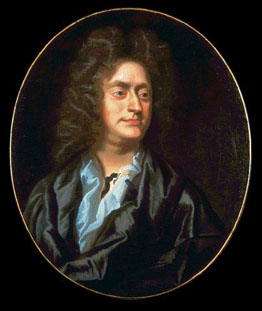
Henry Purcell (1659-1695)

https://i0.wp.com/www.nndb.com/people/352/000093073/henry-purcell-1-sized.jpg

When I saw that Purcell was included among the ranks of Bach and Handel, I was initially surprised. When I think of Purcell, I think almost exclusively of baroque opera–specifically Dido and Aeneas. (Side note: Check out Jessye Norman singing “Dido’s Lament” here. Among most singers, I’d say this is what Purcell is best known for.) However, he did write a number of choral anthems that are still often sung in churches and university choirs.

Born in England and trained in the choir of the Chapel Royal, Purcell began serving as composer-in-ordinary to the King in 1677 and organist to Westminster Abbey in 1679. During his time as composer-in-ordinary, he composed operas (all “semi-operas” except for Dido), anthems and birthday odes for Charles II, James II, and William and Mary. In 1690, he began writing theatrical music full-time.

Over the course of his career, he wrote an opera (in which the music is continuous) and several semi-operas (in which the music is not continuous), music for plays, single songs, and various types of church anthems. He was a trained singer (countertenor) and is known for his exquisite and intuitive setting of text. Of Purcell’s text setting, Carol Kimball writes, “He is considered unsurpassed in setting the English language; his music has an unerring sense for depicting human emotions in a real and touching dramatic way, unparalleled for that time and rarely equalled since.”(1)  H. Wendell Howard writes, “Purcell is to English sung what Shakespeare is to English spoken.”(2)

Throughout his short life, Purcell was loved and respected as a composer. His contemporary Thomas Tudway described him as “…the greatest Genius we ever had.”(3)  Purcell died of unknown causes in 1695 (though most people speculate tuberculosis) and was buried at Westminster Abbey.

I’ll be honest–for a long time, I found Purcell…underwhelming. It all sounded the same–pretty, but repetitive. I really didn’t know what to listen for, but now I believe that part of the reason he is so repetitive is because he sets such poignant texts. (It’s also partly because of the Baroque style, but that’s a whole other post…) Take, for example, “Hear my prayer, O Lord.” The text is based on Psalm 102: 1, and it states, simply, “Hear my prayer, O Lord, and let my cry come unto thee.” Through the use of both repetition and dissonance between the voices, Purcell builds tension, causing us to empathize with the plea of the Psalmist. Studying Purcell helped me to understand that good composers don’t just repeat things for the heck of it; they repeat things to cause you to feel and to understand the text.

There is so much of Purcell, both sacred and secular, that is worth listening to, but for the purposes of this post, I’m sticking to sacred texts.

“Rejoice in the Lord alway”

“Blessed is he that considereth the poor” 

“Remember not, Lord, our offences”

O God, Thou art my God

“Hear my prayer, O Lord”
(Having sung this one before, I can say that it is my favorite by far.)


So…what are your thoughts? Have you heard a lot of Purcell before? If not, what are your initial impressions? Do you find it easy to worship with this type of music, or do you find it distracting? Please do share!


Bonus: This has nothing to do with Purcell, but I came across it while looking for the Jessye Norman video. Who can resist a Jessye Norman/Kathleen Battle duet?
“He’s Got the Whole World in His Hands”


Resources:
1. Kimball, Carol. Song: A Guide to Art Song Style and Literature. Milwaukee: Hal Leonard, 2006. 357.

2. Howard, Wendell H., cited in Carol Kimball’s Song: A Guide to Art Song Style and Literature.

3. Tuppen, Sandra. The Purcell Society, “Biography of Henry Purcell.” http://www.henrypurcell.org.uk/purcell_biography.html. Accessed July 26, 2011.


Purcell and Handel and Bach!

The Episcopal church has named July 28 as a day to remember three composers who were influential in the development of Western church music (and Western music in general)–Henry Purcell (1659-1695), George Frederic Handel (1685-1759), and Johann Sebastian Bach (1685-1750).

Over the next few days, I’ll be reflecting a bit on who these men were, how they studied, where they lived, what their music is like, and why it is important. I look forward to the potential for a discussion regarding your feelings on their work, how it has or hasn’t affected you, and whether you’d like to hear more or less of it in church today.

Here’s some listening to get us all started:

Purcell–“Hear My Prayer, O Lord”

Handel–“Rejoice” from Messiah

Bach–“Herr unser Herrscher” from St John Passion
(If you hit the “show more” button below the video, you can read the English translation.)

Enjoy!

Poem for Romans 8:24-25

For in hope, we were saved. Now hope that is seen is not hope. For who hopes for what is seen?
But if we hope for what we do not see, we wait for it with patience.
Romans 8:24-25

Image source: http://www.poets.org

Hope is the thing with feathers
That perches in the soul,
And sings the tune without the words,
And never stops at all,

And sweetest in the gale is heard;
And sore must be the storm
That could abash the little bird
That kept so many warm.

I’ve heard it in the chillest land,
And on the strangest sea;
Yet, never, in extremity,
It asked a crumb of me.

Emily Dickinson (1830-1886)


Paul Laurence Dunbar– “A Prayer”

Image source–Poets.org

Sunday’s Gospel reading made me think of Paul Laurence Dunbar’s “A Prayer.” In Matthew 11:28, Jesus promises that, if we come to Him, He will give us rest. Dunbar’s poem could almost be viewed as a direct response to Jesus’ promise.

O LORD, the hard-won miles
have worn my stumbling feet:
Oh, soothe me with thy smiles,
and make my life complete.

The thorns were thick and keen
where’er I trembling trod:
The way was long between
my wounded feet and God.

 Where healing waters flow,
do thou my footsteps lead.
My heart is aching so;
Thy gracious balm I need.

(http://www.dunbarsite.org/gallery/APrayer.asp)

Surrendering to Rest

When I was growing up, I hated going to sleep. To me, there was just too much fun to be had and too many books to read. Why would I want to go to sleep and miss out on all of it? But, like most kids, I would eventually tire out, and when I did, I would be very clear with my mother. “I’m not sleeping,” I would insist. “I just need to rest my eyes for a minute.” The “minute” would, of course, generally turn into an afternoon or, I’m sure my parents hoped, an entire night. I wouldn’t mind it much, though, because I was resting, not sleeping. Resting came as a result of a full day, and it required surrender on my part. I had to admit that, loath as I was to go to sleep, I genuinely needed to rest if I wanted to have the energy to continue doing whatever I was doing.

There was, and still is, something about sleep that seems so permanent to me. Even now, I don’t like going to sleep, because I worry about whatever opportunities I’ll miss while sleeping. Rest, however, seems totally different. To me, rest implies, “I’ve been working hard. There’s still work to do. I’m gonna shut my eyes for about twenty minutes (or seven hours!), then I’m going to jump up and get back in the game.”

So when I read Jesus’ words in Matthew 11:28-30, I feel like He’s speaking my language. Or, hopefully, I’m speaking His. He says,

Come to me, all you that are weary and are carrying heavy burdens, and I will give you rest.  Take my yoke upon you, and learn from me; for I am gentle and humble in heart, and you will find rest for your souls. For my yoke is easy, and my burden is light. (NRSV, emphasis mine.)

In this context, “rest” isn’t just physical, and it isn’t just spiritual. There are several different levels to the meaning. Pastor Elisabeth Johnson writes,

To all those laboring under harsh religious and political systems, Jesus says, “Come to me…and I will give you rest.” Rest (anapausis) in the Septuagint can refer to Sabbath rest, the rest of death, or rest from war when Israel’s enemies have been subdued. Rest also functions as an image of salvation, of what will be when the world is finally ordered according to God’s purposes and enjoys its full and complete Sabbath. In promising “rest,” Jesus promises life under God’s reign in the new world that he is bringing into being. (Elisabeth Johnson, http://www.workingpreacher.org.)

Jesus understands what we often miss–that we need rest. And not just any rest; His rest. As “good Christians,” we often find ourselves whizzing about from volunteering to teaching Sunday School to baking cookies for the coffee hour to picking up the kids from school to making spaghetti for the youth group on Wednesday to barely remembering to read the text for Saturday’s Bible study and so on and so on and so on. We precariously balance church, work, family, and friendships, giving and giving until we feel there’s nothing left to give. We silently carry feelings of inadequacy, anxiety, and the need to control every aspect of our lives so that there will be no surprises. We are “Marthas,” knowing all the while that we would probably be happier if we were “Marys.” We behave as I did when I was a child, unable to sit, unable to be at peace, unable to truly be at rest.

In the 1996 movie One Fine Day, Michelle Pfeiffer exemplifies this behavior as she portrays a single mom who is beyond stressed as she attempts to balance her commitments to her job and to her son. When asked why she won’t accept help from anyone, she replies,

“I’ve got all of these little balls up in the air. And if someone else caught one for me, I’d drop them all.”

We all have tons of “little balls” up in the air–obligations with which we’ve filled our lives, often in an attempt to do good. The beautiful news is this: not only is Jesus willing to catch the balls we’ve been juggling; He’s also willing to catch us. To take from us the heavy, overwhelming yoke of the world (and sometimes even of the church), and to give us His yoke–one of joy, laughter, hope, peace…and rest. Much like physical rest, spiritual rest requires our surrender. It requires an understanding that, “I’ve been working hard. There’s still work to do. But I know that, when I need to, I can retreat and take a break for a minute–without shame, guilt, or reservations–because Jesus said that He will give me rest.”

My hope is that we will come to trust that our Savior, who loves us all so completely and profoundly, is big enough to care for us at every point in our lives–whether at work or at rest.

Thinkin’ Questions

What are some other ways of interpreting Jesus’ meaning of “rest”?

Do you feel that you have a tendency to overcommit yourself, or do you strike a pretty good balance?

What are some ways that we could all practice “resting” in Jesus?

Are a restful spirit and a hectic schedule mutually exclusive?