Items of General Interest about liturgy, the liturgical calendar, church customs and culture, our unique “Episcopal vocabulary,” the intersection of faith and culture, and all other items not fitting into the other categories (or fitting into multiple categories).
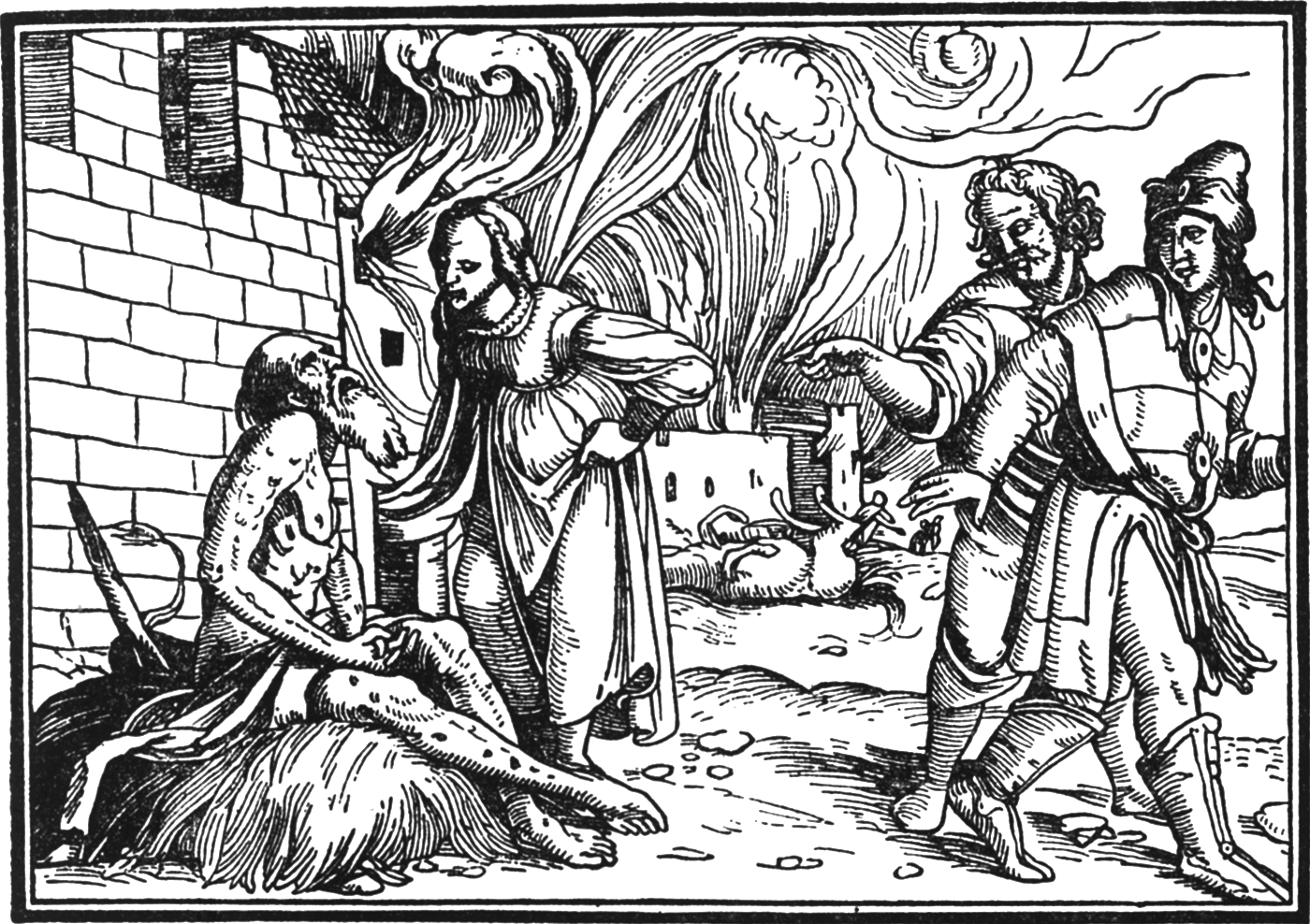
Wind in the Chimes: Despite losing everything, Job moves forward with questions and integrity.
What are we to understand about suffering?
Here is one answer from the Introduction to the Book of Job in the Jewish Study Bible:
THE BOOK OF JOB AS WE HAVE IT makes three main points, which are interrelated. The first, most obvious point is that human suffering is not necessarily deserved; that is, though in some cases we may bring our own suffering about by, for instance, neglecting our health or engaging in risky behavior—or, from a religious perspective, by our sin or immorality—the real problem with suffering comes with the many cases in which someone’s pain, sorrow, or distress are clearly unrelated to anything they have done or failed to do. This point is the one that Job argues most forcibly against his friends. Those friends, who are concerned to safeguard the goodness of the LORD (seen as the cause of all things, good or bad), argue the contrary view: that if a person suffers, the suffering must somehow be deserved. This leads to the second point. The claim that all suffering is deserved will inevitably persuade those who hold that view to falsify either the character of the sufferer or the character of the LORD. Thus, Job’s friends argue that Job is a sinner, deserving of his punishment, while Job claims that the LORD has acted unfairly and is indifferent to human suffering. The third point, however, is the most theologically difficult and gives the book its sense of profundity and at the same time its inconclusive conclusion: There is no way of understanding the meaning of suffering. That is, in the LORD’s argument, the reasons for suffering—if there are any—are simply beyond human comprehension.
Mayer Gruber, “Job: Introduction and Annotations ( בויא ),” in The Jewish Study Bible, ed. Adele Berlin and Marc Zvi Brettler (New York: Oxford University Press, 2004), 1499–1500.
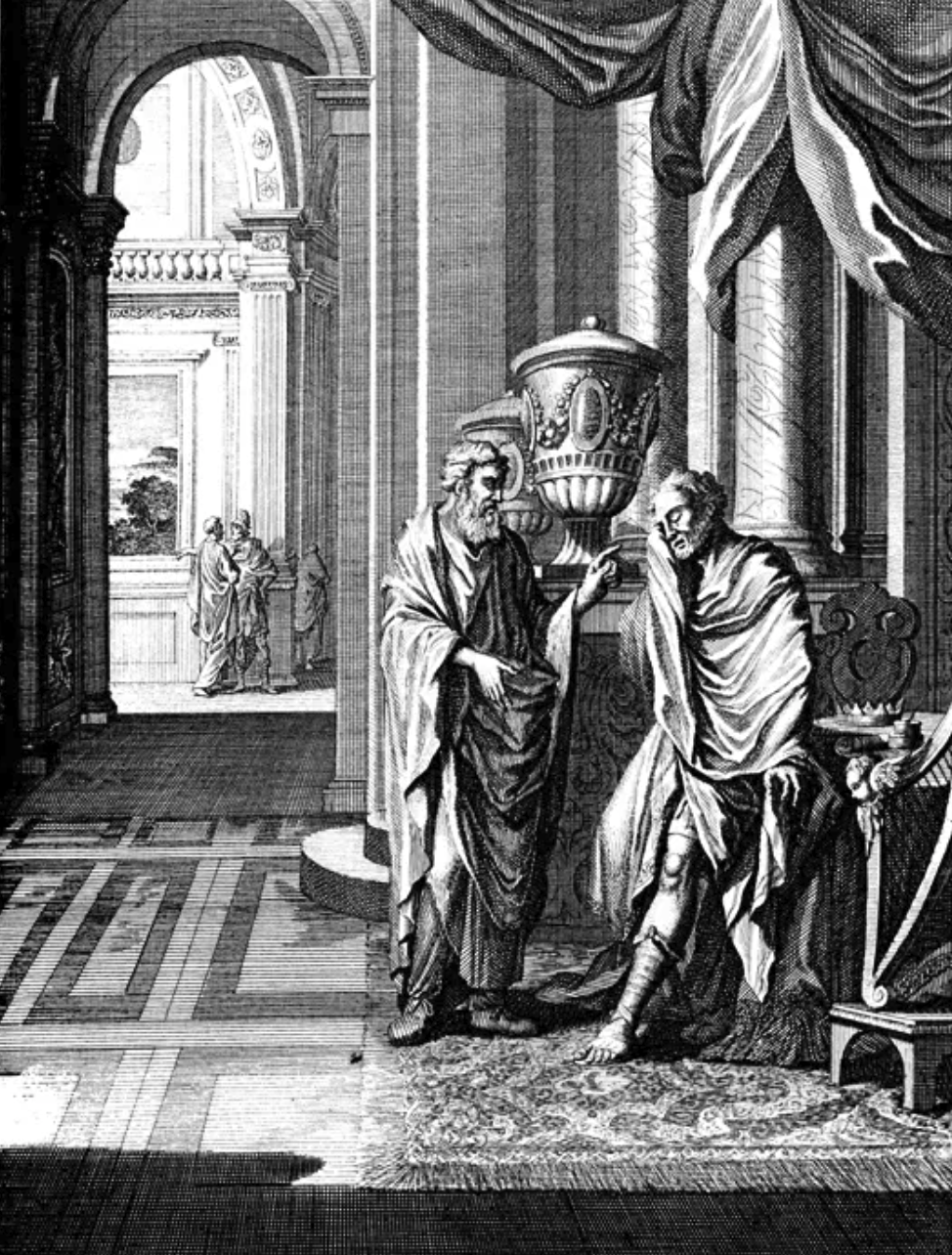
After Bathsheba’s husband, Uriah, was sent into battle to be killed, King David “brought his widow, [Bathsheba] to his house and she became his wife, and bore him a son.” This displeased the Lord and the Prophet Nathan was sent to visit David.
Upon his arrival at David’s palace, Nathan set up his rebuke with a story about two men: one very rich and the other very poor. The poor man had only a ewe he raised from the time it was a small lamb. Like pets that become part of a family, his ewe was dear to him and loved by his children. Nathan noted, “It was like daughter to him.” The rich man lacked nothing and had large flocks of sheep and herds. When he was visited by a traveler, he did not want to give up a single sheep from his own flocks so he took the lone sheep of the poor man to provide dinner for his visitor. The wealthy man used his position to take advantage of the poor one.
When David heard this story he was furious. He said “As the Lord lives the man who has done this deserves to die …because he did this thing and because he had no pity.” Nathan said to David “You are that man.” Nathan reminded David that he had “murdered Uriah the Hittite with the sword of the Ammonites and stole his wife. When faced with the truth, David was remorseful and confessed “I have sinned against the Lord.” He listened as Nathan told him what the sad consequences of his actions would be.
In Caspar’s engraving, David is crownless and his head is downcast. He is standing slump-shouldered as Nathan points his finger at him in a scene reminiscent of a Greek tragedy.
Though Caspar Luiken lived during the early Baroque period, the architectural setting of this engraving gives it a classical quality. Ornate aspects of the print are limited to primarily the drapery, robes, carpet and the two covered storage vessels. In keeping with what was standard practice for an artist of this era, a strong light source defines the folds of the robes and fills the space with high contrasts. Caspar also demonstrates his kill in creating an illusion of pictorial depth. Through an accurate use of linear perspective, our attention is taken back to a brightly lit space and then a window takes us back even farther into a distant landscape.
At the time Caspar Luiken was born, Amsterdam was still aglow from its golden age of art and commerce. During those years it was the wealthiest city in Europe and an important center for the arts. His father, Jan Luiken, was a very successful illustrator and publisher. This was a time before photographs were known; a time when highly skilled engravers such as Jan and his son Caspar filled a need for images that were used in publications. Caspar learned engraving from his father and it was hoped he would carry on the family business but after working with him initially, he went to Germany to be on his own. Six years later he returned to help support his father financially but then he died at the age of thirty-six. A book of Caspar’s engravings of Old Testament events, including Nathan RebukesDavid for his Adultery, was published posthumously.
It happened, late one afternoon when David rose from his couch and was walking about on the roof of the king’s house, that he saw from the roof a woman bathing; the woman was very beautiful.
Bathsheba at Her Bath, oil on canvas, 1636-37, Artemisia Gentileschi, 1593-1656
Bathsheba at Her Bath is one of several versions of this subject painted by Artemisia Gentileschi. In each of them the focus is primarily on Bathsheba with King David observing her from a distance.
In this scene, Bathsheba is relaxed and seems to be interested only in her grooming. She, and the two women assisting her in the foreground, are occupied with details associated with her bath and there is no indication they are aware of being watched by King David.
While Bathsheba was at home in Jerusalem, her husband, Uriah, was serving in King David’s army in a war with the Ammonites. David remained in Jerusalem during this war and everyday activities on the home front continued. On the day Bathsheba was bathing she was in an open-air walled area where she would not be noticed by people at street level but David was at a higher vantage point and could see her.
In Artemisia’s painting, Bathsheba’s bath is almost complete. She is combing her long hair while an attendant is wiping her legs. Another attendant is braiding a portion of her hair and in the background at the upper left, King David is looking at her from a balcony of his Venetian styled palace (He is being shielded from the sun by an attendant with a parasol). Though David is a minor figure in this composition, he is a major player in the events that followed.
Detail (enlarged), David observing Bathsheba.
David was struck by Bathsheba’s beauty and desired to be with her. He sent word for her to come to his palace and this resulted in an inappropriate relationship. Bathsheba became pregnant. In order for David to make it seem like he was not the father of the expected child, Uriah was called back from his military duties to spend time with his wife. Uriah, a highly disciplined military man, however, did not go to his wife. This did not turn out as David hoped so Uriah was sent back to the battlefield and placed in the thick of action where he would be killed. After Uriah’s death, David married Bathsheba but the child that was conceived, died.
In early paintings of Bathsheba, she was portrayed as an innocent victim of King David. The biblical account indicates David, in his position of power, took advantage of her. By the seventeenth century, however, it was suggested Bathsheba was flattered by the attention she received and might have been a willing participant … even a temptress. This second interpretation seems to have grown out of fantasy; there is no factual information to support it.
After the concept of art and artist was established in the fifteenth century, the making of art became a trade. Artists established workshops and sought commissions from wealthy patrons and the Church. In these artist’s workshops the men in a family often worked alongside their father, whereas young women were expected to pursue domestic skills. Unlike traditional roles of women in her time, however, Artemisia apprenticed in the workshop of her well-known father, Orazio, and acquired the skills and insights that enabled her to establish a career in a field dominated by men. In subject matter, she often turned to events in the Bible in which women played important roles or performed heroic deeds.
When Artemisia was young, her mother died and she, along with her brothers, joined her father in his art workshop. She was more serious about art than her brothers and wanted to learn all she could from her father, Orazio. Her father, like many artists who settled in Rome at that time, was influenced by Caravaggio and Artemisia also took an early interest in Caravaggio’s work. She did not limit herself to portraits and flowers (subjects expected of women who painted) but often took on subjects with emotional content. Although she was very gifted and recognized as such among other artists of her time, women artists tended to be overlooked by art historians and it was not until around mid-twentieth century that she began to be recognized for her achievements.
David and all the house of Israel were dancing before the LORD with all their might, with songs and lyres and harps and tambourines and castanets and cymbals. 2 Samuel 6:5
David Dancing Before the Ark, Gouache on Board, c. 1896-1902, James Jacques Joseph Tissot, 1836-1902
James Tissot’s David Dancing Before the Ark illustrates a joyous occasion as the Ark of the Covenant is being transported to Jerusalem. When imagining how this procession might be depicted, perhaps Tissot’s thoughts turned to Psalm 150; “Praise him with timbrel and dance.” “Praise him upon the loud cymbals … and high sounding cymbals.”
When the ark was being moved from Baale-juda, it was placed initially on an oxen-drawn cart but Tissot has given us a scene from the second segment of the journey. At this time the ark is being supported by poles on the shoulders of four men from the tribe of Levi [Levites were the only ones allowed to carry the ark.] Though the men carrying the ark are surrounded by festivity, they themselves are serious in their solemn responsibility. [When it was being moved, the ark was always covered in a blue cloth; it is unclear why Tissot chose to use pink.]
In this painting, Tissot has placed David with his back to us at center stage. He is wearing an ephod (a Jewish priestly vestment) and dancing energetically. To the left of David is a woman in an elaborate dress with “high sounding” cymbals, and on the right, two women in festive dresses are dancing as they play timbrels (a tambourine-like instrument). Crowds surround the ark as they travel with David to Jerusalem. Many in the background are waving palm fronds.
The back story of this painting began at the time David was crowned King of Israel. The Philistines had captured the ark earlier but then returned it. After its return, it was kept in the house of Abinadab for twenty years. It was David’s belief the ark should be in Jerusalem, the city he chose to be the new capital of Israel, and he set out with a large group of supporters to the house of Abinadab to transport it. In preparation for the journey, a cart – to be drawn by oxen – was built and the ark was placed on it. There was dancing and praises as the procession to Jerusalem was underway.
Abinadab’s two sons, Uzzah and Ahio attended the cart as the journey proceeded but the festivity ended abruptly when an ox slipped and it seemed the ark was going to fall. Uzzah reached out instinctively to steady the ark but touching it was against the wishes of God and he was struck dead immediately. This angered and saddened David. Uzzah was trying simply to protect the ark and God’s punishment seemed unfair. The journey was halted for three months until David came to terms with Uzzah’s death. For the remainder of the journey, the ark was carried on poles. Tissot’s painting illustrates the second segment of this journey.
When Tissot became older, he took a deeper interest in his faith and the people of the Bible became his primary subject matter. He first focused on the life of Christ and then after completing a large series, he began painting subjects from the Old Testament. In these biblical paintings, Tissot strived for authenticity and visited Egypt, Arab countries, and the Holy Land on three occasions. While there he sketched and took notes. He believed the manner of dress in rural areas of these lands would have remained similar to the way they were in biblical times.
The medium, gouache, was used by Tissot for a series of paintings depicting events in the life of Christ. He followed this with a series of events in the Hebrew Bible. Many of these works may be seen at the Jewish Museum (events from the Hebrew Bible) and the Brooklyn Museum (events from the life of Christ). Both museums are in New York City. The medium “gouache” — pronounced g’wash (and does not rhyme with ouch)—is an opaque watercolor. A watercolor, however, is composed of transparencies whereas gouache has a white pigment added, thus making all colors opaque. Gouaches produce a soft effect and do have the intensity of colors that we see usually in oil paints and acrylics.
Blessed be the God and Father of our Lord Jesus Christ, who has blessed us in Christ with every spiritual blessing in the heavenly places… Ephesians 1:3
Welcome!
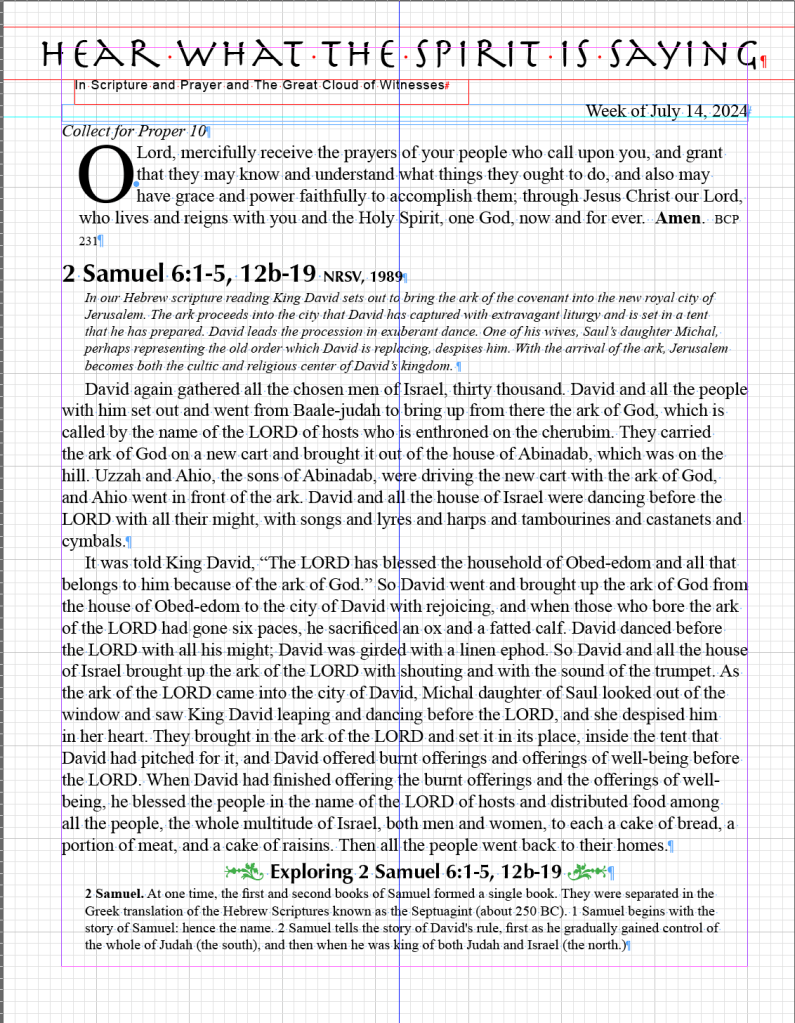
The readings on Sunday, July 14, 2024 (Proper 10B) continue the story of David as he moves the Ark of the Covenant to the City of David (Jerusalem). Psalm 24 gives praise to God and celebrates the King. In worship we start to read the Letter to the Ephesians as the Apostle sets out his vision of life in Christ. The Gospel of Mark tells the story of the death of John the Baptist.
We* had a long discussion on Psalm 24. The essay we read posed two questions we pass along to you:
How often do we approach worship, not with God in mind, but the week we have had?
How many times do we leave worship worried, not if we have worshiped God, but if we have been spiritually fed?
View or download the handout we used in our Wednesday morning forum:
Click the image to view or download our study guide
*Most Wednesday mornings a group of us gather online to explore the readings that will be used in worship the following Sunday. This week’s handout features readings, commentaries, and notes for the Eighth Sunday after Pentecost (July 14, 2024) in Year B of the Revised Common Lectionary. Please: View or download the handoutwe used to guide our discussion and tune our hearts to the Spirit.
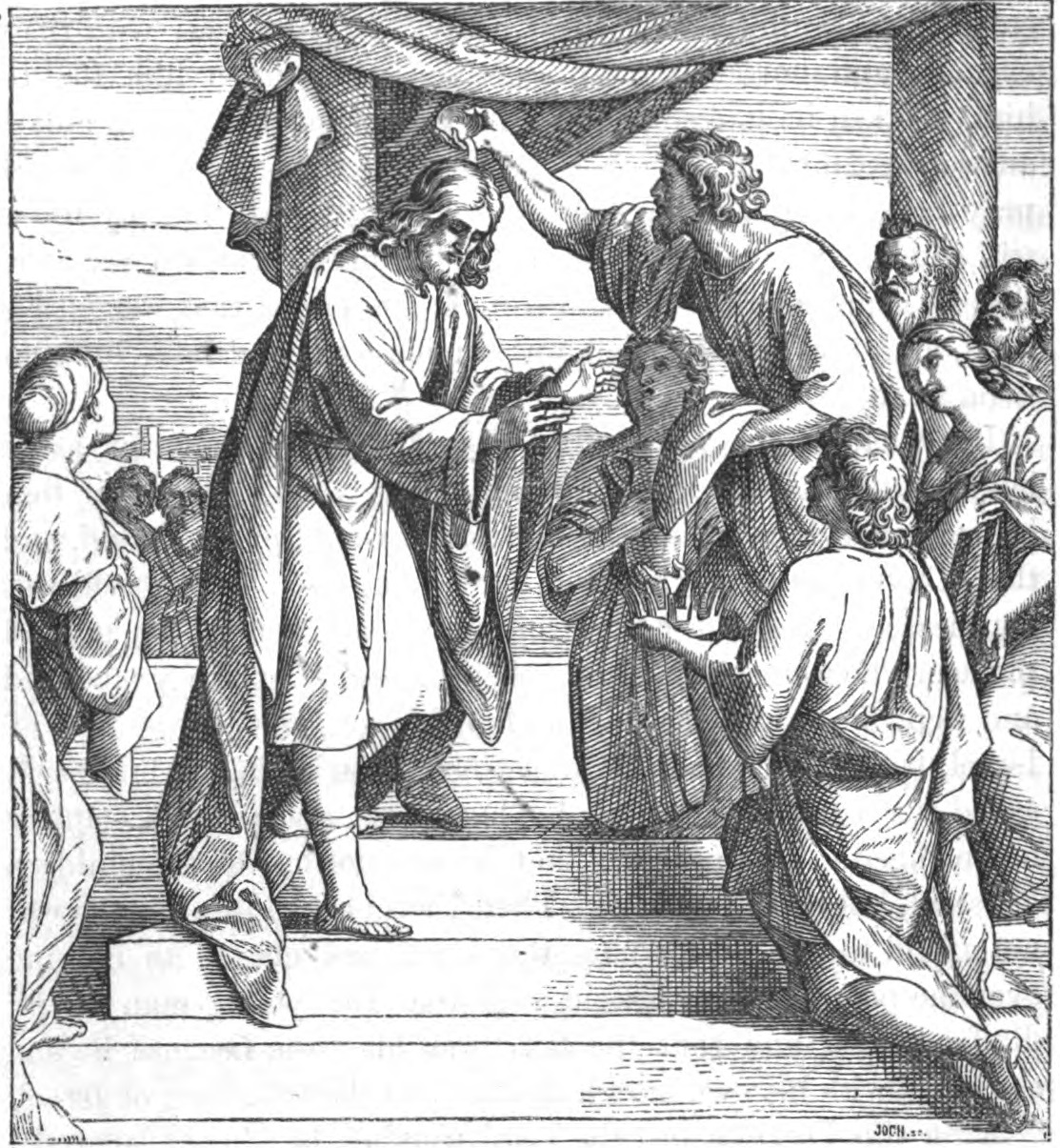
So all the elders of Israel came to the king at Hebron; and King David made a covenant with them at Hebron before the LORD, and they anointed David king over Israel. 2 Samuel 5:3
David Crowned King of Israel, wood engraving, c.1860, Julius Schnorr von Carolsfeld, 1794-1872
After David was crowned King of Judah and reigned for seven years, all of the tribes of Israel met with him and said, “We are your own flesh and blood. In the past, while Saul was king over us, you were the one who led Israel on their military campaigns. And the Lord said to you, ‘You will shepherd my people Israel, and you will become their ruler’” David then “made a covenant with them at Hebron before the Lord, and they anointed David king over Israel.”
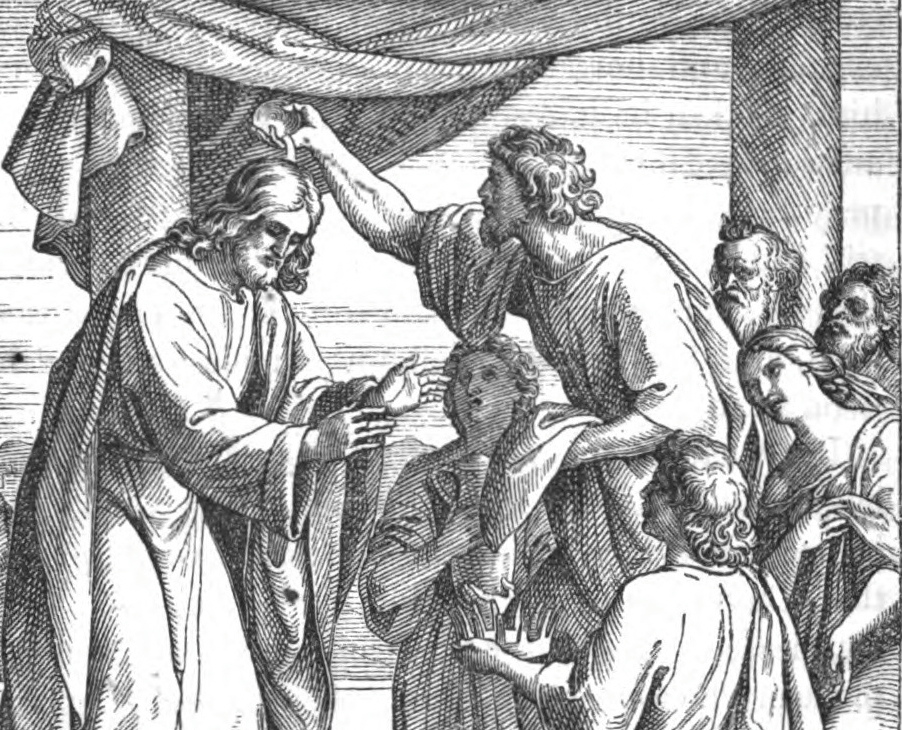
Julius Schnorr von Carolsfeld’s engraving, David Crowned King of Israel depicts an elder pouring oil on David’s head while another is kneeling and holding a crown. David leans forward slightly as he is being anointed. He is looking at the crown and his hands are open as though he is acknowledging and accepting the confidence that is being placed in him.
Carolsfeld presents the moment of crowning as a tableau with David at the center. Almost all attention of the participants on stage is directed toward him. After we glance at the overall composition of this engraving, we tend to go back and enter the scene from the left. From there, the woman at the far left guides us visually to the place above David’s head where oil is being poured. Her gaze is fixed on the procedure. In life, when we see a person’s eyes fixed in a particular direction, our tendency is to look to see what has engaged their attention. This impulse is carried over as we look at subject matter in art. In Carolsfeld’s engraving, almost everyone participating in the ceremony is focused on the anointment.
When we look at shapes, associations come to mind and we project meaning onto them (not always on a conscious level). A pyramid or triangular shape with its broad base gives us a sense of stability, of being secure and on solid ground. Von Carolsfeld has staged the scene of David’s crowning on a stepped-pyramid base, and the central figures move upward from there to continue a triangular grouping with the apex at the point where oil is being poured. Secondary figures witnessing the crowning are on the sides and behind them in the background. Their facial expressions seem filled with emotion and awe. Above them is a drapery, the eighteenth century all-purpose filler of pictorial space and the “go to” backdrop of drama. The clothes of the participants provide an abundance of opportunities for von Carolsfeld, to display his technical skills in the creation of light and shadow effects.
Illustrations enhanced the text of handmade books during medieval times and after printing became mechanized at mid-fifteenth century, they added enrichment to texts through engravings. As the work of artists continued to become specialized, those who created pictures for books became known as illustrators. The art of illustrators was not regarded to be as important as that of painters, but engravers filled a need and they were assured steady work.
German artist von Carolsfeld lived in Italy for ten years and while there he became an admirer of High Renaissance painting. Upon his return to Germany, he had a very successful career as a painter but also produced work in other media. David Crowned King of Israel is one of over two hundred wood engravings created by von Carolsfeld for a Picture Bible
More about the lithograph process: Osmar Schindler’s image of David and Goliath is a lithograph [litho: stone, graph: drawing (drawing on stone)]. The process is based on oil and water not mixing. When making a lithograph, a drawing is made with a greasy crayon on a flattened smooth-surfaced limestone. The surface is treated with a weak acid solution which rolls off the crayon drawing and covers the unmarked areas of the stone. After the drawing is removed with a solvent, the surface is made wet. Water clings to the treated surface but not to where the drawing was made (and removed). When the stone is inked with a large roller, the ink is rejected by the watered surface and clings only to where there was once a drawing. Paper is placed over the inked stone and it is run through a press. When the paper is pulled off the stone, the image (once a drawing on the stone) is now on the paper (in reverse). Multiple prints may be made by this process. If color is to be used, a separate stone is used for each color. Artists may color a lithograph by hand after it has been printed. ~Hovak Najarian
For more art and art commentary search the Art & Music Category or use Hovak Najarian as your search term.
Out of the depths I cry to you, O Lord. Lord, hear my voice! Let your ears be attentive to the voice of my supplications! Psalm 130:1-2
Welcome!
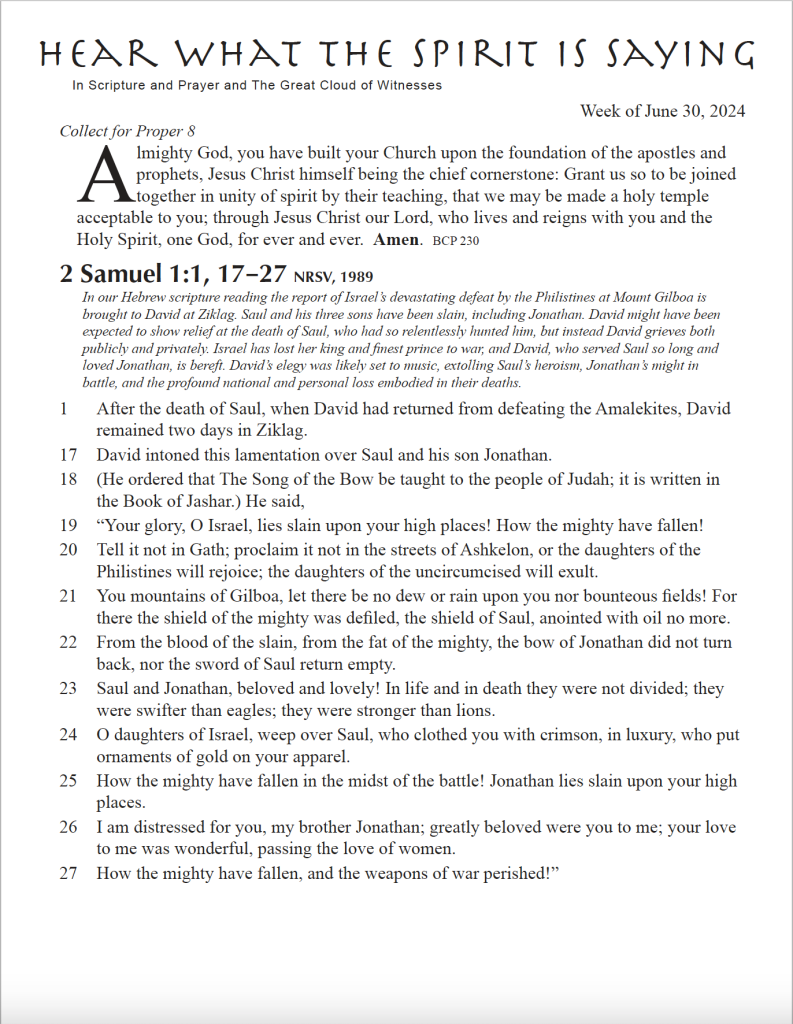
The readings on Sunday, June 30, 2024 (Proper 8B) continue the story of David after the death of King Saul. Psalm 130 is a cry for attention and help and a confident expression that the Lord hears and will answer. There is a patient and hope-filled waiting.
Read Psalm 130 from the Tanakh. Listen carefully. In this translation, which words speak most clearly to your heart? What difference do these words make to you? To those you love?
Psalm 130:1–8 (Tanakh)
1A song of ascents. Out of the depths I call You, O Lord.
2O Lord, listen to my cry; let Your ears be attentive to my plea for mercy.
3If You keep account of sins, O Lord, Lord, who will survive?
4Yours is the power to forgive so that You may be held in awe.
5I look to the Lord; I look to Him; I await His word.
6I am more eager for the Lord than watchmen for the morning, watchmen for the morning.
7O Israel, wait for the Lord; for with the Lord is steadfast love and great power to redeem.
8It is He who will redeem Israel from all their iniquities.
View or download the handout we used in our Wednesday morning forum:
Click the image to view or download our study guide
*Most Wednesday mornings a group of us gather online to explore the readings that will be used in worship the following Sunday. This week’s handout features readings, commentaries, and notes for the Sixth Sunday after Pentecost (June 30, 2024) in Year B of the Revised Common Lectionary. Please: View or download the handoutwe used to guide our discussion and tune our hearts to the Spirit.
“O Lord, make us have perpetual love and reverence for your holy Name, for you never fail to help and govern those whom you have set upon the sure foundation of your loving-kindness…. ” Collect of the Day
Welcome!
The readings from Sunday, June 23, 2024 (Proper 7B) featured the story of David and Goliath. The verses from Psalm 9 came from a heart and a community that, through experience, trusted God in even the most difficult moments of life. Our* discussion focused on the Psalm. You are invited to join the Psalmist in lifting your heart to God.
Click image to view or download our study guide
*Most Wednesday mornings a group of us gather online to explore the readings that will be used in worship the following Sunday. This week’s handout features readings, commentaries, and notes for the Fifth Sunday after Pentecost (June 23, 2024) in Year B of the Revised Common Lectionary. Please: View or download the handoutwe used to guide our discussion and tune our hearts to the Spirit.
When the elders of Israel went to Samuel to demand that he appoint a king, it was argued they would need one to protect them from their enemies. Samuel was not convinced that Israel required a king but after arguments, Saul was anointed.
Among Israel’s enemies were the Philistines whose army had gathered at the Valley of Elah to confront Saul’s forces. During this stand-off a huge warrior named Goliath (reported to be nine feet, nine inches tall) came forward from the Philistine camp with taunts. He challenged the Israelites to send someone to fight him. The nation of the victor, he said, would rule over the other. King Saul was a tall man with experience in battle but he would have been no match for this Philistine giant.
Meanwhile, David, the youngest son of Jesse, was sent by his father to take food to his brothers who were serving in Saul’s army. When David saw Goliath and heard his taunts, he said he would fight him. He had killed wild beasts while protecting his sheep and was very accurate with his sling. There was neither fear in David nor a need to wear burdensome armor. When Goliath saw he was being approached by an armor-less boy with a shepherd’s staff and sling, he was both surprised and amused. He said “Am I a dog that you come to me with sticks?” David, however, quickly dispatched the giant with a stone hurled from his sling. The stone penetrated Goliath’s unprotected forehead and he fell. David then used Goliath’s own sword to behead him.
Osmar Schindler’s colored lithograph, David and Goliath, depicts the self-assured giant standing with his head back in laughter at the sight of David. The men in the Philistine army behind him were anticipating a show-down between two warriors and they too must have wondered what was going on with the appearance of David. In his right hand Goliath is holding a spear and his left hand is resting easily on his waist. He did not take David seriously. Even his shield-bearer is standing aside and leaving him not fully protected. Goliath’s thoughts were perhaps “Are you kidding? What is this?”
Regardless of size differences, David was not intimidated. Before going out to confront Goliath, he told Saul, “The Lord who saved me from the paw of the lion and the paw of the bear will save me from the hand of the Philistine.” In the foreground, David has both feet planted firmly on a boulder as he looks at Goliath. He is ready and in a moment the stone placed in his sling’s pouch will be swung and released to put an end to Goliath.
There are many paintings and drawings of David’s encounter with Goliath. They range from Sunday School cartoons to gory images of Goliath being beheaded or David holding up Goliath’s severed head. David is well represented also in sculpture. Two of the most noted sculptures of David are Donatello’s David (with Goliath’s head at his feet) and Michelangelo’s David (holding a sling over his left shoulder).
David slays Goliath
Michelangelo, fresco, Sistine Chapel
Donatello, David, bronze, Bargello National Museum
More about the lithograph process: Osmar Schindler’s image of David and Goliath is a lithograph [litho: stone, graph: drawing (drawing on stone)]. The process is based on oil and water not mixing. When making a lithograph, a drawing is made with a greasy crayon on a flattened smooth-surfaced limestone. The surface is treated with a weak acid solution which rolls off the crayon drawing and covers the unmarked areas of the stone. After the drawing is removed with a solvent, the surface is made wet. Water clings to the treated surface but not to where the drawing was made (and removed). When the stone is inked with a large roller, the ink is rejected by the watered surface and clings only to where there was once a drawing. Paper is placed over the inked stone and it is run through a press. When the paper is pulled off the stone, the image (once a drawing on the stone) is now on the paper (in reverse). Multiple prints may be made by this process. If color is to be used, a separate stone is used for each color. Artists may color a lithograph by hand after it has been printed. ~Hovak Najarian
For more art and art commentary search the Art & Music Category or use Hovak Najarian as your search term.
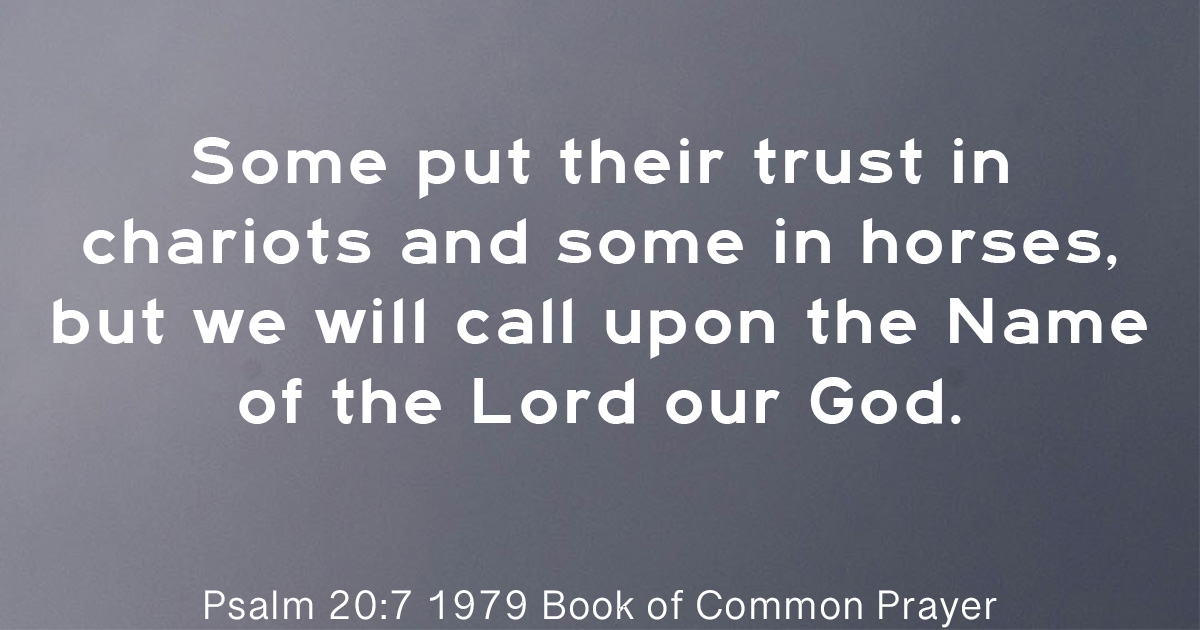
Wind in the Chimes: In a moment of decision where do you put your trust?
Psalm 20:7
Some put their trust in chariots and some in horses, but we will call upon the Name of the Lord our God.
Psalm 20:7 (The Book of Common Prayer, 1979: Psalter)
Our sacred text is living and dynamic. New understandings about God and about God’s people continue to emerge. These understandings continue to expand with each new experience—of individuals and communities—and new questions and understandings are born in the answering.
In our moment(s) of crisis “trust in chariots and horses” could be read as trust in wealth, material goods, political power, physical power, and strength, or in clever manipulation of law and order. The text asserts that in our ancestor’s moment of crisis they “will call upon the Name of the Lord our God.”
This text asks you and me—in our moment of need or crisis: in what (or in whom) do you trust? As we work out our individual answers and join others in a similar journey, I hope we can assert with the Psalmist that “WE will call upon the Name of the Lord our God”
About Wind in the Chimes
Wind in the Chimes (renaming and reintroduction of Wind Chimes, 7/21/20)








 Hear what the Spirit is saying
.jpg)


.jpg)

