“Welcome the Needy”

VATICAN CITY (RNS) Pope Francis called for greater compassion for refugees and marginalized people less than a week after President Trump ordered a temporary immigration ban from seven predominantly Muslim countries.

In a video of the pontiff’s prayer intentions for February, the pope does not specifically refer to the president or his policies but emphasizes his concern about large numbers of people who he says are being marginalized and forgotten on the fringes of society.

“Don’t abandon them,” the pope says in the video, which features men and women comforting a homeless man on the street.

“Pray with me for all those who are afflicted, especially the poor, refugees and marginalized, so they may be welcomed and find comfort in our communities.”

Read the entire post

Mercy

… for I was hungry and you gave me food, I was thirsty and you gave me something to drink, I was a stranger and you welcomed me, I was naked and you gave me clothing, I was sick and you took care of me, I was in prison and you visited me.…  Matthew 25:35-36

Caravaggio's Seven Acts of Mercy

A Caravaggio masterpiece on mercy calls to Pope Francis across the centuries

Begin quote

(RNS) If Pope Francis wanted a single image to illustrate the special Year of Mercy that is the current focus of his ministry and, indeed, the theme at the heart of his pontificate, he could do no better than choosing an underappreciated masterpiece by the thrilling Italian artist known as Caravaggio.

In fact, the 400-year-old canvas, an altarpiece in a Naples church titled “The Seven Acts of Mercy,” may represent the perfect combination of the man — or, rather, two men — and the moment: a brilliant painter with a scurrilous reputation who was striving for redemption, and a popular pontiff struggling to make the church more welcoming to outcasts.end-quote-black-71by52

Why does this painting call across the centuries?

I invite you to read the entire essay posted by Religion News Service on March 30, 2016 and learn more about Caravaggio, this remarkable painting, the theme of mercy, and how this painting (and Caravaggio himself) calls us to act with mercy and live with hope. ~Fr. Dan

Keep learning

We are all Syrian. We are all Muslim.

This was an email letter sent to members of the Episcopal Diocese of San Diego on January 29, 2017 and posted the same day to the Diocesan Facebook Page


Logo for Episcopal Diocese of San DiegoDear Sisters and Brothers in Christ,


The last nine days have been a disquieting and dizzying display of presidential action in Mr. Trump’s first days in office. It is difficult for us to find focus as he occupies the media space railing about the size of the inauguration crowd and making unsubstantiated claims regarding voter fraud. From a public policy perspective, there is much to worry about: news blackouts from federal departments, possible trade wars, and comments about illegal torture to name a few.


However, Friday’s executive order to halt immigration from seven Muslim countries, including the suspension of refugees from war-ravaged Syria, is an affront to our sense of fairness and equity. Indeed, the president even stated that our nation would give preferential treatment to Christians over Muslims, thereby invoking a religious standard for entry that is anathema to our national creed. Fanning the fears of 9/11 and ISIS, the president wants us to believe that we will be safer because we change who we are as a people who welcome the immigrant and the refugee. But we are the nation of the Marshall Plan, Famine Relief and Tsunami recovery. Our dark chapters of the last century include Franklin Roosevelt’s executive order 9066, which interred Japanese Americans because of their ethnicity. This is too eerily familiar. Surely we have learned from our past and discovered the better angels of our nature.

Please read all of the Bishop’s letter

After presidential power shifts, Episcopalians ask: How should we pray?

Book of Common Prayer page 359

Episcopal News Service (ENS) posted “After presidential power shifts, Episcopalians ask: How should we pray” on January 23, 2017. It had the subtitle “Debating purpose, intention of praying for Donald Trump in church.” As internet posts go, this is a long post. It presents reasoned answers for both “yes” and “no.” What follows are a few quotes from the article. I encourage you to read the entire article here.
~Fr. Dan

Read quotes from the article

Welcome to the Jesus Movement

Evangelism, Episcopal Church InitiativeThis is the Bulletin Insert for Sunday, January 29, 2017 (Epiphany 4A). Each week the Episcopal Church posts a Bulletin Insert online for sharing in all the churches.

The insert posted here announces Episcopal Church Revival Meetings in 2017-18. Imagine that! Read on. ~Fr. Dan

Begin quoteThe Episcopal Church is working with diocesan teams to organize a series of Episcopal Revivals in 2017 and 2018, six major events that promise to stir and renew hearts for Jesus, to equip Episcopalians as evangelists, and to welcome people who aren’t part of a church to join the Jesus Movement.

“I love the surprised response when people hear we’re organizing Episcopal Revivals,” said the Rev. Canon Stephanie Spellers, the presiding bishop’s canon for evangelism, reconciliation and stewardship of creation. “Why wouldn’t we? A revival is a movement of the Spirit among the people of God, a concrete sign that we want to share God’s love out loud with each other and with new people. That sounds like the Jesus Movement.”

Read on, there’s more

Many Sightings of Hope

This essay, by Martin E. Marty, was originally posted on January 2, 2017 on “Sightings: Religion in Public Life” by The Martin Marty Center for the Advanced Study of Religion

For more than a year I engaged in the visual and oral analog to “fasting.” Fasters discipline themselves not to eat. I chose not to comment on the election campaigns. A digital word-search will find no mention in 50 Monday Sightings of any presidential candidate or party. The choice was an implicit protest against or retreat from the grossness, waste, distortion, and distraction in what elections have become. Now the bad year of 2016 is past, and it is time to join everyone else in the sighting-and-commentary professions and to re-emerge actively.

What struck me all year was the sense and sight of extreme despair on many fronts, accompanied by some new notices of the meaning and potential of hope. The headline of a column by fellow Chicagoan Neil Steinberg was “The Necessity of Hope.” The column began with a quotation from Michelle Obama: “Now we’re feeling what not having hope feels like.” It ended: “Hopelessness is not an option. Hope is a tool, a hammer. Never let it go. You’re going to need it.”

This paralleled the long holiday essay in The Economist on “The agony of hope,” which focused on President Obama, who had written at book length on “hope,” and who kept embodying and exemplifying it against all odds, as the story recalled. The article traces the President’s career and evidences of his outlook through his bad recent year, in which he had no choice but to act and speak. Conclusion: he had to do the best he could. “Sometimes it was all he could do. The possibilities seem shrunken. After its collision with history, so might hope itself.”

You’ll want to keep reading…

Statement of Episcopal Church Presiding Bishop Curry regarding prayers for the President

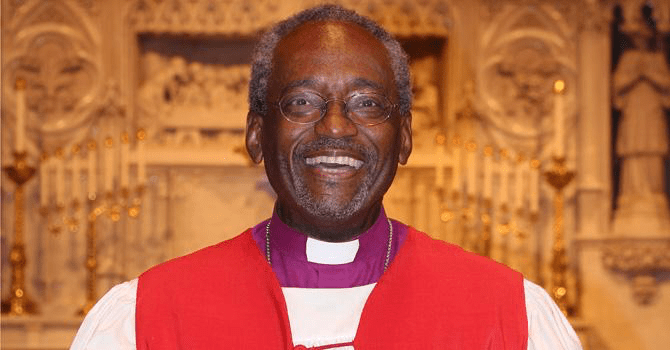
Presiding Bishop Michael Curry

The following is a statement from Presiding Bishop and Primate Michael B. Curry via the Public Affairs Office of the Episcopal Church

 

Begin quoteThis past week, Barack H. Obama, the 44th President of the United States, in the tradition of Presidents dating back to George Washington, gave his farewell address to the nation. Next week Donald J. Trump, in the same tradition of this country, will take the oath of office and be inaugurated as the 45th President.

We recognize that this election has been contentious, and the Episcopal Church, like our nation, has expressed a diversity of views, some of which have been born in deep pain.

There has been much discussion, and some controversy, about the appropriateness of the Washington National Cathedral hosting the Inaugural Prayer Service this year, and of church choirs singing at inaugural events.

Underneath the variety of questions and concerns are some basic Christian questions about prayer: when I pray for our leaders, why am I doing so?  Should I pray for a leader I disagree with? When I pray what do I think I am accomplishing?

On one level these questions seem inconsequential and innocuous. But real prayer is not innocuous. It is powerful. That question can become poignant and even painful as it is for many in this moment, given that some of the values that many of us heard expressed over the past year have seemed to be in contradiction to deeply-held Christian convictions of love, compassion, and human dignity.

So, should we pray for the President?

– Please keep reading!
Archbishop of Canterbury to express remorse over Reformation violence | Religion News Service

CANTERBURY, England (RNS) The archbishop of Canterbury, Justin Welby, is expected to issue a statement this week apologizing for the violence that followed the Protestant Reformation 500 years ago.

The statement, according to news accounts, will express remorse that the (Protestant) Church of England carried out so many acts of violence — including burning Roman Catholics at the stake.

It will also urge believers to ask for forgiveness for atrocities that happened on both sides during the Reformation and for greater unity between Catholic and Protestant churches today.

The publication of Martin Luther’s 95 Theses on Oct. 31, 1517, is traditionally considered the birth of the Reformation that split Western Christianity into Catholic and Protestant. Celebrations throughout the world will mark the 500th anniversary this year.

Welby’s statement is due to come a month before members of the Church of England’s General Synod discuss the commemoration.

Catholics and Protestants will gather at Lambeth Palace — Welby’s London home — to express remorse and pray for Christian unity.

Although the physical atrocities against Catholics took place during the reigns of Henry VIII, Elizabeth I and Edward VI, Catholics (and Jews) were not allowed to vote, sit in Parliament or attend universities until the middle of the 19th century.

Originally posted by Trevor Grundy on Religion News Service 1/17/17: Archbishop of Canterbury to express remorse over Reformation violence

Unity prayers to recall the Reformation and celebrate reconciliation

Martin Luther
Martin Luther’s act of nailing his 95 Theses to the door of Castle Church in Wittenberg gave birth to the Reformation. In this 500th anniversary year, the Week of Prayer for Christian Unity will reflect on the Reformation and ongoing reconciliation.

[WCC] The Week of Prayer for Christian Unity, celebrated worldwide from 18-25 January, will be hosted this year by the Council of Christian Churches in Germany (Arbeitsgemeinschaft Christlicher Kirchen in Deutschland / ACK). As 2017 marks the commemoration of the Reformation, the week of prayer will reflect on the legacy of the Reformation and the current spirit of reconciliation in Christ.

“For Christians in Germany and all over the world, the theme Reconciliation – The Love of Christ Compels Us (2 Corinthians 5:14-20) can be considered both a calling and an opportunity for reconciliation”, the Revd Dr Odair Pedroso Mateus, World Council of Churches (WCC) director of Faith and Order, said, “a chance to break historical walls that separate churches and congregations from each other, during times that require healing and recovering hope”. Continue reading “Unity prayers to recall the Reformation and celebrate reconciliation”

Networking Hope. Let your light shine.

A candle shining in the darkEarlier I posted a link to an essay by the Rev. Dr. Rachel Marsh about having hope in 2017. Among her “four (hope-giving) things” was this:

Transformational change takes place when individual actions are networked

Often we feel despondent because it feels like our small actions are too small, that they are meaningless. But research shows that although individual changes may not lead to transformational change, networking these individual actions CAN make a difference. This is where social media can be a blessing: a small action on one side of the world can inspire groups of people to take action elsewhere. The effect is multiplied and so my small action gains significance, affirmation and inspires me to do more. —Why I have hope for 2017

Today, via the Christian Science Monitor, I found this sign of hope: From a former sex slave to a climate poet: five unsung heroes of 2016. The article highlights the work of 5 individuals in places most of us will never visit. We know of their work because of the internet/social media.

May those doing similar work, may we who are able to support them by prayer, solidarity, and financial resources, continue to network in hope and courage, and for the common good. ~Fr. Dan

For further reading (keep learning)