What are we to understand about suffering?
Here is one answer from the Introduction to the Book of Job in the Jewish Study Bible:
THE BOOK OF JOB AS WE HAVE IT makes three main points, which are interrelated. The first, most obvious point is that human suffering is not necessarily deserved; that is, though in some cases we may bring our own suffering about by, for instance, neglecting our health or engaging in risky behavior—or, from a religious perspective, by our sin or immorality—the real problem with suffering comes with the many cases in which someone’s pain, sorrow, or distress are clearly unrelated to anything they have done or failed to do. This point is the one that Job argues most forcibly against his friends. Those friends, who are concerned to safeguard the goodness of the LORD (seen as the cause of all things, good or bad), argue the contrary view: that if a person suffers, the suffering must somehow be deserved. This leads to the second point. The claim that all suffering is deserved will inevitably persuade those who hold that view to falsify either the character of the sufferer or the character of the LORD. Thus, Job’s friends argue that Job is a sinner, deserving of his punishment, while Job claims that the LORD has acted unfairly and is indifferent to human suffering. The third point, however, is the most theologically difficult and gives the book its sense of profundity and at the same time its inconclusive conclusion: There is no way of understanding the meaning of suffering. That is, in the LORD’s argument, the reasons for suffering—if there are any—are simply beyond human comprehension.
Mayer Gruber, “Job: Introduction and Annotations ( בויא ),” in The Jewish Study Bible, ed. Adele Berlin and Marc Zvi Brettler (New York: Oxford University Press, 2004), 1499–1500.
More
Book of Job Summary: A Complete Animated Overview produced and curated by BibleProject
About Wind in the Chimes

Wind in the Chimes (renaming and reintroduction of Wind Chimes, 7/21/20)
Wind Chimes: September 25 2012 (an introduction)
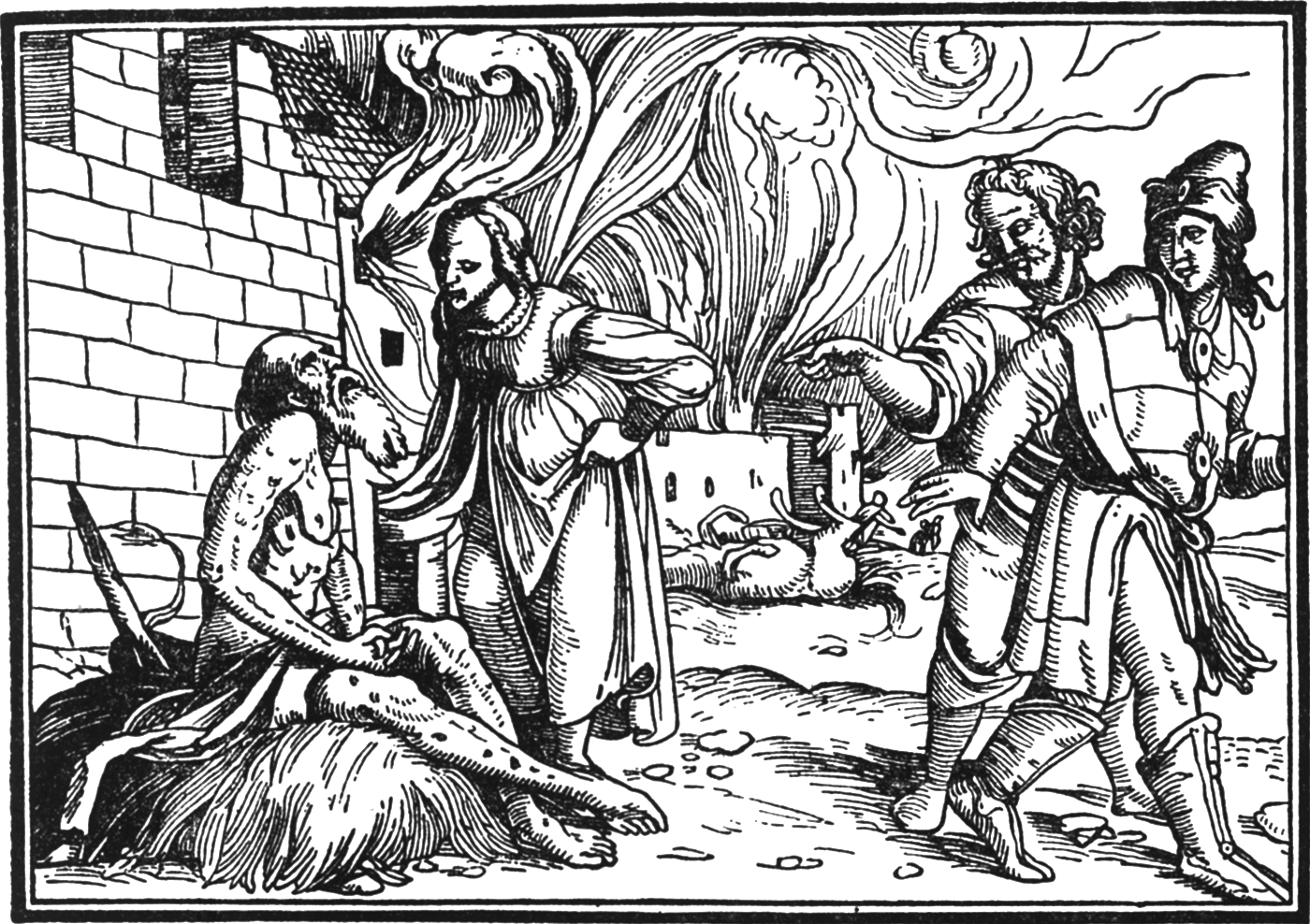
Image: Job Rebuketh His Wife (Job 2:9-10) in Hans Holbein, Holbein’s Bible Woodcuts. Sylvan Press; New York, NY, 1947; 2009.






 Hear what the Spirit is saying