Rest on the Flight into Egypt | Art for Christmas 2A

What happened after the Magi left the Holy Family?

Matthew 2:13 An angel of the Lord appeared to Joseph in a dream and said, “Get up, take the child and his mother, and flee to Egypt…”

Rest on the Flight into Egypt, engraving, c. 1470-75,
Martin Schongauer, 1430 -1491

Commentary by Hovak Najarian

 When Herod learned the “King of the Jews” had been born he was troubled and ordered all males at the age of two and under in Bethlehem and nearby regions, to be killed.  Joseph was warned by an angel about Herod’s plan so “he rose and took the child and his mother by night, and departed to Egypt, and remained there until the death of Herod.” 

 Martin Schongauer’s engraving is based on an account from the non-canonical Gospel of Pseudo Matthew.   It tells of a rest taken while the Holy Family was on their journey.  After three days, Mary was tired, hungry, and thirsty so they rested under a date palm; Mary looked up at the fruit but could see that it was too high to reach.  The baby Jesus said, “O tree, bend thy branches and refresh my mother with thy fruit.”  Schongauer depicts five angels bending the tree, thus allowing Joseph to reach the dates.  Jesus then asked water to flow from the roots of a palm and the family was refreshed. 
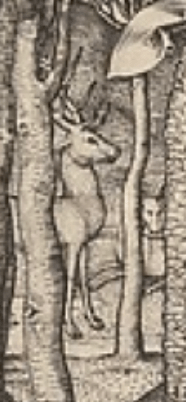
 It was a common practice for artists of this period to include symbolic content in their work.  Some of the flora and fauna in this engraving may seem gratuitous but in its day their meaning would have been understood.  The stag, a symbol for Christ and a destroyer of serpents, is standing watch through the trees in the background.  Stags shed their antlers every year and it was believed they renewed them by drinking from a spring; likewise people who drink from the spring of the spirit shed sins and are renewed.  A dandelion in the foreground on the right is a symbol of Christ’s passion and a reminder of the future that awaits the child.  The lily at the left foreground is a symbol of Mary’s purity, and at the far left is a dragon tree.  When the tree is cut it yields a red resin known as “dragon’s blood.”

 In Schongauer’s engraving, two lizards are on the trunk of the dragon tree and one is approaching it.  The presence of lizards, serpents, and dragons represents the devil and lurking danger.  At the very top of the tree is yet another symbol; a parrot.  Because a parrot has the ability to fly and talk they symbolize a messenger and are associated with the angel that brought word to Mary that she would give birth to Jesus.  In paintings of Mary, a parrot is sometimes placed on her shoulder as though it just arrived and said, “Ave Maria.” When not with Mary, a parrot may be placed high in a tree (as here in the dragon tree) where it cannot be reached by serpents.

More Information

Johannes Guttenberg invented moveable type and printed the Bible not long before Martin Schongauer engraved, “Rest on the Flight into Egypt,” but since most people could not read, art remained an essential means of learning stories of the Bible. During the fifteenth century the range of subjects expanded widely and stories about Mary were enhanced with lore. In addition to events such as the Annunciation and the Nativity, stories based on tradition often were included in illustrations of her life.

Hovak Najarian © 2013, 2020. Post updated 01.02.25
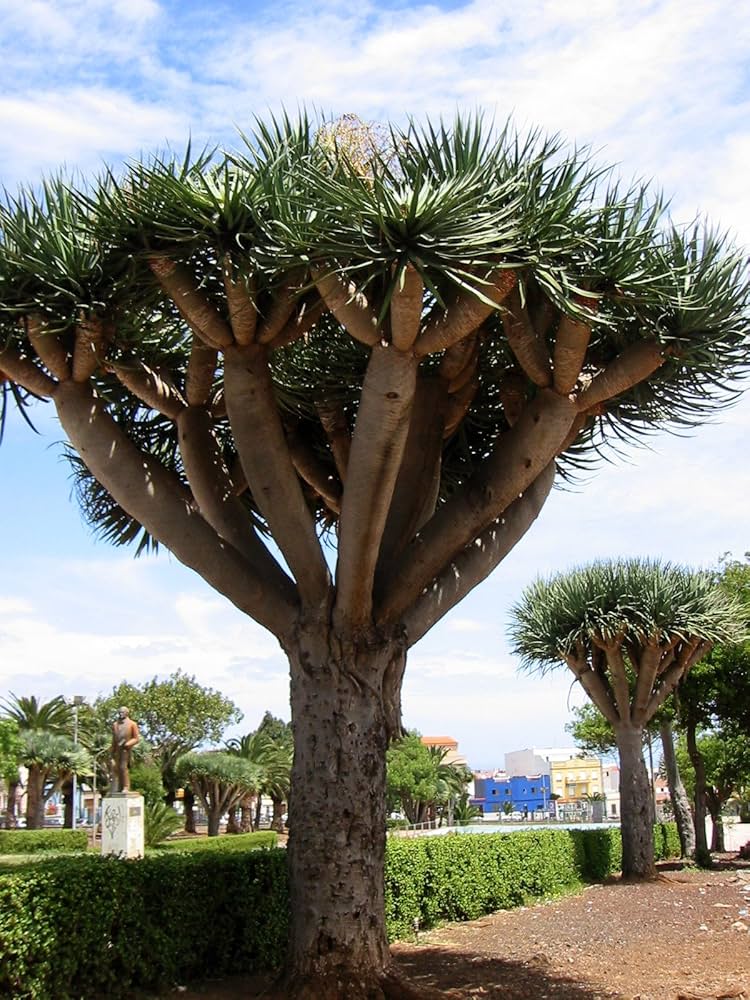

  Dragon trees are native to the Canary Islands.  It is possible that Schongauer saw one in Leipzig where the first botanical garden in Europe was established. 


This scene and folk story from The Gospel of Pseudo-Matthew (scroll down to chap 20) travelled to Europe becoming, with many changes, The Cherry Tree Carol.

The Cherry Tree Carol performed by Joan Baez

This “Art and Commentary” is based on the Gospel [Matthew 2:13-15, 19-23] appointed for the Second Sunday after Christmas, January 5, 2025.   After the wise men left Bethlehem (not reporting back to Herod) an angel appeared to Joseph and told him of Herod’s plan to find and kill Jesus.  Joseph was told to flee to Egypt with Jesus and Mary and not return until told. 

Images
  1. Web Gallery of Art
  2. “Dragon Tree” via Google Image Search
Striving for justice and peace

We post here a letter written by The Most Rev. Alan Vigneron, Archbishop of Detroit to the priests and people of his diocese. We believe it reflects well the baptismal promise made, renewed and lived into by Episcopalians: “Will you strive for justice and peace among all people, and respect the dignity of every human being? … ‘I will with God’s help.'”

“In light of a public proposal put forth recently to restrict the immigration of Muslims into the United States based on their religion, I thought it would be helpful to remind everyone of the Catholic teaching regarding Islam. Fifty years ago, the Fathers of the Second Vatican Council taught that the Catholic Church treats with respect those who practice the religion of Islam. And for these past fifty years, Catholics and Muslims in southeastern Michigan have enjoyed warm relations marked by a spirit of mutual respect and esteem.

Restricting or sacrificing these religious rights and liberties out of fear – instead of defending them and protecting them in the name of mutual respect and justice – is a rationalization which fractures the very foundation of morality on which we stand.

While the Catholic Church refrains from weighing in for or against individual candidates for a particular political office, the Church does and should speak to the morality of this important and far-reaching issue of religious liberty. Especially as our political discourse addresses the very real concerns about the security of our country, our families, and our values, we need to remember that religious rights are a cornerstone of these values. Restricting or sacrificing these religious rights and liberties out of fear – instead of defending them and protecting them in the name of mutual respect and justice – is a rationalization which fractures the very foundation of morality on which we stand. This also threatens the foundation of religious liberty that makes it possible for us to freely practice our faith. These are not only Catholic sentiments on these issues; these, I believe, are the sentiments of all Americans.”

Most Rev. Allen H. Vigneron,
Archbishop of Detroit
December 10, 2015

Few the letter on the Diocesan Website

Detroit archbishop denounces proposals to bar Muslims from U.S. by David Gibson on Religion News Service

A Jubilee of Mercy

A papal embrace on December 8, 2015

Pope Francis launched the jubilee of mercy on Tuesday (Dec. 8) with the opening of the Vatican’s holy door, joined by his predecessor Pope Emeritus Benedict XVI and thousands of pilgrims gathered in St. Peter’s Square, surrounded by heavy security.

“This extraordinary year is itself a gift of grace,” Francis told the faithful gathered at the Vatican. “To pass through the holy door means to rediscover the infinite mercy of the Father who welcomes everyone and goes out personally to encounter each of them.”

Read more on Religion News Service.

Once again we encourage you to read the text of Pope Francis’ declaration—Misericordiae Vultus—that sets out the purpose of the Jubilee of Mercy and invites all Christ-followers to encounter and share God’s mercy and love.

Image: Osservatore Romano/Handout via Reuters via RNS

On the Way: 12/06/15

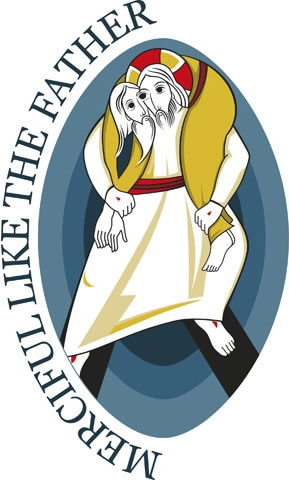
2015 Year of Mercy Logo x289Our weekly newsletter is now available.

Grace and Peace to you.

Two shooters bring death and destruction into a festive gathering just down the road from us. The media whether in print, online, or on the air, seems to need a daily dose of violence and evil to report and dissect in order to sell the products of their sponsors. The Church in its Lectionary readings features texts about the end of time and God’s judgement. Pope Francis will open an “Extraordinary Jubilee of Mercy” (a Holy Year of Mercy) on Tuesday, December 8, 2015 in Rome.

“We need constantly to contemplate the mystery of mercy. It is a wellspring of joy, serenity, and peace. Our salvation depends on it. Mercy: the word reveals the very mystery of the Most Holy Trinity. Mercy: the ultimate and supreme act by which God comes to meet us. Mercy: the fundamental law that dwells in the heart of every person who looks sincerely into the eyes of his brothers and sisters on the path of life. Mercy: the bridge that connects God and man, opening our hearts to the hope of being loved forever despite our sinfulness.” (From the Pope’s proclamation of the Extraordinary Jubilee of Mercy)

What shall be our Way? Pay attention. Prepare to receive the Divine Mercy. Pay attention. Prepare to share the Divine Mercy you know in Jesus Christ.

View the entire Newsletter

Against the brutal urge

butterfly-in-the-hand02a

As day dawns in California details continue to emerge about the brutality of yet another mass shooting in our nation. The lament that this is becoming too “normal” is gaining volume. When will our leaders hear the lament?

Prayers multiply. Action to reign in gun violence by gun control has yet to reach the ‘tipping point’ and yet it is the hope and the work of many more each day: to be the voice, to join the work, that begins to control the proliferation of arms in our neighborhoods and communities; it is the further hope of many to be the voice and join the work of nurturing dignity, respect, and peace in our neighborhoods and communities.

How about you, what do you hear? What is the movement of the Spirit within you?

Here is one Pastor’s Response:

Dearly Beloved,

Grace and Peace to you.

Against the brutal urge
only a mass of gentle people
will be effective.

Against the deep night
which is not bottomless after all
only light will bring release.

Read the entire post on Unfolding Light, the blog of Pastor Steve Garnaas-Holmes. And, listen for the Spirit.

What do you hear?

If you’ve not encountered  (Pastor) Steve Garnaas-Holmes yet, let this be your introduction. Upon hearing these words from Luke…

Prepare the way of the Lord, make a straight path for God. Every valley shall be filled, and every mountain and hill shall be made low, and the crooked shall be made straight, and the rough ways made smooth; and all flesh shall see the salvation of God. —Luke 3.4-6

… Steve heard a prayer and shared it:

God of love, take my heart and change it.

Take what is rough in me and let it become gentle.

Take my fear and let it become wonder.

Read the entire prayer

And you, what do you hear?

Visit Steve’s Blog: Unfolding Light


#Adventword

Here’s a wonderful opportunity to participate with Christ-followers throughout the world in the Season of Advent: http://bit.ly/1l2y51G

Sign up. Partici[ate. Keep learning.

Remembering St. Andrew, November 30th

Every November 30th the Episcopal Church remembers Saint Andrew, Apostle. Here’s a fun look at the history that has made Saint Andrew important to the Scottish people:

Prayers and readings we use on this day


On the Way | 11/29/15

Our weekly newsletter is now available online. Find refreshment and even inspiration along the Way: http://bit.ly/1LFnI8U

Ruth and Naomi | Art for Proper 26B

Ruth 1:16 But Ruth said,
“Do not press me to leave you
or to turn back from following you!
Where you go, I will go;
where you lodge, I will lodge;
your people shall be my people,
and your God my God.

Ruth and Naomi
Ruth and Naomi, Painting, 2001,
He Qi, China,
Oil on canvas, 119 x 146 cm
Vanderbilt Divinity Library, Nashville, TN.
Click image for more information.

______________
Commentary by Hovak Najarian

Ruth and Naomi, 2001, Mixed Media on Paper, He Qi (20th cent.)

The familiar, Moonlight Sonata was not inspired by the moon and Beethoven did not know it by that title. A German critic used that term to describe it a few years after Beethoven’s death. Music is the most abstract of the arts and a title of a piece may be simply something that pops into a person’s thoughts. When Aaron Copland wrote a ballet for Martha Graham, his focus was on composing music; he was not writing a score for a film and did not have a subject in mind. Graham liked the title of Hart Crane’s poem, Appalachian Spring, and decided to make it the title of her ballet. The ballet became widely known and Copland was amused when he would be told his music captured perfectly the image of springtime in the Appalachians. Today, the title of an abstract painting often is intended to provide meaning when none may be found in the work itself.

In the Book of Ruth we read the story of Naomi who left Judah with her husband and two sons and went to Moab. Her two sons married Moabites. Naomi’s husband died while they were there and later her two sons died as well. She told her daughters-in-law of her plan to return to Judah and tried to convince them to remain in Moab and possibly remarry. Ruth, one of the daughters-in-law, clung to Naomi and begged to go to Judah with her. In this touching moment Ruth said to Naomi: “Entreat me not to leave you…for where you go I will go, and where you lodge, I will lodge, your people shall be my people and your God my God;” (Ruth 1:16).

None of the emotional content found in the story of Ruth and Naomi is seen in He Qi’s painting. Even to believe two women are being depicted depends entirely on the acceptance of its title. This subject is treated usually as two women embracing and we may assume this is what He Qi had in mind as well. If the title were not provided the painting could be interpreted easily as two figures dancing; possibly doing a tango or the west coast swing. As with music, an abstraction in art may be called anything.

To a person unfamiliar with art, He Qi’s painting may seem “modern” but it is related in form to the work done by French Cubists and German Expressionists during the early years of the twentieth century. In Ruth and Naomi there is a big dose of mid-twentieth century grade school cliché as well. A popular art assignment in the 1950s was to ask a child to fill a sheet of paper with curvilinear lines; then the shapes formed by the overlapping lines were filled in with different colors; He Qi follows this formula. His “Ruth and Naomi” may delight people enamored with bright colors but it lacks both originality and substance. Perhaps a painting can never depict fully the emotions being experienced in this heartwarming biblical story but treating it as an abstraction and giving it a title avoids the problem entirely.

Note

Modern art is a term applied to work that emerged in the late nineteenth century and continued until the 1960s – 1970s. Although styles that came out of modernism are now somewhat passé, they tend to appeal to artists who are self-consciously trying to be forward thinking and yet seem to be unaware that art of the last century no longer represents the avant-garde.

______________

© 2012 Hovak Najarian