The Rutter Requiem and Why It’s Awesome. Yes, I Use the Word “Awesome” Too Much, but It Totally Applies Here.

If you grew up Episcopalian or Catholic (I didn’t), you probably have a head start on all this “requiem” business, but if you’re still catching up (like me), here’s a synopsis: The requiem began as a type of mass to honor the dead. Traditionally, there are twelve parts to the requiem, beginning with the Introit and ending with the In paradisum. However, as composers began to play with the format, they began to see it more as an art form and less as a rigid liturgy. The Rutter Requiem, for example, has only seven movements. The Duruflé has nine, the Mozart seven-ish, and so on. Anyway, more on those later.

So growing up, I’d never heard of the Rutter Requiem. When I finally did, I was about nineteen, thinking that I knew oh-so-much about music (for the record, I didn’t…and still don’t!). I was given the chance to sing the second movement, “Out of the Deep” with a choir at a conference. Long story short, I’d never heard music like that before, and I couldn’t wait to find a way to hear the rest of the Requiem. I mean, I was hooked. It changed how I felt about sacred music in general. Fast forward about seven years, and I still love this work so much and could pretty much never get tired of it.

I’m not going to ramble with biographical info about John Rutter or even with more info about the Requiem itself. You can get all that stuff with a quick Google search. What I’m going to do is much more important–

Requiem aeternam
Out of the Deep (My favorite. Has been referred to as “Anglican blues.” Ahhhhh.)
Pie Jesu
Sanctus
Agnus Dei (My other favorite.)
The Lord is My Shepherd (My last favorite. Yes, I have three favorites.)
Lux aeterna

I hope you love it like I do. More requiem fun to follow.

So what do you think? Does this speak to you? It’s much more moving to hear it in person, of course, but even the recording is still pretty great. Do you have favorite movements? Favorite masses? Let’s chat it up in the comments!

Dream Vision, Albrecht Dürer, August 5


 DÜRER, Albrecht
(b. 1471, Nürnberg, d. 1528, Nürnberg)
Click to open Web Gallery of Art Artist Biography and to explore other works by this artist.

Dream Vision
1525
Watercolour on paper, 30 x 43 cm
Kunsthistorisches Museum, Vienna
Click to open Web Gallery of Art display page.
 Click on their image to enlarge/fit page etc.

 While Dürer is well known for his woodcuts and naturalistic watercolor I thought this work particularly interesting because of our recent class discussion of dreams and because it’s not that often we have the artists explanation with the painting.

The Isenheim Altarpiece, Matthias Grünewald, August 5


 GRÜNEWALD, Matthias
(b. 1470/80, Würzburg, d. 1528, Halle)
Click to open Web Gallery of Art Artist Biography and to explore other works by this artist.

The Resurrection (detail) Isenheim Altarpiece
c. 1515
Oil on wood
Musée d’Unterlinden, Colmar
Click to open Web Gallery of Art display page.
 Click on their image to enlarge/fit page etc.


This work of the Resurrection is my personal favorite but it is part of an intricate assembly in The Isenheim Altarpiece. Click here for several pages exploring the entire work.

A Proper 14 Art for Readings August 7, 2011


 BORRASSA, Lluis
(b. ca. 1360, Gerona, d. 1425, Barcelona)
Click to open Web Gallery of Art Artist Biography and to explore other works by this artist.

St Peter is Walking on the Water
1411-13
Tempera on wood, 102 x 65 cm
Sant Pere, Terrasa
Click to open Web Gallery of Art display page.
 Click on their image to enlage/fit page etc.

Reflection on Purcell, Handel, and Bach

Over the last few days, we’ve looked at the lives of Henry Purcell, George Frederic Handel, and Johann Sebastian Bach. We’ve talked about their education and about their compositional styles and about what they’re known for in the church. What we haven’t talked about is why they should matter to us.

For me, it’s pretty simple. Traditional sacred music presents us with an opportunity to be connected with history and to collectively make art. Music is dependent upon performers, so whether or not we are the “best” musicians, we get to take part in this historic ritual together. Whether it’s Purcell, Handel, Bach, Mendelssohn, Fanny Crosby, or John Rutter, sacred music is timeless. Bach’s message from 1723 is, I think, the same message that we believe today.

Though we can enjoy sacred music and be inspired by it, we can also create it together for God’s enjoyment. Choral and congregational singing is an incredible tradition God has given us, and it provides us with an opportunity to be connected to the composer, to each other, and–hopefully–to God.

Almighty God, beautiful in majesty and majestic in holiness, who teaches us in Holy Scripture to sing your praises and who gave your musicians Johann Sebastian Bach, George Frederic Handel, and Henry Purcell grace to show forth your glory in their music: Be with all those who write or make music for your people, that we on earth may glimpse your beauty and know the inexhaustible riches of your new creation in Jesus Christ our Savior; who lives and reigns with you and the Holy Spirit, one God, for ever and ever. Amen.–Collect for Feast of Bach, Handel, and Purcell, July 28

So what have I missed? How does sacred music affect you? Do you tend to prefer traditional hymns or larger works like the ones we’ve heard from Purcell, Handel, and Bach? Do you prefer participating in these works through performing or through listening? (Both are equally important!)

Johann Sebastian Bach (1685-1750)

I cannot begin to state  how nervous I am to write about Bach. He is so important to church music, and his body of work is so vast that I’m sure I’m going to leave something out. Please feel free to correct or add on in the comments!

Deep breath….

Here we go.

Born into a musical family, Bach began his training with his father and his older brother. He played both violin and organ, but his primary interest was in composition. Like many composers, he learned composition by studying or arranging works by other composers. In doing so, he became well versed in French, German, Austrian, and Italian styles. Bach held a number of positions over the course of his career–organist at Arnstadt (1703-1707), organist at Muehlhausen (1707-1708), court organist and concertmaster for the duke of Weimar (1708-1717), and music director at a court in Coethen (1717-1723). He finally settled in Leipzig in 1723 where he served as “Cantor of St. Thomas and Director of Music in Leipzig” at St. Thomas’s School.

[Here I will greatly simplify Bach’s work so that I don’t go on and on and on about preludes, fugues, toccatas, and whatnot.] Bach wrote many works for harpsichord and organ. He also wrote for violin, cello, various combinations of chamber ensemble, and voice. In A History of Western Music, Donald Grout explains that Bach wrote in “all the genres practiced in his time with the exception of opera.”(1)

In church, we know Bach largely for his choral anthems, but he also wrote cantatas (both sacred and secular), motets, two Passions (St Matthew and St John) and the Mass in B Minor. During his lifetime, he was respected, but not overly popular. His potential fame was eclipsed by many of his contemporaries, and due to rapidly changing trends in music, much of his work fell into obscurity until the 1800s.

Bach was a profoundly religious person, and the letters “SGD,” standing for “Soli Deo Gloria” or “to the glory of God alone” can be found on many of his manuscripts. Gerhard Herz writes,

That Bach was a Christian has never been doubted. Yet he was not, as many writers have pointed out, a Christian who lived apart from his time, but one who in every respect lived and remained within the social and religious boundaries of his century. Bach’s personality and creations, which today move us chiefly aesthetically and emotionally, are deeply rooted in the ethos of the old Lutheran church.(2)

Grout writes,

Among the qualities that account for the continuing vitality of [Bach’s] music are his concentrated and distinctive themes, his copious musical invention, the balance he struck between harmonic and contrapuntal forces, the strong rhythmic drive, clarity of form, grand proportions, imaginative use of pictorial and symbolic figures, intensity of expression always controlled by a ruling architectural idea, and technical perfection of every detail.(3)

St Matthew Passion–“Kommt, ihr Tochter, helft mir klagen” —
(Wiki page about St Matthew Passion)

St John Passion–“Ruht wohl ihr heiligen Gebeine“–
(Wiki page about St John Passion)

Mass in B MinorDona Nobis Pacem

Mass in B Minor–Osanna in excelsis

Jesu, meine Freude (Jesus, my joy)

Herz und Mund und Tat und Leben (Heart and mouth and deed and life)

Everyone’s favorite wedding song (next to “Canon in D”)

There are so many great recordings of Bach, so if you feel up to it, do a little digging on YouTube or iTunes. I’ve only included choral arrangements, but there are many instrumental and solo works that are equally important.

Fun fact: The “BWV” that you see on the videos stands for “Bach-Werke-Verzeichnis” (Bach Works Catalogue), and it was developed by Wolfgang Schmieder in 1950 to help us keep track of Bach’s works. This is common for composers with a large output. For example, Mozart’s works are organized by “K” number because that system was developed by Ludwig von Koechel. Similar systems exist for Schubert, Handel, Wagner, and many other composers.

So, what are your thoughts on Bach? Love him? Hate him? Let’s discuss!

Resources:
1. Grout, Donald Jay and Claude Palisca. A History of Western Music. London: W.W. Norton & Co., 2001.
2. Herz, Gerhard. “Bach’s Religion,” Journal of Renaissance and Baroque Music. Vol. 1, No. 2 (Jun., 1946), pp. 124-138.
3. Grout, Donald Jay and Claude Palisca. A History of Western Music.
George Frederic Handel (1685-1759)

George Frederic Handel was born in Halle, Germany in 1685. Though there were no musicians in his family, his father recognized his talent and allowed him to study composition, organ, harpsichord, violin, and oboe with composer Friedrich Wilhelm Zachow. At an early age, he had a strong grasp of counterpoint and of Italian and German compositional tradition. In 1702, he began attending the University of Halle, and he soon began working as a cathedral organist. He spent much of his childhood education training to be a cathedral cantor, yet in 1703, he moved to Hamburg and began to focus on composing operas.

Handel frequently traveled to and from German, Italian, and English-speaking countries. From 1706-1710, he lived in Italy, studying Italian opera. He also spent a great deal of time in England developing oratorios and concertos. Over the course of his career, he wrote operas, concertos, oratorios, cantatas, suites, and sonatas. Unlike many composers who only achieved renown posthumously, Handel was beloved throughout much of his career.

Within the church, Handel is probably best known for his oratorios–Saul, Messiah, Israel in Egypt, Judas Maccabaeus, Joshua, and so on. Without  a doubt, his greatest contribution to the development of the oratorio was the use of the chorus. He borrowed from the Lutheran and south German traditions but relied heavily on the English forms as well. In A History of Western Music, Donald Grout writes, “The monumental character of Handel’s choral style fits the oratorio’s emphasis on communal rather than individual expression.”(1) Handel also found ways to illustrate the text of an oratorio through devices such as word-painting (using a musical figure to illustrate what the words are saying).

There is so much more about Handel that can be said in one blog post. His compositional expertise has provided the church, the orchestra, and the opera stage a vast and much-loved body of work.

I’ll give Donald Grout the last word:

Handel’s historical significance rests largely on his contribution to the living repertory of performed music. His music aged well because he adopted the devices that became important in the new style of the mid-eighteenth century. Handel’s emphasis on melody and harmony, as compared to the more strictly contrapuntal procedures of Bach, allied him with the fashions of his time. As a choral composer…he had no peer. He was a consummate master of contrast, not only in choral music but in all types of compositions. In the oratorios he deliberately appealed to a middle-class audience, recognizing social changes that would have far-reaching effects on music.(2)

Messiah–“Every valley shall be exalted

Messiah–“There were shepherds abiding” (This recording is a little old, but it’s Robert Shaw conducting the Atlanta Symphony, so I had to include it!)

Israel in Egypt–“The people shall hear and be afraid

Israel in Egypt–“The Lord shall reign for ever and ever

Judas Maccabaeus–“See the conquering hero comes” (Sound familiar? It was later adapted to form the hymn “Thine be the Glory, Risen Conquering Son.”)

There are so many more on YouTube and iTunes, so feel free to keep listening!

One of the great things about Handel’s music is that many people find it (or at least Messiah) familiar. Many community choirs perform his oratorios, and churches will often host Messiah “sing alongs” around Christmas. There’s something about his music that makes you want to be part of it rather than just listening. (Or maybe that’s just me–is it just me?)

We often relegate Handel to Christmas and Easter. Would you like to hear him more year-round, or do you think that only hearing his works every so often makes the experience more special? What are some of your favorite works by Handel? I’d love to hear your thoughts!

Resources:
1. Grout, Donald Jay and Claude V. Palisca. A History of Western Music. London: W.W. Norton and Company, 2001.
2. Ibid.

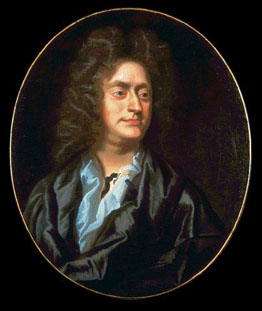
Henry Purcell (1659-1695)

https://i0.wp.com/www.nndb.com/people/352/000093073/henry-purcell-1-sized.jpg

When I saw that Purcell was included among the ranks of Bach and Handel, I was initially surprised. When I think of Purcell, I think almost exclusively of baroque opera–specifically Dido and Aeneas. (Side note: Check out Jessye Norman singing “Dido’s Lament” here. Among most singers, I’d say this is what Purcell is best known for.) However, he did write a number of choral anthems that are still often sung in churches and university choirs.

Born in England and trained in the choir of the Chapel Royal, Purcell began serving as composer-in-ordinary to the King in 1677 and organist to Westminster Abbey in 1679. During his time as composer-in-ordinary, he composed operas (all “semi-operas” except for Dido), anthems and birthday odes for Charles II, James II, and William and Mary. In 1690, he began writing theatrical music full-time.

Over the course of his career, he wrote an opera (in which the music is continuous) and several semi-operas (in which the music is not continuous), music for plays, single songs, and various types of church anthems. He was a trained singer (countertenor) and is known for his exquisite and intuitive setting of text. Of Purcell’s text setting, Carol Kimball writes, “He is considered unsurpassed in setting the English language; his music has an unerring sense for depicting human emotions in a real and touching dramatic way, unparalleled for that time and rarely equalled since.”(1)  H. Wendell Howard writes, “Purcell is to English sung what Shakespeare is to English spoken.”(2)

Throughout his short life, Purcell was loved and respected as a composer. His contemporary Thomas Tudway described him as “…the greatest Genius we ever had.”(3)  Purcell died of unknown causes in 1695 (though most people speculate tuberculosis) and was buried at Westminster Abbey.

I’ll be honest–for a long time, I found Purcell…underwhelming. It all sounded the same–pretty, but repetitive. I really didn’t know what to listen for, but now I believe that part of the reason he is so repetitive is because he sets such poignant texts. (It’s also partly because of the Baroque style, but that’s a whole other post…) Take, for example, “Hear my prayer, O Lord.” The text is based on Psalm 102: 1, and it states, simply, “Hear my prayer, O Lord, and let my cry come unto thee.” Through the use of both repetition and dissonance between the voices, Purcell builds tension, causing us to empathize with the plea of the Psalmist. Studying Purcell helped me to understand that good composers don’t just repeat things for the heck of it; they repeat things to cause you to feel and to understand the text.

There is so much of Purcell, both sacred and secular, that is worth listening to, but for the purposes of this post, I’m sticking to sacred texts.

“Rejoice in the Lord alway”

“Blessed is he that considereth the poor” 

“Remember not, Lord, our offences”

O God, Thou art my God

“Hear my prayer, O Lord”
(Having sung this one before, I can say that it is my favorite by far.)


So…what are your thoughts? Have you heard a lot of Purcell before? If not, what are your initial impressions? Do you find it easy to worship with this type of music, or do you find it distracting? Please do share!


Bonus: This has nothing to do with Purcell, but I came across it while looking for the Jessye Norman video. Who can resist a Jessye Norman/Kathleen Battle duet?
“He’s Got the Whole World in His Hands”


Resources:
1. Kimball, Carol. Song: A Guide to Art Song Style and Literature. Milwaukee: Hal Leonard, 2006. 357.

2. Howard, Wendell H., cited in Carol Kimball’s Song: A Guide to Art Song Style and Literature.

3. Tuppen, Sandra. The Purcell Society, “Biography of Henry Purcell.” http://www.henrypurcell.org.uk/purcell_biography.html. Accessed July 26, 2011.


Purcell and Handel and Bach!

The Episcopal church has named July 28 as a day to remember three composers who were influential in the development of Western church music (and Western music in general)–Henry Purcell (1659-1695), George Frederic Handel (1685-1759), and Johann Sebastian Bach (1685-1750).

Over the next few days, I’ll be reflecting a bit on who these men were, how they studied, where they lived, what their music is like, and why it is important. I look forward to the potential for a discussion regarding your feelings on their work, how it has or hasn’t affected you, and whether you’d like to hear more or less of it in church today.

Here’s some listening to get us all started:

Purcell–“Hear My Prayer, O Lord”

Handel–“Rejoice” from Messiah

Bach–“Herr unser Herrscher” from St John Passion
(If you hit the “show more” button below the video, you can read the English translation.)

Enjoy!

A Proper 13 Art for Readings July 31, 2011


 SOGLIANI, Giovanni Antonio
(b. 1492, Firenze, d. 1544, Firenze)
Click to open Web Gallery of Art Artist Biography and to explore other works by this artist.

Multiplication of the Loaves and Fishes
1536
Drawing, black chalk and white on prepared paper, 217 x 335 mm
Galleria degli Uffizi, Florence
Click to open Web Gallery of Art display page, and an interesting comment for why this design was rejected.
 Click on their image to enlarge/fit page etc.


Design rejected for the Convent of San Marco, Florence. Click to see the finished work accepted by the order.
 Click on their image to enlage/fit page etc.


Click here and scroll down to the 9th paragraph For Vasari’s account of the painting of the fresco for the Convent of San Marco, Florence.