Archaeologist Says the Bible’s King Hezekiah Is Real

An interesting read for those whose study of the Bible includes the archeology of the ancient world, modern archeological science and methods, and current politics. Read the entire essay as you “keep learning”

From the Daily Beast, 12/03/15:

A recent find from Israel
A clay imprint, known as a bulla, which was unearthed from excavations near Jerusalem’s Old City

Israeli archeologists have discovered a mark from a seal of the biblical King Hezekiah—and the discovery is being touted in some circles as proof of the authenticity of the biblical record.

The small circular inscription was found as part of excavations of a refuse dump at the foot of the southern wall that surrounds Jerusalem’s Old City. The clay imprint, known to archeologists as a bulla, contains ancient Hebrew script and a symbol of a two-winged sun.

In the end, the discovery of the bulla may tell us as much about the politics of the present as it does the archeology of the past.

According to the Bible, Hezekiah ruled around 700 B.C. and, along with King Josiah, was one of the few good kings dedicated to eliminating idolatry. 2 Kings 18:5 implies that he was without equal: “there was no one like him among all the kings of Judah, either before him or after him.”
Read the entire essay here


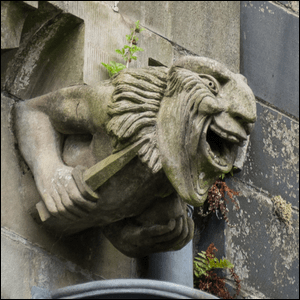
The Most Critical Feature Of A Gargoyle Is That It Is?

Think you know the answer? Click through to see if you’re right!

Source: The Most Critical Feature Of A Gargoyle Is That It Is?

What a homeless man taught me on Christmas morning

The original post appeared on The Messy Middle, January 4, 2017

When we truly “seek and serve Christ in all persons,” (see the Book of Common Prayer, 305) when we behave in a way that reveals we truly “love our neighbor as ourselves,” we open ourselves to the Christ meeting us and teaching us in ways we never expected. This is a story to make that point for you and me.

Continue reading “What a homeless man taught me on Christmas morning”

Some Epiphany Customs

A man dressed as one of the Three Kings greets people during the Epiphany parade in Gijon, Spain, on Jan. 5, 2017. Photo courtesy of Reuters/Eloy Alonso

A baby in the cake, shoes left out for candy (or coal), a polar bear dip to retrieve a cross: these are a few of the customs explained in a Religion News Service (RNS) “‘Splainer.” Epiphany was celebrated on January 6th, but the RNS post “What is Epiphany?” is still timely. Enjoy the read.

You thought the holidays were over. Technically, no — not until Jan. 6, when Christians all over the world celebrate Epiphany. In some places, the day is known as “Three Kings Day” after the wise men, or Magi, who, the Bible says, brought the infant gifts and proclaimed him the Son of God. In other places, the day is known for giving gifts, for extremely cold baths and for biting into babies. Let us ’splain …

Read “What is Epiphany?” on RNS

Photo from the RNS article

Why Did the Magi Bring Gold, Frankincense and Myrrh?

January 6th is the Feast of the Epiphany in the Episcopal Church. Often we read the account of the Magi offering the baby Jesus gold, frankincense, and myrrh. There is a long history of exploring the meaning of these gifts. The link (below) will give you one insight.

“Were the gifts of the magi meant to save Jesus from the pain of arthritis? It’s possible, according to researchers at Cardiff University in Wales who have been studying the medical uses of frankincense.”

Find out. Read more:  Why Did the Magi Bring Gold, Frankincense and Myrrh? – Biblical Archaeology Society

Why I have hope for 2017 | ACNS

The Rev. Dr. Rachel Marsh

In a blog post for the Anglican Communion News Service (ACNS) the Rev. Dr. Rachel Marsh sets out “four things” that give her hope in 2017. I’m with her in being filled with hope; I especially liked “thing” #3. ~Fr. Dan

Was 2016 the year that fear and hatred won? Looking to the future, many people are filled with concern, particularly about the environment – a cause close to my heart. … We feel powerless – powerless to stop governments who say climate change is a myth; powerless to stop its impact on the most vulnerable.

And yet, we are people of faith. What is faith? It is the confident assurance that something we want is going to happen. It is the certainty that what we hope for is waiting for us, even though we cannot see it up ahead. (Hebrews 11:1 Living Bible). We know what we want to happen. How can we be assured it will happen?

Here are four things that give me hope for 2017.

Read for yourself the four things that give Rev. Marsh hope.


Shaker group founded in 1783 has just two members after Maine woman dies

This report comes from the Religion News Service and the Guardian. The Shakers have a place and calling within our Christian history. I marvel at the ways God calls us and enriches our life together. ~Fr. Dan

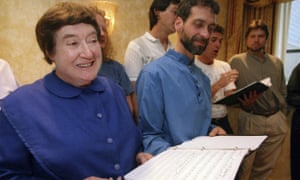
Sister Frances Carr, one of the last remaining members of the nearly extinct religious society called the Shakers, has died. She was 89.

Carr died Monday surrounded by family and friends in the dwelling house at the Shaker community at Sabbathday Lake in New Gloucester, Maine after a brief battle with cancer, said Brother Arnold Hadd, one of the group’s two remaining members.

“She had a death with dignity and love,” Hadd said Tuesday. “She was surrounded by love, tears and a lot of Shaker songs.”

Source: Shaker group founded in 1783 has just two members after Maine woman dies | US news | The Guardian

Creating a Covenant Resolution

Mosaic of the Baptism of the LordThe Episcopal Diocese of Minnesota (Bishop’s Blog) posted a short meditation on entering the new year with the Season of Epiphany on our hearts and shaping our determination to be a follower (and a revealer) of Christ.

… what it would be like to merge our New Year’s resolutions with the Season of Epiphany. What if our New Year’s resolutions were to know and make known Christ in all things? Here’s what I think it would look like: Read the resolutions put forward for consideration

Source: Creating a Covenant Resolution – Bishop’s Blog

Image: Art in the Christian Tradition (Vanderbilt Library)

On Prayer and the New Year

As the new year approaches and many people think about new years resolutions, I would like to suggest one: reading written prayers.
I am not suggesting that one replace his whole prayer time with reading prayers or that he give up spontaneous praying in favor of reading prayers, but that he add to those disciplines the practice of reading prayers written by others. I suggest this resolution for the following reasons.

Written from an “evangelical perspective” the suggestion is relevant to all who wish to deepen their life of prayer in 2017. Read the entire post by Taylor Drummond on The Chorus in the Chaos Blog (Patheos).


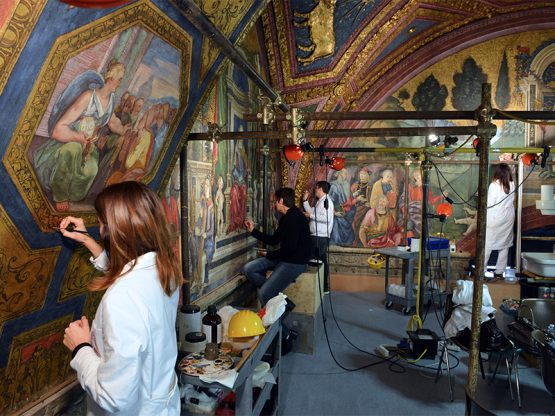
Vatican restoration uncovers work of Renaissance master

Art restorers recover the 500-year old apartments of Pope Alexander VI, bringing new life to the works of the Renaissance artist “Pinturicchio.” The restoration brings attention not only to the masterful frescoes but also to the the story of the controversial pope who commissioned them, Rodrigo Borgia.

Source: Vatican restoration uncovers work of Renaissance master on Crux