Surely He took up our pain and bore our suffering…He was pierced for our transgressions and crushed for our inequities; the punishment that brought us peace was on Him, and by His wounds, we are healed. Isaiah 53:4-5
Items of General Interest about liturgy, the liturgical calendar, church customs and culture, our unique “Episcopal vocabulary,” the intersection of faith and culture, and all other items not fitting into the other categories (or fitting into multiple categories).
Surely He took up our pain and bore our suffering…He was pierced for our transgressions and crushed for our inequities; the punishment that brought us peace was on Him, and by His wounds, we are healed. Isaiah 53:4-5
O God, Creator of heaven and earth: Grant that, as the crucified body of your dear Son was laid in the tomb and rested on this holy Sabbath,
so we may await with him the coming of the third day,
and rise with him to newness of life;
who now lives and reigns with you and the Holy Spirit,
one God, for ever and ever. Amen.
 The chimes are still today. But the silence is filled with meaning and even hope. What do you hear? Please leave a comment.
“A new command I give you: Love one another. As I have loved you, so you must love one another. By this, everyone will know that you are my disciples, if you love one another.” John 13:34-35
In keeping with the Chimes’ song of water today, it’s fitting to share this piece. I wish so badly that I could find a clearer recording of it, but even in this recording, you can easily hear the water themes. The piece alternates between the refrains of “Wade in the water” and “God’s gonna trouble the water,” at times imitating a babbling brook, rising and falling waves, and ending as a roaring, raging river.
There is not enough space here to devote to composer Margaret Bonds (1913-1972), but she was a true groundbreaker. As an African-American female, she defied the odds by pursuing classical training in an era where formal music education was available to neither African-Americans nor women. She is known for her collaborations with poet Langston Hughes and soprano Leontyne Price and for her compositions which blended the Negro spiritual with European compositional traditions.
I continue to pray for those who lack water, both physically and spiritually. May we all be used to help quench their thirsts.
More on Margaret Bonds:
http://www.npr.org/blogs/deceptivecadence/2013/03/03/173276882/at-100-composer-margaret-bonds-remains-a-great-exception
http://www.classicalarchives.com/composer/11598.html#tvf=tracks&tv=about

Water: we all need it, we all depend on it. Today, take a moment to think about the gift of water in your life. Take a moment to understand that a brother or sister you may never meet could really use your help in obtaining clean water. It is World Water Day.
Here are 2 videos to help you think about water and how you can make a difference:
Water. Water. Water. Please? That is what the chimes sound like today.
What do you hear? Please leave a comment.
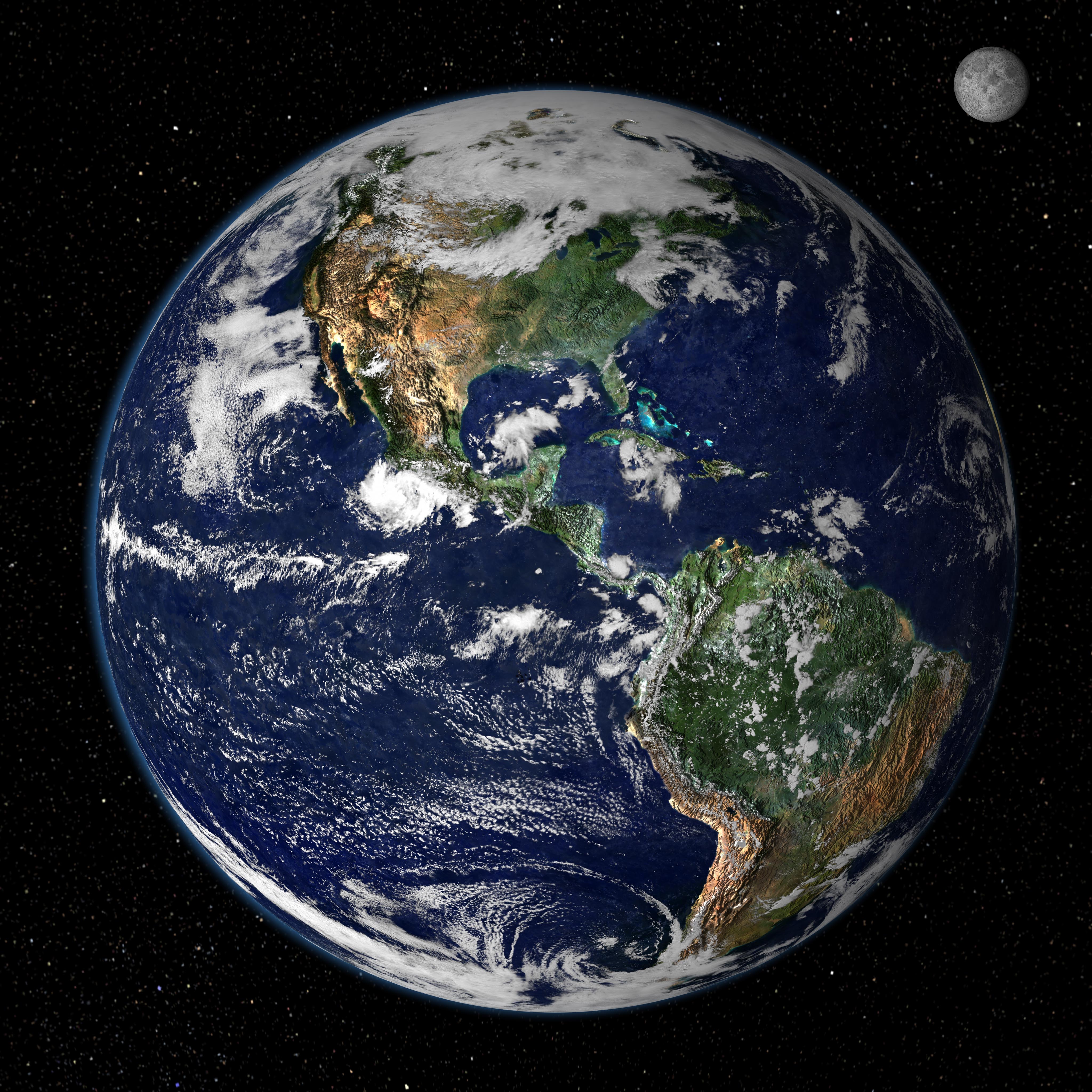
being a protector … means protecting all creation, the beauty of the created world … It means respecting each of God’s creatures and respecting the environment in which we live. –Francis, Bishop of Rome
Today at a Mass celebrating the start of his ministry as Pope Francis I, the new pope addressed those gathered with words remembering St. Joseph as a ‘protector’ of Jesus and Mary (and in later centuries, a protector of the Church). These words especially give me hope:
The vocation of being a “protector”, however, is not just something involving us Christians alone; it also has a prior dimension which is simply human, involving everyone. It means protecting all creation, the beauty of the created world, as the Book of Genesis tells us and as Saint Francis of Assisi showed us. It means respecting each of God’s creatures and respecting the environment in which we live. It means protecting people, showing loving concern for each and every person, especially children, the elderly, those in need, who are often the last we think about. It means caring for one another in our families: husbands and wives first protect one another, and then, as parents, they care for their children, and children themselves, in time, protect their parents. It means building sincere friendships in which we protect one another in trust, respect, and goodness. In the end, everything has been entrusted to our protection, and all of us are responsible for it. Be protectors of God’s gifts!
The entire homily (translated) is here: The real power of the pope is to serve the most vulnerable in La Stampa (an Italian newspaper).
The chimes sound both tender and strong today.
What do you hear? Please leave a comment.
The debate about free will and predestination is sometimes our discussion in the Sunday Morning Forum. Episcopalians tend to come into the church from a variety of Christian traditions which often provides lively discussion. The faith formation of our childhood and teen years really is “bone deep.” As adults we revisit and even question what we learned as children. Privileged to share in a group that cares, the questions and conversations invite all to keep learning.
This short essay in Religion News Service expresses the question in its basic form and the answer most of us are living with as Episcopalians: Father knows best: How do free will and predestination coincide? by Martin Elfert. Martin begins his essay with this question, “How do free will and predestination coexist?” posed by Free—or not so much (FONSM).
I encourage you to read the essay.
The sounds from the chimes seem to be asking a question today.
What do you hear? Please leave a comment.
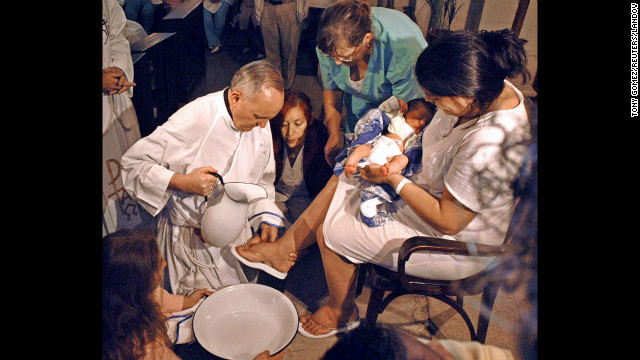
In my lifetime this has been the official position of the Roman Catholic Church. What is new is that these are the unscripted words of a pope who has cooked his own meals, rode the bus to work, and walked in the slums of Buenos Aires. Perhaps the way the teaching of the Roman Catholic Church is daily lived by its pope is about to change.
Read how Pope Francis came to choose his name, and what others things he shared with journalists today (3/16/13) in Rome: How I would like a church that is poor, and for the poor by John Thavis on his blog.
Simple sounds, gentle sounds are coming from the chimes today.
What do you hear? Please leave a comment.

Thomas Reese (a Jesuit priest and Vatican observer) begins his short article in the National Catholic Reporter this way, “In picking the name Francis, the new pope sent his first message to the world, but what is that message? Four possibilities come to mind, and perhaps they are all true.”
He then describes the possibilities:
He concludes, “Yes, there is a lot to learn from a name.”
You’ll want to read his fuller description of each of these possibilities: Francis: What is in a Name? in the National Catholic Reporter. You will have much to think about; I know I did.
Do the chimes sing of hope and possibility today? What do you hear? Please leave a comment.
Photo: REUTERS/Alessandro Bianchi
 As the conclave to elect a pope begins …
Today (3/12/13) 115 Roman Catholic Cardinals will share the Eucharist in St. Peter’s Basilica at 10am CET. At 3:45pm CET the cardinals will file into the Sistine Chapel; shortly after they are seated those who processed with them will then be ordered out and the cardinals will begin their work to elect the next pope. Around 7pm the results of the first (and only) ballot of this day will be made known to the public via the black or white smoke leaving the chimney atop the Sistine Chapel.
This is an important election for all Christians, not just Roman Catholics. The man who becomes pope and leads the 1.2 billion Roman Catholics worldwide will influence, for better or worse, the work of all Christians. Please join me in praying for the cardinals as they work to elect a pope, and please pray for the man who is soon to be elected. May God be glorified in the work of electing and in the man who becomes pope; may the nurture and welfare of all God’s people and, indeed, all of God’s creation be a joyful ministry of the new pope.
To see a virtual tour of the Sistine Chapel click here. This is where the cardinals will meet and pray and elect the next pope.
We know “the wind blows where it will” and the sound in the chimes defies prediction. How like the Spirit this is. What do you hear? Please leave a comment.
 Hear what the Spirit is saying