Pour into our hearts such love …

Wind in the Chimes: Letting our collective prayer interrogate and inspire us.

The Collect for the Sixth Sunday of Easter

O God, you have prepared for those who love you such good things as surpass our understanding: Pour into our hearts such love towards you, that we, loving you in all things and above all things, may obtain your promises, which exceed all that we can desire; through Jesus Christ our Lord, who lives and reigns with you and the Holy Spirit, one God, for ever and ever. Amen.

The Book of Common Prayer, 225

A few questions from our prayer

I invite you to read through this prayer and then use these prompts as you ponder, contemplate, or journal. Please let the beauty and power of our common prayer be nourishment and refreshment along the Way.

O God, you have prepared for those who love you such good things as surpass our understanding: 

  • What evidence do you have that this is true, a trustworthy statement? From your life experiences, name some of those who have trusted this statement and share that trust with you.

Pour into our hearts such love towards you, …  

  • “Pour into our hearts…” How many ways could God (who is love, 1 John 4:8) do this pouring? How many ways has love towards God filled your heart?

that we, loving you in all things and above all things,

  • Describe the challenges of living like this.

may obtain your promises, which exceed all that we can desire;

  • What “promises” (from God) do you most cherish? Most desire to be fulfilled? What promises arouse the most curiosity in you? Why do you suppose our prayer uses a plural (promises) form?

through Jesus Christ our Lord, who lives and reigns with you and the Holy Spirit, one God, for ever and ever. Amen.

  • As disciples of Christ, as believers, we trust that “Christian prayer is [a] response to God the Father, through Jesus Christ, in the power of the Holy Spirit.” from The Book of Common Prayer, p. 836

More

  • The Collect: an Anglican/Episcopal Treasure. From the “Foreward” to The Collects of Thomas Cranmer edited by C. Frederick Barbee and Paul F. M. Zahl. This essay provides historical and liturgical background to this type of liturgical prayer.
  • A Pattern for Prayer by John D. Witvliet posted on Religion Online. The author believes the study of ancient liturgical materials facilitates special insight.  He discusses at length the understanding which lies in the structures and patterns of early collects and similar prayers, for preparing such prayers challenges us to draw on nearly the whole range of theological themes and motifs.

About Wind in the Chimes

Wind in the Chimes (renaming and reintroduction of Wind Chimes, 7/21/20)

Wind Chimes: September 25 2012 (an introduction)
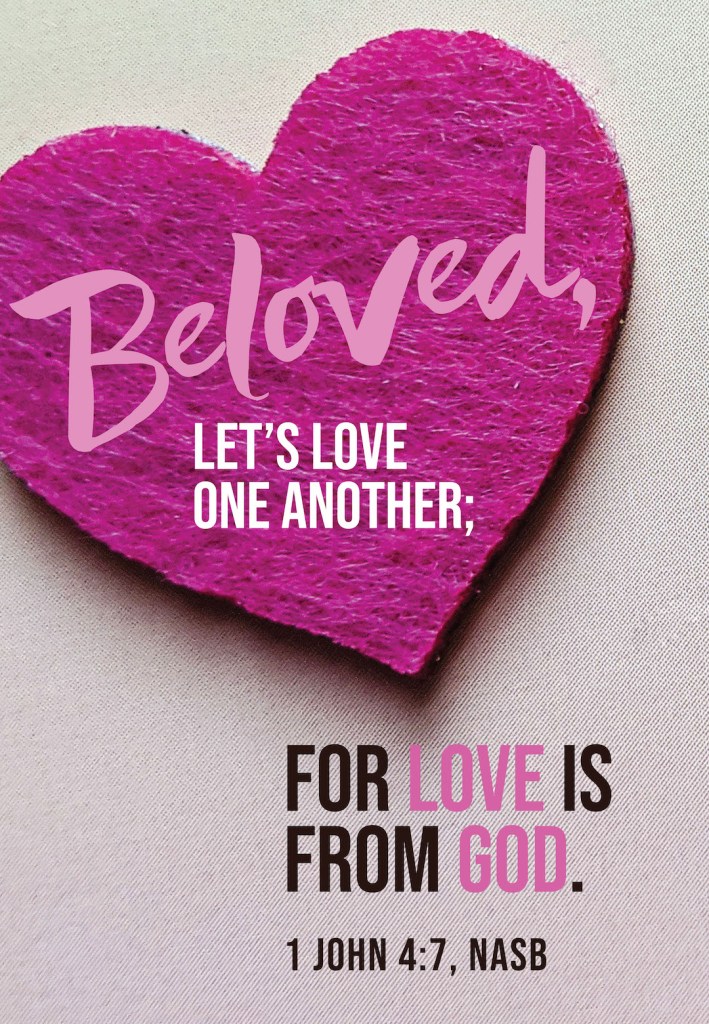
Let’s love one another

Beloved, since God loved us so much, we also ought to love one another. 1 John 4:11 NRSV

Welcome!

1 John 4:7

On Wednesday, April 24, 2024, we explored 1 John 4:7-21, the epistle pericope appointed for the Fifth Sunday of Easter, Year B. Our handout included commentaries on the other appointed texts from the Acts of the Apostles (Acts 8:26-40), the Psalms (Psalm 22:25-31), and the Gospel according to John (John 15:1-8).

From a commentary on 1 John 4:7-21

Tucked away in verse 7 is an even more sobering claim. We know God by seeing what God has done, but seeing is not enough. We know God in the fullest and most authentic sense only when the love of God flows through us. God is love; only the one who loves can know this love that is God. Love is not a concept, known abstractly. It is an action, lived concretely. It is not enough to remember Jesus’ self-sacrifice, to think about it, or even to be moved by it. We must live it. To know the God of love is to live the love of God.

Ronald Cole-Turner, “Theological Perspective on 1 John 4:7–21,” in Feasting on the Word: Preaching the Revised Common Lectionary: Year B, ed. David L. Bartlett and Barbara Brown Taylor, vol. 2 (Louisville, KY; London: Westminster John Knox Press, 2008), 468.

divider line

Most Wednesday mornings a group of us gather online to explore the readings that will be used in worship the following Sunday. Our handout features readings, commentaries, and notes for the Fifth Sunday of Easter (April 28, 2024) in Year B of the Revised Common Lectionary. Please: View or download the handout we used to guide our discussion and tune our hearts to the Spirit.

View the Revised Common Lectionary readings appointed for Sunday, April 28, 2024, on the Revised Common Lectionary site curated by the Vanderbilt Divinity Library.

Ronald Cole-Turner is the H. Parker Sharp Chair of Theology and Ethics, at Pittsburgh Theological Seminary, Pittsburgh, Pennsylvania. More.

Please return to this site throughout the week to keep learning.

divider line

Be well. Do good. Pay attention. Keep learning.

Image: ChurchArt Pro

I shall not want

“…I shall not want.” In what ways is this true for you?

Welcome!

On Wednesday, April 17, 2024, we explored Psalm 23 for the voice of the Spirit. Our handout included commentaries on the other appointed texts from the Acts of the Apostles (Acts 4:5-12), the First Letter of John (1 John 3:16-24), and the Gospel according to John (John 10:11-18).

Here is yet another brief look at Psalm 23. The first verse of the Psalm invites us to trust deeply.

From a commentary on Psalm 23

The psalm has been composed as the exposition of its opening line. The line makes a positive and a negative statement. The positive statement relates the LORD and the psalmist through the metaphor “shepherd.” That metaphorical statement, broadly enough understood, controls the imagery of the whole. The negative statement is a self-description of the psalmist. It uses the word “lack” (NRSV, “want”) in an absolute sense; the transitive verb is given no object. The psalmist lists what he does not lack in the rest of the psalm. […]

To say “The LORD is my shepherd” invokes all the richness of this theological and political background as well as the pastoral. The metaphor is not restricted to associations with what actual shepherds did; it is informed by what the LORD has done and what kings were supposed to do. One does not have to shift to images of guide and host to account for the whole poem. “Shepherd” understood against its usage in Israel accounts for the whole. The statement is a confession. It declares commitment and trust. It also has a polemical thrust against human rulers and divine powers. The psalm entrusts the support, guidance, and protection of life only and alone to the one whose name is the LORD.

The body of the psalm completes the sentence, “I do not lack.…” It does not leave those who say it to fill it out with what they want out of their own subjective wills. It has its own agenda of what the LORD does to fulfill one’s needs. The very personal syntax of the opening confession is maintained in the recitation of “what the LORD (he/you) does for me.” The items in the recitation can be read and understood in relation to three areas. First, what the LORD does draws on what is prayed for in the prayers for help. Second, it reflects the song of thanksgiving with its report of salvation and accompanying festivities, except here the account tells what the LORD does, not what the LORD has done in the past. Third, the recitation is at points connected with the language of Israel’s testimony to its salvation in the exodus.

Excerpted from, James Luther Mays, Psalms, Interpretation, a Bible Commentary for Teaching and Preaching (Louisville, KY: John Knox Press, 1994), 117–118.

divider line

Most Wednesday mornings a group of us gather online to explore the readings that will be used in worship the following Sunday. Our handout features readings, commentaries, and notes for the Fourth Sunday of Easter (April 21, 2024) in Year B of the Revised Common Lectionary. Please: View or download the handout we used to guide our discussion and tune our hearts to the Spirit.

View the Revised Common Lectionary readings appointed for Sunday, April 21, 2024, on the Revised Common Lectionary site curated by the Vanderbilt Divinity Library.

Please come back to this site throughout the week in order to keep learning.

divider line

Be well. Do good. Pay attention. Keep learning.

Image: ChurchArt Pro

Companions along the Way

Here’s an interesting post for those—like me—who sometimes find it difficult to hear what the Spirit is saying along the Way. 8 Books to Read When You’re Struggling to Read the Bible: How some writers can push you toward God.

Read more at http://www.relevantmagazine.com/god/practical-faith/8-books-read-when-youre-struggling-read-bible#dhIDIrqIDWARPKW6.99

Rowan Williams’ four essentials for being ‘Christian’

Jonathan Merritt of Religion News Service presented his interview of Rowan Williams recently. Among the items is this for our consideration and conversation:

RNS: You list the Bible as one of the essentials of “being Christian” but various people have diverse views about the Bible. Do you think every view of the Bible is equally “Christian” or is there some baseline?

RW: It’s always been true that Christians have had differences over reading the Bible. But it remains the text we have in common. And so long as one believes that the Bible is a gift from God and tells us what we need to know about God for our well-being here and hereafter, it’s still possible to think we have something seriously in common.

Things get difficult if you hold that the Bible is only a human product; but they also get difficult when the Bible is treated only as a set of timeless instructions from God, irrespective of the actual process by which the texts arose. The Bible needs to be read, prayerfully and discerningly, in the company of as many other believers as possible, so that we can learn some wisdom from each other as to what exactly God does want to tell us. Hearing the truth in Scripture means expecting the Holy Spirit to be at work both in the text and in the community that reads it.

via Rowan Williams’ four essentials for being ‘Christian’ | On Faith & Culture. with Jonathan Merritt

Look again/anew at Paul

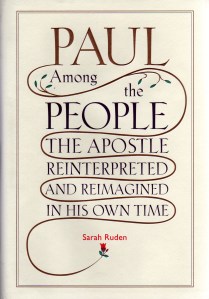
2013-1014-paul-amongWhat’s the connection between St. Paul’s First Letter to the Corinthians and the second-century Roman novelist Apuleius’s comedy The Golden Ass? More than you might think, says classicist Sarah Ruden in her book Paul Among the People (Image). Ruden, who specializes in ancient Greek and Roman literature, became interested in the preconceptions modern readers bring to Paul’s writing when she began studying the apostle herself. –

Read the interview in US Catholic

We shared the link to the interview on our Facebook Page. Now we share it here. Read the article. Share what you think. Keep the conversation going.

Wind Chimes: 12 August 2013

“Jesus said, ‘Recognize what is in your sight, and that which is hidden from you will become plain to you. For there is nothing hidden which will not become manifest.’” 

The Gospel of Thomas (c. 60-175 A.D.)
in A New New Testament

The Four Evangelists by Jordaens Lovre
Four Evangelists, Jordaens Louvre (c. 1625-1630)

Are you ready to be stretched a little? A lot? Is it possible that other ancient texts can lead to a deeper understanding of the ‘official’ biblical texts used by Christians of various denominations? A council of scholars and teachers came together under the leadership of Hal Taussig to produce A New New Testament:

Is the New Testament missing a few books? In a move that may seem heretical to some Christians, a group of scholars and religious leaders has added 10 new texts to the Christian canon.

The work, A New New Testament, was released nationwide in March in an attempt to add a different historical and spiritual context to the Christian scripture.

Some of the 10 additional texts—which have come to light over the past century—date back to the earliest days of Christianity and include some works that were rejected by the early church.

The 19-member council that compiled the texts consisted of biblical scholars, leaders in several Christian denominations—Episcopal, Roman Catholic, United Methodist, United Church of Christ and Lutheran—two rabbis and an expert in Eastern religions and yoga.

Read the Religion News Service introduction to this effort. The article (dated March 28, 2013) includes the names of those who helped in the project.

The article points out that “not surprisingly not everyone admires the project.” Read the article, read all (or parts) of A New New Testament and let us know what you think. Continue the conversation here.

DivLine360x12There’s a restless, searching, rhythm in the chimes today.
What do you hear?

Seven, ten, or thirteen? Scholars are still deciding.

We raised the question on Sunday.

The last 3 weeks we have read from “Paul’s Letter to the Ephesians” in our worship. In the discussion on Sunday (7/29/12) Stan and I raised the question about who authored the letter to the Ephesians. In part, our question arises from our reading of commentaries and essays by a variety of scholars including, most recently, the scholarship of Marcus Borg and John Dominic Crossan.

Quote . . .THREE PAULS

Mainstream scholarship as it has developed over the last two centuries has concluded that some of the thirteen letters attributed to Paul were not written by him. Rather, they fall into three categories.

First, a massive scholarly consensus: at least seven letters are “genuine” – that is, written by Paul himself. These seven include three longer ones (Romans, I and II Corinthians), and four shorter ones (I Thessalonians, Galatians, Philippians, and Philemon). Written in the 50s of the first century, plus or minus a year or two, they are the earliest documents in the New Testament, earlier than the gospels (recall that Mark, the first gospel, was written around 70). Thus the genuine letters of Paul are the oldest witness we have to what was to become Christianity.

Second, an almost equally strong consensus: three letters were not written by Paul. These are I and II Timothy and Titus, commonly known as “the pastoral epistles” or simply “the pastorals.” Scholars estimate that they were written around the year 100, possibly a decade or two later. The reasons these are seen as “non-Pauline” include what looks like a later historical setting as well as a style of writing quite unlike the Paul of the seven genuine letters.

Thus the letters to Timothy and Titus were written in the name of Paul several decades after his death. In case some readers may think that writing in somebody else’s name was dishonest or fraudulent, we note that it was a common practice in the ancient world. It was a literary convention of the time, including within Judaism.

Third, letters about which there is no scholarly consensus, though a majority see them as not coming from Paul. Often called the “disputed” epistles, they include Ephesians, Colossians, and II Thessalonians. We are among those who see these as “post-Paul,” written a generation or so after his death, midway between the genuine letters and the later pastoral letters.

From Chapter 1 of their book The First Paul: Reclaiming the Radical Visionary Behind the Church’s Conservative Icon. Chapter 1 is online at: Paul: Appealing or Appalling?

In your reading and study have you formed an opinion? What role does the Holy Spirit play in the writing, preserving, handing on, and interpreting of these letters? What role does the Spirit play as you grapple with this kind of information? Let’s keep the conversation going.

What about Bible reading and “Newspaper” reading?

On Sunday (5/20/12) our discussion wandered into the area of reading the Bible and reading the newspaper (well, to be 21st century, reading or watching the news on the internet). I recalled, and others nodded their heads, that Karl Barth, a great theologian and teacher, commented on that dynamic.

Here is what Barth is reported to have said:

“[Barth] recalls that 40 years ago he advised young theologians ‘to take your Bible and take your newspaper, and read both. But interpret newspapers from your Bible.’” Time, May 31, 1963

The Time article goes on to give us more of Barth’s thoughts on journalists and their place in the world: “Newspapers, he says, are so important that ‘I always pray for the sick, the poor, journalists, authorities of the state and the church – in that order. Journalists form public opinion. They hold terribly important positions. Nevertheless, a theologian should never be formed by the world around him – either East or West. He should make his vocation to show both East and West that they can live without a clash. Where the peace of God is proclaimed, there is peace on earth is implicit. Have we forgotten the Christmas message?’” —Center for Barth Studies at Princeton Theological Seminary Accessed 3 May 2011

In invite you to share as we continue this conversation:

  • Do you  “read both” (Bible and “newspaper”)?
  • In what ways do you “interpret” the news “from your Bible”?
  • How would you rephrase Barth’s advice for the 21st century?

What would Jerome think? St. Jerome, that is.

Today (9/30) the church remembers Jerome, “Priest, and Monk of Jerusalem,” who died in 420 CE. Among his many accomplishments was the translation of the Bible from Hebrew and Greek into the common (vulgar) language of Latin. The Vulgate version of the Bible remains a standard text in the Roman Catholic Church and has a respected place among contemporary biblical scholars and church historians. Thus, the question, “What would Jerome think?”

Yesterday (9/29) the Episcopal News Service posted an article about a new English translation of the Bible (from Hebrew and Greek). This newest Bible is the Common English Bible (CEB). What Jerome did in his study in the early 5th century was today accomplished by “120 scholars drawn from 24 denominations” at the cost of $3.5 million over the course of 4 years. In addition, “More than 500 readers in 77 groups later field-tested their work” according to the article. Read the entire post here: New Common English Bible translation draws on expertise of 17 Anglican, Episcopal scholars.

So what would Jerome think about the choices made? What do you think? How did some of your favorite verses fare in the new translation?

Probably most of us “know” that Genesis 1:1 begins like this “In the beginning God created the heaven and the earth …” (KJV) The Common English translation? “When God began to create the heavens and the earth—”

One more example, a favorite of many, Psalm 23. The final verse, which is the most powerful to me when this Psalm is used in a Memorial Service (Ps 23:6): “Surely goodness and mercy shall follow me all the days of my life: and I will dwell in the house of the LORD for ever.” (KJV) and “Yes, goodness and faithful love will pursue me all the days of my life, and I will live in the LORD’s house as long as I live. ” (CEB) You can read the entire Psalm here: King James Version and Common English Bible

Thank you for being part of the Sunday Morning Forum (in real time or online). Like Jerome, we take seriously our study of the Word of God. Whether you like or appreciate the newest translation of the Bible, I do hope you appreciate how the Live Word of the Living God continues to demand our study and our best efforts to know and apply its God inspired wisdom. Leave a comment or two (below) to continue this conversation. What do you think about all this?

For further reflection and study

  • Common English Bible — official website of the Common English Bible. You will find many options to fully explore this new bible and to learn more about how it was produced.
  • Bible Gateway — a site with many different translations of the Bible including the Common English Bible; you can compare translations pretty easily.
  • Bible Study Tools — another site with an assembly of different versions of the Bible including the version we use in worship: the New Revised Standard Version of the Bible.