
Wind Chimes: 12 August 2013

“Jesus said, ‘Recognize what is in your sight, and that which is hidden from you will become plain to you. For there is nothing hidden which will not become manifest.’” 

The Gospel of Thomas (c. 60-175 A.D.)
in A New New Testament

The Four Evangelists by Jordaens Lovre
Four Evangelists, Jordaens Louvre (c. 1625-1630)

Are you ready to be stretched a little? A lot? Is it possible that other ancient texts can lead to a deeper understanding of the ‘official’ biblical texts used by Christians of various denominations? A council of scholars and teachers came together under the leadership of Hal Taussig to produce A New New Testament:

Is the New Testament missing a few books? In a move that may seem heretical to some Christians, a group of scholars and religious leaders has added 10 new texts to the Christian canon.

The work, A New New Testament, was released nationwide in March in an attempt to add a different historical and spiritual context to the Christian scripture.

Some of the 10 additional texts—which have come to light over the past century—date back to the earliest days of Christianity and include some works that were rejected by the early church.

The 19-member council that compiled the texts consisted of biblical scholars, leaders in several Christian denominations—Episcopal, Roman Catholic, United Methodist, United Church of Christ and Lutheran—two rabbis and an expert in Eastern religions and yoga.

Read the Religion News Service introduction to this effort. The article (dated March 28, 2013) includes the names of those who helped in the project.

The article points out that “not surprisingly not everyone admires the project.” Read the article, read all (or parts) of A New New Testament and let us know what you think. Continue the conversation here.

DivLine360x12There’s a restless, searching, rhythm in the chimes today.
What do you hear?

Wind Chimes: 1 July 2013

“For freedom Christ has set us free. Stand firm, therefore, and do not submit again to a yoke of slavery. … For you were called to freedom, brothers and sisters; only do not use your freedom as an opportunity for self-indulgence, but through love become slaves to one another. For the whole law is summed up in a single commandment, ‘You shall love your neighbor as yourself.’”

Galatians 5:1, 13-14
Read on Sunday, June 30, 2013

The Revised Common Lectionary provided a very rich fare on Sunday, June 30th. I bring the wind chimes out of storage to keep the music (of the Spirit) going into this new week. Here is a sample of a commentary on Sunday’s reading from Galatians (Chapter 5, verses 1 and 13-25):

Paul makes the strongest possible emphasis on the “you” plural address. Again he frames the sentence with words describing the addressees: “You all,” “brothers,” “You all have been chosen for freedom.” He repeats the confident assertion of 5:1 by making personal and direct and clear, that “you all” have been chosen for freedom indeed, but Paul moves on very quickly to define the freedom.

It is not a wild, abstract freedom from restraint. Paul’s freedom does not create the culture we have become — at least not in his mind or on purpose. Paul proclaims the freedom with the passive voice of having been chosen by an implied agent, God. To be chosen by God for freedom, to have been freed by Christ is to have been freed from the dire results of life lived apart from God. It is also a call into freedom that in some ways mirrors God’s own, that is a freedom dedicated to serving others in love.

I encourage you to read the entire Commentary on Galatians 5:1, 13-25 by Sarah Henrich on Working Preacher.

DivLine360x12

You must love your neighbor as yourself

Leviticus 19:18

The chimes are moving freely again. The sounding of the chimes reminds me of love.
What do you hear?

What do we believe about the Trinity? Listen, “Holy, holy, holy …”

Singing is praying (actually, praying twice according to many). If you want to know what we believe listen to how we pray. No, it isn’t a theological treatise, a confessional statement, or a magisterial teaching, Nonetheless, our prayer is a powerful and wonderful shaper of belief and action. Episcopalians pray. In our prayer we shape our belief and our beliefs shape our actions (at least when we are at our best).

Holy, holy, holy, Lord God almighty was composed by Reginald Heber and published in 1826:

Reginald Heber was born in 1783 into a wealthy, educated family. He was a bright youth, translating a Latin classic into English verse by the time he was seven, entering Oxford at 17, and winning two awards for his poetry during his time there. After his graduation he became rector of his father’s church in the village of Hodnet near Shrewsbury in the west of England where he remained for 16 years. He was appointed Bishop of Calcutta in 1823 and worked tirelessly for three years until the weather and travel took its toll on his health and he died of a stroke. Most of his 57 hymns, which include “Holy, Holy, Holy,” are still in use today. — Greg Scheer, 1995 on Hymnary.org

Listen …

Please continue the conversation, we would like to hear from you

A new* study resource introduced

In the Sunday Forum I introduced folks to a new (to us) study resource: The New English Translation of the Bible (NET Bible or NET in abbreviation) was begun in 1995 and published in 2005.

The NET Bible on bible.org

From the Preface to the NET Bible:

The NET Bible (New English Translation) is a completely new translation of the Bible, not a revision or an update of a previous English version. It is being completed by more than twenty biblical scholars who are working directly from the best currently available Hebrew, Aramaic, and Greek texts. The translation project originally started as an attempt to provide an electronic version of a modern translation for electronic distribution over the Internet and on CD-Rom. Anyone anywhere in the world with an Internet connection will be able to use and print out the NET Bible without cost for personal study. In addition, anyone who wants to share the Bible with others can print unlimited copies and give them away free to others.

You can find this resource on bible.org. You can choose to become a registered user or not. The process to become a registered uset is Free and easily done. Registering opens up other ways to use this resource. Even if you don’t become a registered user the NET Bible will be a useful addition for your personal study. I agree with Wikipedia: “The translation is most notable for an immense number of lengthy footnotes (which often explain its textual translation decision), its open translation process, [and] its availability on the Internet ….” Good stuff. ~dan

Check out this resource for yourself:

*That is, new to us in the Sunday Morning Forum (the NET Bible has been online since 2005).

Sarah Josepha Buell Hale

Sarah Josepha Buell Hale as pictured in Godey's Lady BookOn our “Wednesday Morning Spiritual Day Hike” we walked with Sarah Josepha Buell Hale yesterday (5/1/13). Sarah Hale is commemorated in the Episcopal Church’s (trial) Calendar, Holy Women, Holy Men on April 30th.

Sarah, a woman ahead of her time in some ways, was a woman of her time in others. Shining through it all: her love of God and neighbor. She continues to inspire folks she never met living some 200 years later in a part of her country she never visited. The Communion of Saints is an amazing thing.

Watch, Sarah Hale: The Mother of Thanksgiving, an Audio Slide Show posted by BackStory with the American History Guys

The Collect of Day as we commemorate Sarah Hale:

Gracious God, we bless your Name for the vision and witness of Sarah Hale, whose advocacy for the ministry of women helped to support the deaconess movement. Make us grateful for your many blessings, that we may come closer to Christ in our own families; through Jesus Christ our Savior, who lives and reigns with you and the Holy Spirit, one God, for ever and ever. Amen..

Wind Chimes: 23 Apr 2013

“The spirit of Christ must be the soul of all real social reconstruction.”

Toyohiko Kagawa (1888 – 1960)

Since 2009 the Episcopal Church has been exploring a revised Liturgical Calendar titled Holy Women, Holy Men. Stories of women and men living exemplary lives are finding a wider audience. The stories call forth the best in us and pose questions for us who continue our journey on the Way. Today, April 23rd, the church remembers Toyohiko Kagawa a “Prophetic Witness in Japan.”

Toyohiko Kagawa was a

Image of Toyohiko Kagawa on Holy Women, Holy Men“Japanese Christian social reformer. He came of a wealthy family and received his early education in a Buddhist monastery. After conversion to Christianity and disinheritance by his family, he studied at the *Presbyterian seminary at Kobe from 1905 to 1908. Here he became acutely conscious of Christian responsibility in the face of existing social evils and spent several years among the poor in the bad slums of Shinkawa. In 1914 he went to Princeton, USA, to study modern social techniques, and after returning to Japan in 1917 devoted himself entirely to the improvement of social conditions.”

Oxford Dictionary of the Christian Church

Within the political rhetoric of our country today, we who follow Christ, who follow the Way (of Love) can best love our neighbor if we can hold fast to that ancient truth discovered and lived by Toyohiko Kagawa: “The spirit of Christ must be the soul of all real social reconstruction.”

DivLine360x12There’s a peaceful rhythm to sounds in the chimes today. The melody is simple:
have the Spirit of Christ … have the Spirit of Christ …have the Spirit of Christ
What do you hear?

Wind Chimes: 13 Apr 2013

Diana Butler Bass is a favorite author, writer, speaker, and teacher. In early March she posted this to her Facebook Page:

Was asked by an evangelical friend who has found his way to an Episcopal Church WHY the congregation likes scholars like Dom Crossan. Here’s part of my answer:

“Since I wasn’t at Dom’s presentations at the church you mention, I can’t speak directly to them. But I can speak to the ethos of the Episcopal Church. The Episcopal Church understands itself as a big room, a community bound together by prayer and enacting justice, not a particular way of understanding scripture or theology. It is a comprehensive church, one that prides itself on holding a wide variety of views, and always open to new ways of engaging the ancient stories. Thus, as a denomination, everyone is really, truly welcome—and that includes Dom Crossan to Rowan Williams and Marcus Borg to NT Wright! But, of course, not everyone is comfortable with such an ethos. But it does mean that we listen to a wide swath of Christian thinkers — it is NOT unusual at all for a single Episcopal congregation to read books ranging from Crossan to CS Lewis. Or to hear Mary Daly and Phil Yancey quoted in a sermon.”

Every Sunday (at 9 am) we gather at St. Margaret’s in our Sunday Morning Forum. We definitely represent “a wide swath” of Christian thinking and believing. Either before (8 am) or after (10 am) the Forum we worship together and take communion together. Come join us for a wide-ranging discussion, prayers, and communion.

DivLine360x12It is a beautiful spectrum of sounds and rhythms from the chimes today.
What do you hear?
Wind Chimes: 08 Jan 2013

It’s a poetic sound in the chimes tonight. What do you hear?

We three kings of Orient are

If you haven’t discovered Hymnary.org yet, now would be a good time. The text of this favorite Epiphany hymn was written by John H. Hopkins (an Episcopal deacon) in 1867 and the text and more is set out nicely by Hymnary. It is a rich source of texts, history, music, and much more.

1
We three kings of Orient are:
Bearing gifts we traverse afar—
Field and fountain, moor and mountain—
Following yonder star.

Chorus:
Oh, star of wonder, star of night,
Star with royal beauty bright,
Westward leading, still proceeding,
Guide us to thy perfect light.

2
Born a King on Bethlehem’s plain:
Gold I bring to crown Him again,
King forever, ceasing never,
Over us all to reign.[Chorus]

3
Frankincense to offer have I,
Incense owns a Deity nigh;
Prayer and praising, all men raising,
Worship Him, God on high.[Chorus]

4
Myrrh is mine, its bitter perfume
Breathes a life of gathering gloom—Sorrowing, sighing, bleeding, dying,
Sealed in the stone cold tomb.[Chorus]

5
Glorious now behold Him arise:
King and God and Sacrifice;
Alleluia, Alleluia!
Earth to heaven replies.[Chorus]

Source: “We three kings of Orient are” on Hymnary.org

Video: We three kings of Orient are sung by Kings College Choir, Cambridge

Wind Chimes: 07 Jan 2013

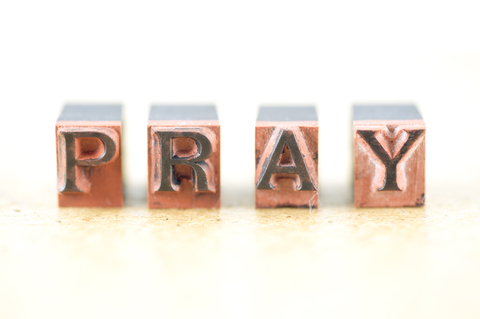
Pray

But if we hope for what we do not see, we wait for it with patience. Likewise the Spirit helps us in our weakness; for we do not know how to pray as we ought, but that very Spirit intercedes with sighs too deep for words.

Romans 8:25-26 NRSV

The chimes are a call to prayer (again). What do you hear?

Continuing prayer for our new Congress

I’ll confess that I often don’t know how to pray, even when my hopes seem to be in accord with God’s love. On January 3, 2013 many, including me, began a 21-day prayer vigil for our new Congress and the President. In addition to our daily and weekly prayers for our political leaders, this is a special time of prayer requested by an interfaith coalition of folks like you and me. Commit to praying, and let us trust the Spirit to work in ways we can barely imagine. Read more about this effort and sign-on to pray here: Call to Prayer. Then, join us in praying for our new Congress.

The Home Page for The Faith & Politics Institute

Image: Dreamstime

Wind Chimes: 03 Jan 2013

On that day: The deaf will hear the words of a scroll and, freed from dimness and darkness, the eyes of the blind will see. The poor will again find joy in the Lord, and the neediest of people will rejoice in the holy one of Israel.

Isaiah 29:18-19 CEB

Today, January 3rd, the Episcopal Church remembers William Passavant (October 9, 1821 – January 3, 1894).

William Passavant was a Pennsylvania Lutheran pastor who left an uncommonly rich legacy of service. He was driven by a desire to see the consequences of the Gospel worked out in practical ways in the lives of people in need. For Passavant, the church’s commitment to the Gospel must not be spiritual only. It must be visible. For him, it was essential that Gospel principles were worked out in clear missionary actions.

Learn more about William Passavant on Holy Women, Holy Men

In the Collect we ask God, the Compassionate, to “inspire us by his example, that we may be tireless to address the wants of all who are sick and friendless….”

One of the goals of the Sunday Morning Forum is to hear the Spirit calling us to such service and gracing us to serve to the welfare of others and the glory of God. The chimes sound, “you are called to serve.” What do you hear?

Additional information about William Passavant on Wikipedia