Wind Chimes: 15 Oct 2012

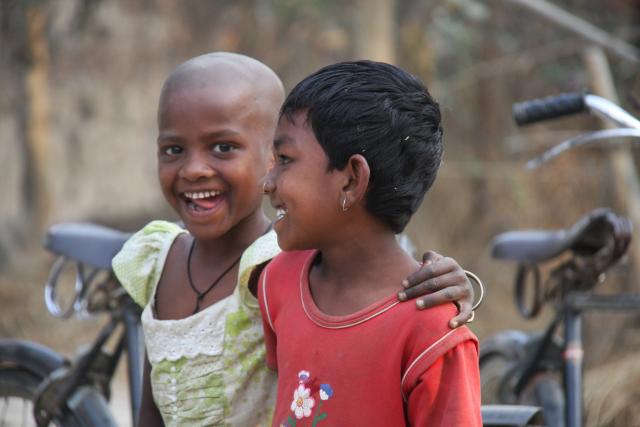
Women buying fruit in a downtown market in Ouagadougou, Burkina Faso.

Through the rest of this week we’ll wonder, with Job, where is God? Where is God in the midst of enormous challenges facing his creation and his ‘children’ throughout creation—even those we consider our ‘enemies’? And where is God in the challenges we face?

Sometimes the chimes sound far-off, sometimes near. What do you hear?

God is too good to believe in

God is not too hard to believe in. God is too good to believe in, we being such strangers to such goodness. The love of God is to me absolutely overwhelming. It’s clear to me, two things: that almost every square inch of the Earth’s surface is soaked with the tears and blood of the innocent, and it’s not God’s doing. It’s our doing. That’s human malpractice. Don’t chalk it up to God. Every time people say, when they see the innocent suffering, every time they lift their eyes to heaven and say, “God, how could you let this happen?” it’s well to remember that exactly at that moment God is asking exactly the same question of us: “How could you let this happen?” So you have to take responsibility. —William Sloane Coffin in an interview with Religion & Ethics Newsweekly on August 27, 2004.

October 15 – International Rural Women’s Day

“Where is God? How could God let this happen?” High food prices affect us all. While we may complain about this, we know that in rural locations throughout our nation and the world the affect of high food prices can be devastating.

“Prices of food have really gone up and this has made my children and I not to eat as we used to. We used to eat four times a day but now we can only eat two times under hard struggle.” — Salome Nche, mother of eight, Cameroon excerpt  from the Huairou Commission report “Grassroots Women’s Perspectives on Food Insecurity in Africa, Asia and Latin America,” 2009

Go to more information about the need and the beginning responses to meet the need.

One way Episcopalians “take responsibility” is through the work of Episcopal Relief and Development (ERD). Financial contributions from members and non-members fund work ‘on-the-ground’ in rural communities. Here is one example:

[ERD] Alleviating Hunger and Improving the Food Supply [in both Sudan and South Sudan in partnership with The Episcopal Church of Sudan]

  • approximately 24 agriculture resource agents will be trained over the next three years (one for each diocese)
  • following a three-month training course, each resource agent will establish a model garden to demonstrate agricultural techniques
  • the agent will train communities in sustainable land management, focusing on household gardens which can provide families with nutritious food and needed income
  • For more information

A prayer of remembering before a meal

“O God when I have food, help me to remember the hungry.
When I have work, help me to remember the jobless.
When I have a comfortable home, help me to remember
those who suffer from the cold or from the heat.
When I am without pain, help me to remember those who suffer.
In all this remembering, help me to destroy my own complacency
and bestir my compassion.
Make me concerned enough to help by word, deed and prayer,
those who cry out for what I so often take for granted.”

Contained in a Facebook posting by fr. James martin on 24 July 2012. He heard this prayer. Offered as a blessing before lunch in a 2012 meeting in Massachusetts of roman catholic school superintendents and principals

Photo: Women buying fruit in a downtown market in Ouagadougou, Burkina Faso. FAO is implementing its Initiative on Soaring Food Prices (ISFP) in the country to rapidly boost food production in order to increase food availability and accessibility and to alleviate the effects of soaring food prices on poor and vulnerable groups. Credit: FAO/Alessandra Benedetti Additional information about the International Day of Rural Women

Advent Calendar Day 16: Episcopal Relief and Development

Episcopal Relief and Development

Just this past Lent we collected donations at St. Margaret’s and sent them to Episcopal Relief and Development to be added to their NetsforLife Inspiration Fund. Episcopal Relief and Development provides a way for all Episcopalians (indeed, all people of goodwill) to meet the needs of the hungry, the thirsty, the stranger, the ill-clothed, the one who is sick and the one who is in prison (see Matthew 25:37-40)

Mission Statement

“Healing a hurting world”

Episcopal Relief & Development is the compassionate response of the Episcopal Church to human suffering in the world. Hearing God’s call to seek and serve Christ in all persons and to respect the dignity of every human being, Episcopal Relief & Development serves to bring together the generosity of Episcopalians and others with the needs of the world.

Episcopal Relief & Development faithfully administers the funds that are received from the Church and raised from other sources. It provides relief in times of disaster and promotes sustainable development by identifying and addressing the root causes of suffering.

Episcopal Relief & Development cherishes its partnerships within the Anglican Communion, with ecumenical bodies and with others who share a common vision for justice and peace among all people.

For more on this ministry: Episcopal Relief and Development
Learn more about the NetsforLife Inspiration Fund

Advent Calendar in one place
About the Online Advent Calendar


For further reflection

Help isn’t on the way. It’s already there

In 2010, Episcopal Relief & Development reached more than 3 million people in over 40 countries around the world.

Rather than imposing “one size fits all” solutions, Episcopal Relief & Development supports unique local, long-term initiatives that address poverty, hunger, disease, economic development and disaster response.

Our partnership with the worldwide Church creates opportunities to serve communities in some of the most remote areas of the world, as well as in urban environments where extreme poverty persists.

In many of these places, the Church is often one of the few institutions people trust and turn to for help. Episcopal Relief & Development leverages existing Church relationships to reach those whose need is greatest.

“Go with the people. Live with them. Learn from them. Love them. Start with what they have. Build on what they know. But with the best leaders, when the work is done, the task accomplished, the people will say, ‘We have done this ourselves’.”  — Lao Tsu, Chinese Philosopher, 700 B.C.

From: ERD What We Do. Check out even more information using their Quick Links section on the right side of the page

See also the ERD Blog AND/OR Stories from the Field to see how Episcopalians, working together, seek and serve Christ in the “least” among us. Hear what the Spirit is saying.

____________
Image: ERD Logo from the ERD Media Center Online Press Kit


Here is an opportunity to “change the world” — use it

Part of taking action on behalf of others is being informed. Then, part of effective action is joining with others to enhance the action taken (you know, “strength in numbers” and so on). I would like to introduce the Episcopal Relief and Development (ERD) Blog to you by sharing from today’s post. You will see that the blog is intended to be “a forum for discussion, sharing and community.” Be informed.

Then, as we enter the season when gifts are given, hear Rob Radtke’s appeal. Rob is the President of ERD. He has donors who will match every donation made through November 30th up to $500,000. Consider a gift that will be twice as large (with the help of others) and do a world of good.  Then, make a gift. Here is Rob’s introduction:

It’s that time of year. The leaves are turning, there’s a chill in the air and the holidays are rushing toward us. And as I write, we’re over halfway through our 2011 Matching Gift Challenge. Just as they did last fall, some extremely generous donors are again matching every donation we receive through November 30, dollar for dollar – up to a total of $500,000.

As I’ve mentioned previously, it’s generally not my policy to ask for donations on our blog. I try as much as possible to honor the goal of this space: to be a forum for discussion, sharing and community. But once again, I’m making an exception because of this remarkable opportunity.

Thanks to our special donors, a gift today will go twice as far to reach people living in extreme poverty and hunger around the world. You’ll be able to provide double the amount of emergency relief supplies for those affected by disaster, two times as many meals for hungry school children, or twice the number of life-saving malaria nets and training to protect families.

via Episcopal Relief & Development.

Photo: ERD blog

The Abundant Life in a cup of coffee

Sherry has been doing important research for our group. I am proud to share the results of her research and invite you to consider how we might make a difference “for good” in our little Sunday Morning Forum. –Dan

COFFEE WITH A CONSCIENCE

You may be surprised to discover that you can savor a great cup of coffee while supporting a great cause.  Coffee is the world’s second most traded commodity.  By buying Fair Trade coffee, every cup of coffee you consume makes a positive difference in the lives of poor coffee farmers around the world.

WHAT IS FAIR TRADE?

Fair Trade certification guarantees that farmers who grow and process the beans receive a fair price, which keeps small farmers in business. 

Fair trade standards encourage sustainable agriculture practices for disposing of hazardous wastes, minimizing water use, avoiding erosion, and conserving the soil.  Fair Trade farms must also meet labor standards such as paying a minimum wage to workers.

WHY ARE WE, AS EPISCOPALIANS, INTERESTED IN FAIR TRADE?

Episcopal Relief & Development (ERD) partners with Pura Vida Coffee, a Seattle-based company, in committing to using their resources to do as much for coffee farmers and their families as possible.  Together, they give back to the coffee-growing communities in the form of health, education, and infrastructure projects.  ERD and Pura Vida are helping to create strong and sustainable communities.

More about the partnership between Pura Vida and ERD: Bishops Blend
A short video about Pura Vida and its vision

WHERE CAN I BUY FAIR TRADE COFFEE?

Finding Fair Trade coffee is as easy as looking on your grocer’s shelves for containers with the Fair Trade Certification logo, a click away for online shopping at Pura Vida: Create Good, or by phone at 877.469.1431.  ERD and Pura Vida have partnered to produce a delicious organic, shade-grown coffee called Bishops Blend, the purchase of which not only guarantees fair wages to coffee producers, but 15% of the purchase price of each bag  goes to support ERD’s mission of responding to poverty, hunger, and disease around the world.

Sherry Wollenberg is Co-facilitator of the Sunday Morning Forum at St. Margaret’s Episcopal Church in Palm Desert, CA.

A question for youKnowing more about Fair Trade coffee, about Pura Vida and about its partnership with ERD, what are some things we (individually and/or collectively) can do as we strive to promote “justice and peace among all people,”  as we “respect the dignity of every human being”? (from our Baptismal Covenant) Leave a comment or share your comment in the Forum on Sunday. –Dan