Some Epiphany Customs

A man dressed as one of the Three Kings greets people during the Epiphany parade in Gijon, Spain, on Jan. 5, 2017. Photo courtesy of Reuters/Eloy Alonso

A baby in the cake, shoes left out for candy (or coal), a polar bear dip to retrieve a cross: these are a few of the customs explained in a Religion News Service (RNS) “‘Splainer.” Epiphany was celebrated on January 6th, but the RNS post “What is Epiphany?” is still timely. Enjoy the read.

You thought the holidays were over. Technically, no — not until Jan. 6, when Christians all over the world celebrate Epiphany. In some places, the day is known as “Three Kings Day” after the wise men, or Magi, who, the Bible says, brought the infant gifts and proclaimed him the Son of God. In other places, the day is known for giving gifts, for extremely cold baths and for biting into babies. Let us ’splain …

Read “What is Epiphany?” on RNS

Photo from the RNS article

Why Did the Magi Bring Gold, Frankincense and Myrrh?

January 6th is the Feast of the Epiphany in the Episcopal Church. Often we read the account of the Magi offering the baby Jesus gold, frankincense, and myrrh. There is a long history of exploring the meaning of these gifts. The link (below) will give you one insight.

“Were the gifts of the magi meant to save Jesus from the pain of arthritis? It’s possible, according to researchers at Cardiff University in Wales who have been studying the medical uses of frankincense.”

Find out. Read more:  Why Did the Magi Bring Gold, Frankincense and Myrrh? – Biblical Archaeology Society

Why I have hope for 2017 | ACNS

The Rev. Dr. Rachel Marsh

In a blog post for the Anglican Communion News Service (ACNS) the Rev. Dr. Rachel Marsh sets out “four things” that give her hope in 2017. I’m with her in being filled with hope; I especially liked “thing” #3. ~Fr. Dan

Was 2016 the year that fear and hatred won? Looking to the future, many people are filled with concern, particularly about the environment – a cause close to my heart. … We feel powerless – powerless to stop governments who say climate change is a myth; powerless to stop its impact on the most vulnerable.

And yet, we are people of faith. What is faith? It is the confident assurance that something we want is going to happen. It is the certainty that what we hope for is waiting for us, even though we cannot see it up ahead. (Hebrews 11:1 Living Bible). We know what we want to happen. How can we be assured it will happen?

Here are four things that give me hope for 2017.

Read for yourself the four things that give Rev. Marsh hope.


Shaker group founded in 1783 has just two members after Maine woman dies

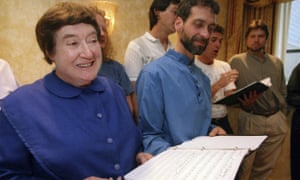
This report comes from the Religion News Service and the Guardian. The Shakers have a place and calling within our Christian history. I marvel at the ways God calls us and enriches our life together. ~Fr. Dan

Sister Frances Carr, one of the last remaining members of the nearly extinct religious society called the Shakers, has died. She was 89.

Carr died Monday surrounded by family and friends in the dwelling house at the Shaker community at Sabbathday Lake in New Gloucester, Maine after a brief battle with cancer, said Brother Arnold Hadd, one of the group’s two remaining members.

“She had a death with dignity and love,” Hadd said Tuesday. “She was surrounded by love, tears and a lot of Shaker songs.”

Source: Shaker group founded in 1783 has just two members after Maine woman dies | US news | The Guardian

Creating a Covenant Resolution

Mosaic of the Baptism of the LordThe Episcopal Diocese of Minnesota (Bishop’s Blog) posted a short meditation on entering the new year with the Season of Epiphany on our hearts and shaping our determination to be a follower (and a revealer) of Christ.

… what it would be like to merge our New Year’s resolutions with the Season of Epiphany. What if our New Year’s resolutions were to know and make known Christ in all things? Here’s what I think it would look like: Read the resolutions put forward for consideration

Source: Creating a Covenant Resolution – Bishop’s Blog

Image: Art in the Christian Tradition (Vanderbilt Library)

On Prayer and the New Year

As the new year approaches and many people think about new years resolutions, I would like to suggest one: reading written prayers.

I am not suggesting that one replace his whole prayer time with reading prayers or that he give up spontaneous praying in favor of reading prayers, but that he add to those disciplines the practice of reading prayers written by others. I suggest this resolution for the following reasons.

Written from an “evangelical perspective” the suggestion is relevant to all who wish to deepen their life of prayer in 2017. Read the entire post by Taylor Drummond on The Chorus in the Chaos Blog (Patheos).


Vatican restoration uncovers work of Renaissance master

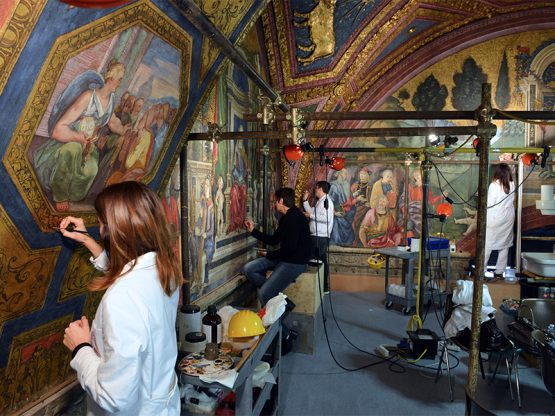
Art restorers recover the 500-year old apartments of Pope Alexander VI, bringing new life to the works of the Renaissance artist “Pinturicchio.” The restoration brings attention not only to the masterful frescoes but also to the the story of the controversial pope who commissioned them, Rodrigo Borgia.

Source: Vatican restoration uncovers work of Renaissance master on Crux

Statement of Becca Stevens after CNN Hero Awards

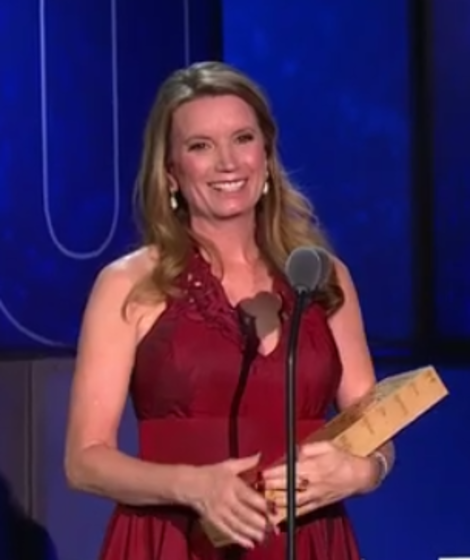
Becca Stevens at 2016 CNN Hear Awards Ceremony
Becca Stevens at the 2016 CNN Hero Awards Ceremony

It was a great honor to represent the women of Thistle Farms on the CNN Heroes Tribute last week in New York. The experience allowed us to make new friends and tell a wider community that love does heal. My favorite part of the weekend was becoming friends with the other honorees. I loved hearing about their work and laughing in the van on the way to interviews and the gala. From voting daily, to telling friends, I’m grateful for everything this community did to make such a big impact. We have a lot more work ahead and many women waiting for us to expand our reach. Love heals for sure–especially through the tireless efforts of everyone in the circle at Thistle Farms. Thank you, thank you, thank you.

Becca Stevens, Founder & President

Visit the Thistle Farms Website | Learn about the Mission of Thistle Farms

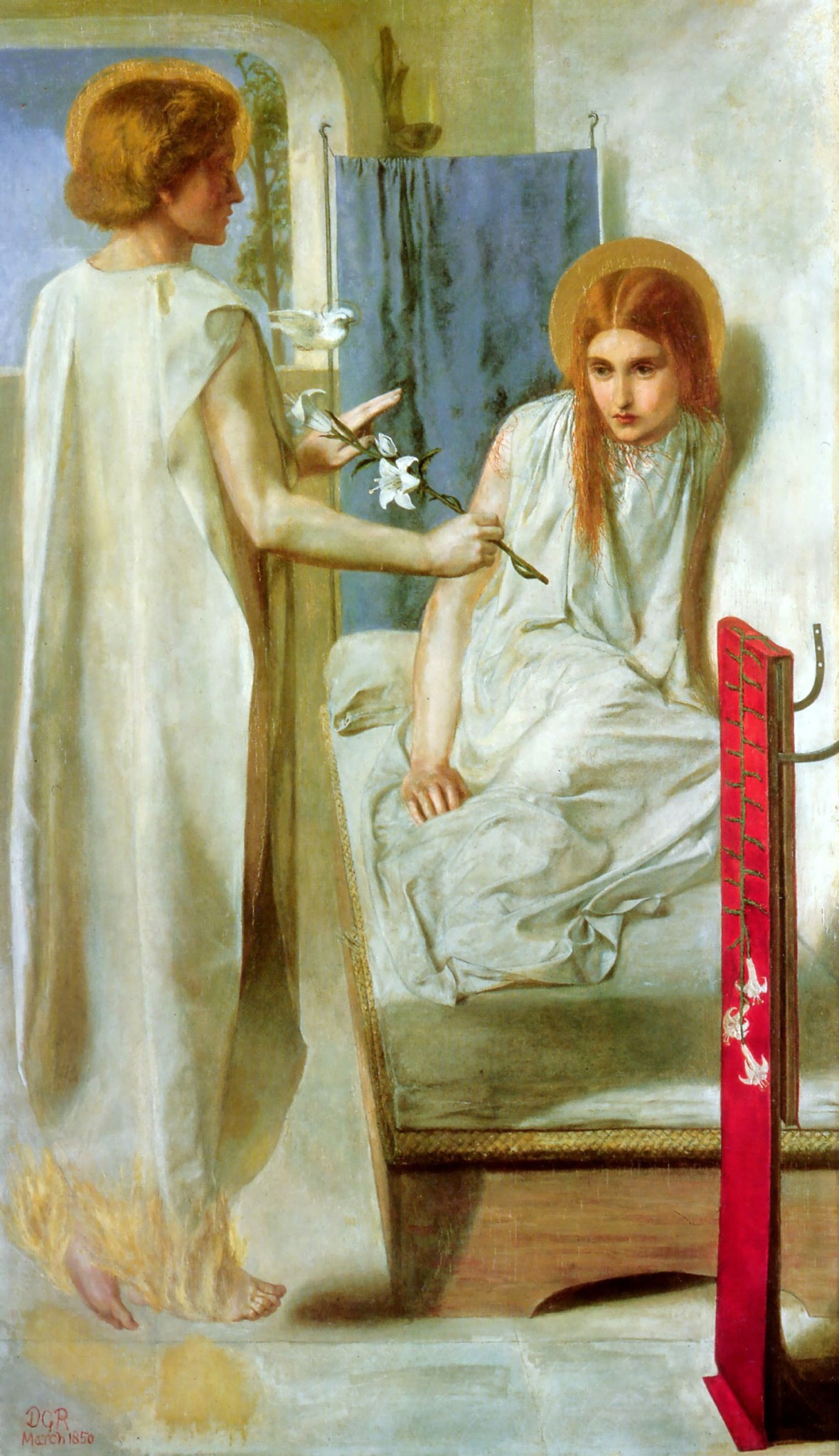
Ecce Ancilla Domini

The Annunciation by Rossetti

Ecce Ancilla Domini, oil on canvas, 1850, Dante Gabriel Rossetti, 1828 – 1882

The Biblical account of the Annunciation: Luke 1:26-38

Commentary by Hovak Najarian

At the time Dante Gabriel Rossetti painted, Ecce Ancilla Domini (Latin: “Behold the handmaiden of the Lord,” also called, The Annunciation), England was the most advanced industrialized nation in the world. In the following year, 1851, the Great Exhibition in London (the first “World’s Fair”) celebrated the advancements of industry and culture. Like leaders of industry, English artists of the day were looking toward the future. Unlike many artists of his generation, however, Rossetti and like-minded friends did not follow their contemporaries. Instead of looking toward new directions in art, they looked back to medieval times and called themselves the Pre-Raphaelite Brotherhood (the name is in reference to a time before Raphael and the fifteenth century Renaissance). Among their beliefs was that art lost its spiritual quality after the Renaissance.

In subject matter, paintings of the annunciation depict the angel Gabriel greeting Mary to tell her she would bear a son and call him Jesus. Fifteenth and sixteenth century artists often placed this event at an intimate indoor setting or on a porch. Mary is pensive usually with a dove, representing the Holy Spirit above her head.

In contrast to idealized settings – often with dramatic lighting – created typically by artists of the Renaissance and beyond, the Pre-Raphaelites depicted subjects as real people in natural surroundings. In Rossetti’s, The Annunciation, Gabriel does not have dazzling rainbow-hued wings and Mary is not sitting in a throne-like chair. Instead, she is on her bed in a loose white nightgown looking as though she was awakened just a few minutes earlier and is now sitting up trying to process the message that Gabriel brought. She seems somewhat bewildered. A wingless Gabriel is standing upright by the bed, looking like an ordinary man floating in air slightly above the floor with his feet in flames. [Rossetti’s brother posed for Gabriel and he was originally without a halo. His younger sister, Christina, posed for Mary.] As in traditional depictions, Gabriel is presenting a lily (symbolizing purity) to Mary; a small haloed-dove is nearby. Although the red rectangular shape in the right foreground may not be recognized immediately, it is a sewing stand with its work-surface folded down. The image on it is a long-stemmed lily that Mary has been embroidering.

When Rossetti’s Annunciation was exhibited initially it did not receive favorable reviews. Critics were not accustomed to biblical subjects being treated in this non-traditional manner.

Notes:

In addition to painting, Dante Gabriel Rossetti wrote poems. The poetry of his younger sister, Christina, however, received far more acclaim. Her, poem, “In the Bleak Midwinter,” was set to music by Gustav Holst and is a Christmas hymn of the Anglican Church. This poem also was set to music as an anthem by Harold Darke. Anglican Churches honor Christina Rossetti with a feast day on April 27th.

Hovak Najarian © 2016
Four Possible Paths for the Book of Common Prayer – Standing Commission on Liturgy and Music

Our Book of Common Prayer, of course, unites us as Episcopalians. It is not a static document anymore than we are static Christ-followers. God is always working within us, and within our collective worship. Here is an example of God’s constant call to us to renew our lives in Christ and our faithful response to that call.

The Standing Commission on Liturgy and Music (SCLM) will be sending to General Convention 2018 four different paths forward for its consideration in regards to the Book of Common Prayer and liturgical renewal.  It will request that General Convention 2018 select one of the four paths that will chart the SCLM’s course for the 2018-2021, and 2021-2024 triennia.

Source: Four Possible Paths for the Book of Common Prayer – Standing Commission on Liturgy and Music