
Pentecost +2, Proper 5A

No distrust made Abraham waver concerning the promise of God, but he grew strong in his faith as he gave glory to God.

Welcome!

Each Wednesday morning a group of us gather to explore the readings to be used in worship on the following Sunday. Our handout features readings, commentaries, and notes for the Second Sunday After Pentecost (June 11, 2023) in Year A of the Revised Common Lectionary.
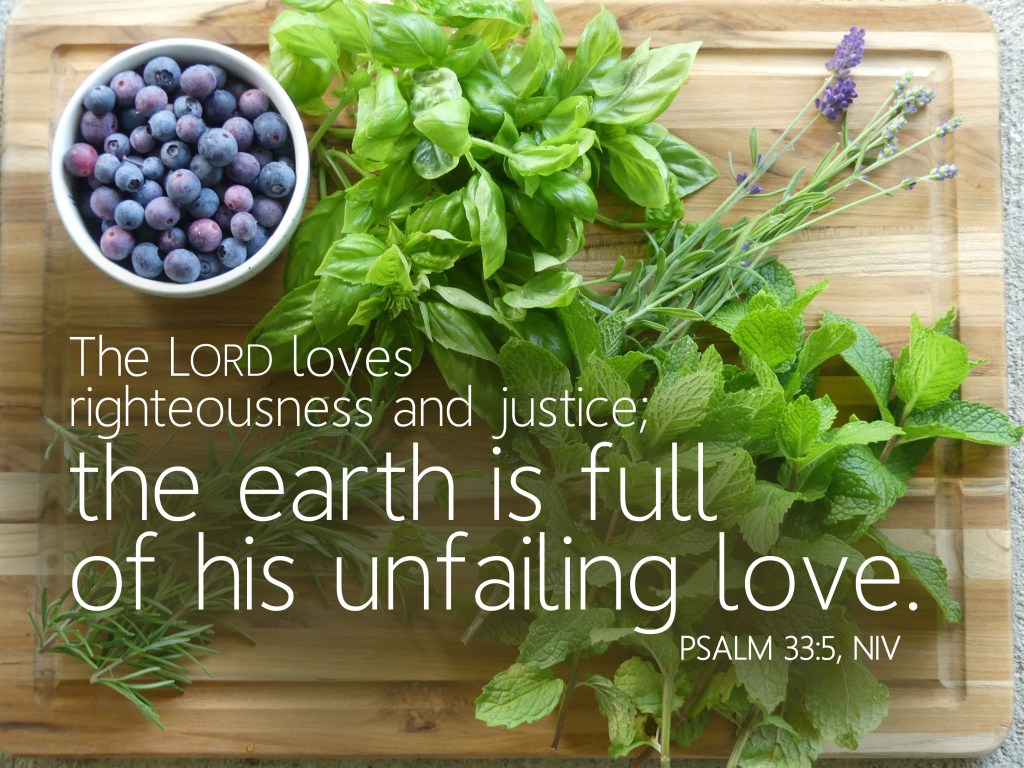
In our Forum on Wednesday, June 7, 2023, we carefully explored the readings from Genesis 12:1-9 and Matthew 9:9-13, 18-26 for the voice of the Spirit. Both the appointed Psalm (Psalm 33:1-12) and the portion of the Letter to the Romans (Romans 4:13-25) added depth to our discussion.

Please view or download the handout we used to guide our exploration.

View the Revised Common Lectionary readings appointed for Sunday, June 11, 2023 on the Revised Common Lectionary site curated by the Vanderbilt Divinity Library.

Track 1 and Track 2?

What are “Track 1” and “Track 2”?

During the … season after Pentecost, there are two tracks (or strands) each week for Old Testament readings. Within each track, there is a Psalm chosen to accompany the particular lesson.

The Revised Common Lectionary allows us to make use of either of these tracks, but once a track has been selected, it should be followed through to the end of the Pentecost season, rather than jumping back and forth between the two strands

The first track of Old Testament readings (“Track 1”) follows major stories and themes, read mostly continuously from week to week. In Year A we begin with Genesis, in Year B we hear some of the great monarchy narratives, and in Year C we read from the later prophets.

A second track of readings (“Track 2”) follows the Roman Catholic tradition of thematically pairing the Old Testament reading with the Gospel reading, often typologically—a sort of foretelling of Jesus Christ’s life and ministry, if you will. ….

Within each track there may be additional readings, complementary to the standard reading; these may be used with the standard reading, or in place of it.

(credit to The Rev Dr. J. Barrington Bates)

Via The Lectionary Page (scroll down to view)

Pay attention. Keep learning.

View or download the Handout for Proper 5, Year A.

Saint Matthew – Tax Man, Apostle, Evangelist, Martyr from the Ad Imaginem Dei blog curated by Margaret M. Duffy. This post explores Saint Matthew presented in Christian art through the centuries.

Please come back to this site throughout the week in order to keep learning.

Image: ChurchArt Pro

Matthew, Apostle and Evangelist

As Jesus continued on from there,
he saw a man named Matthew
sitting at a kiosk for collecting taxes.
He said to him, “Follow me,”
and he got up and followed him.

Matthew 9:9, CEB

Collect commemorating Matthew, Apostle and Evangelist

We thank you, heavenly Father, for the witness of your apostle and evangelist Matthew to the Gospel of your Son our Savior; and we pray that, after his example, we may with ready wills and hearts obey the calling of our Lord to follow him; through Jesus Christ our Lord, who lives and reigns with you and the Holy Spirit, one God, now and for ever. Amen.

Come wander with me. Hear what the Spirit is saying, as you listen to what we ask (and what we say about ourselves and our God) in the Collect we pray as we commemorate Saint Matthew, Apostle and Evangelist.

We thank you, heavenly Father

  • Only one other Collect (Saturday in Easter Week) begins with the words “we thank you.” My personal prayers often begin with the words, “thank you.” Other collects contain thanksgiving, but this prayer on Matthew’s Feast Day and the prayer on Saturday in Easter Week mark the only 2 times our communal prayer in worship begins with thanksgiving.

we pray that, after [Matthew’s] example, we may with ready wills and hearts obey the calling of our Lord to follow him

  • Wow. That is some request. It intrigues me that our request is that we imitate the example of Matthew, that we hear and then obey (with ready wills and hearts no less) the calling of our Lord to follow. We don’t ask for graces to prepare ourselves to be sent (an apostle is one who is sent by another) or even to proclaim ‘good news’ (what Matthew ultimately did, what an evangelist does); we ask to be able to hear and obey and follow. We ask God for grace (and good-will) to hang out with Jesus.
  • If you are reading this. chances are you have indeed heard this call and have followed Jesus.
    • Into what adventure have you followed him?
    • Were you able, like Matthew, to follow immediately?
    • Were you more like me (and so many others I have met along the way) and hesitated, wondered, asked questions, started, stopped, sat down and didn’t move, and, you get the idea … well?
    • My following has hardly been immediate or perfect, but here I am. I do thank God for that grace; I thank God that I have so many traveling with me who have similar stories. I thank God for the example of Matthew, who just got up and followed.

What are your thoughts as you listen to this prayer, especially the notion of “call”? And, by the way, have you noticed how often “call” is part of our prayers? What are your experiences, your hopes, your beliefs, given voice in this prayer? Please continue the conversation in the Comment section. Be well. Do good. Pay attention. Keep learning.

John Coleridge Patteson

A Collect commemorating John Coleridge Patteson and his Companions; Bishop of Melanesia, Martyrs, 1871

Almighty God, you called your faithful servant John Coleridge Patteson and his companions to be witnesses and martyrs in the islands of Melanesia, and by their labors and sufferings raised up a people for your own possession: Pour out your Holy Spirit upon your Church in every land, that by the service and sacrifice of many, your holy Name may be glorified and your kingdom enlarged; through Jesus Christ our Lord, who lives and reigns with you and the Holy Spirit, one God, for ever and ever. Amen.
(Collect for the Commemoration of John Coleridge Patteson, in Holy Women, Holy Men)

Inspired by offline encouragement, I find myself wandering through the Collects (prayers used by many churches including the Episcopal Church at the start of worship). Come wander with me. Hear what the Spirit is saying, as you listen to what we ask (and what we say about ourselves and our God) in the Collect we pray as we commemorate John Coleridge Patteson and his companions.

“you called” (let’s consider this one element of the Collect)

Once again we acknowledge a characteristic of God: Almighty God (One so beyond us) is also One who calls (a very personal, very intimate activity).

If God speaks anywhere, it is into our personal lives that he speaks. Someone we love dies, say. Some unforeseen act of kindness or cruelty touches the heart or makes the blood run cold. We fail a friend, or a friend fails us, and we are appalled at the capacity we all of us have for estranging the very people in our lives we need the most.

“If God speaks anywhere,
it is into our personal lives”

Or maybe nothing extraordinary happens at all—just one day following another, helter-skelter, in the manner of days. We sleep and dream. We wake. We work. We remember and forget. We have fun and are depressed. And into the thick of it, or out of the thick of it, at moments of even the most humdrum of our days, God speaks.
Buechner, Frederick (2009-10-13). Listening to Your Life: Daily Meditations with Frederick Buechne (pp. 2-3). Harper Collins, Inc.. Kindle Edition.

I believe (with Buechner and many others) that God speaks (“calls”) through persons and events in our lives. It is a very personal communication if we are paying attention. By paying attention I mean listening and wondering in prayer, in study, in quiet, in action (as we do what we believe God is “calling” us to do). In each of these moments we gain information. When what we “hear” is confirmed by others in our faith community, we can definitely go forward with boldness (like John Coleridge Patteson and his companions).

What are your thoughts as you listen to this prayer, especially the notion of “call”? What are your experiences, your hopes, your beliefs, given voice in this prayer? Please continue the conversation in the Comment section. Be well. Do good. Pay attention. Keep learning.