7/31/12—Maturing in wisdom and age

Ignatius of Loyola

Today, July 31st, the Church remembers St. Ignatius of Loyola. Much has been written about Ignatius and many (including me) incorporate all or some of what is now called “Ignatian Spirituality” as a daily exercise of  body, mind, and spirit.

Here is a video meditation (32 minutes) on the saint and his spirituality, on art, on the creativity of humans, on why we continue to find ways (like sculptures) to use material objects to enter more deeply into spiritual mysteries, and on the possibility that a 16th century human can still speak powerfully to us 21st century humans.

The process of making and placing “Examen” by Joan Benefiel and Jeremy Leichman (Figuration LLC) on the campus of Fairfield University.

More about St. Ignatius in the Episcopal Blog Holy Women, Holy Men

7/24/12—Maturing in wisdom and age

Thomas à Kempis

My “go-to” book on discernment is Hearing with the heart: A gentle guide to discerning God’s will for your life (San Francisco, CA: Jossey-Bass, 2003) by Debra K. Farrington. She begins Chapter 1 with this prayer by Thomas à Kempis whom the Episcopal Church commemorates today (July 24):

Grant me, O Lord, to know what I ought to know, to love what I ought to love, to praise what delights you most, to value what is precious in your sight, to hate what is offensive to you. Do not allow me to judge according to the sight of my eyes, nor to pass sentence according to the hearing of my ears; but to discern with a true judgment between things visible and spiritual, and above all things, always to inquire what is the good pleasure of your will.

The wisdom of Thomas has helped and continues to help shape my spirituality. My prayer is frequently not as eloquent as this prayer, but it is nonetheless fervent in seeking to know and do God’s will.

What do you think—is his prayer something you have prayed? Something you would like to pray? Something that a Christ-follower might actually achieve (knowing and doing God’s will)? Let us know.

7/22/12—Maturing in wisdom and age

Jesus matured in wisdom and years, and in favor with God and with people. Luke 2:52 CEB

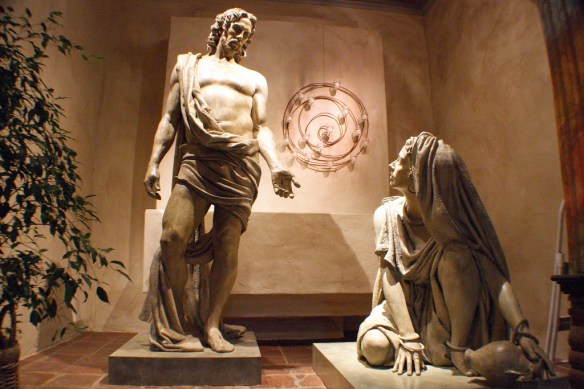
Mary Magdalene: Apostle to the Apostles

Jesus and Mary Magdalene by Bruce Wolfe in the Mission Santa Barbara
Jesus with Mary Magdalene by Bruce Wolfe in the Mission Santa Barbara

Every July 22nd the Episcopal Church commemorates Mary Magdalene, Apostle to the Apostles. This year her commemoration is moved to Monday, July 23rd.

Misidentification of Mary as reformed public sinner achieved official standing with a powerful homily by Pope Gregory the Great (540-604).
Henceforth, Mary of Magdala became known in the west, not as the strong woman leader who accompanied Jesus through a tortuous death, first witnessed his Resurrection, and proclaimed the Risen Savior to the early church, but as a wanton woman in need of repentance and a life of hidden (and hopefully silent) penitence. Interestingly, the eastern church never identified her as a prostitute, but honored her throughout history as “the Apostle to the Apostles”. Read more at Mary of Magdala– Apostle to the Apostles
Mary Magdalene looking to the Risen Christ
The Gospel narratives give a prominence to women in the Jesus movement unusual in ancient society; this culminates in the extraordinary part which they play in Matthew’s, Mark’s and John’s accounts of the human discovery of the Resurrection. All three evangelists make women the first witnesses to the empty tomb and resurrection of Jesus; this is despite the fact that in Jewish Law women could not be considered as valid witnesses. The most prominent named woman, first in all three accounts, is Mary Magdalene (‘from Magdala’ in Galilee). She was a close associate of Jesus in his public ministry and has continued to arouse a set of variously motivated fascinations among Christians throughout the ages. Some overexcited modern commentators and mediocre novelists have even elevated her (on no good ancient evidence) to the status of Jesus’s wife.
(MacCulloch, Diarmaid (2010-02-25). Christianity: The First Three Thousand Years, Kindle Edition. Search word: Magdalene

Come Holy Spirit

Fifteen years ago The Rev. G. Bradford Hall, 4th rector of St. Margaret’s, died. Brad’s oft prayed sermon prayer, iconic of his service and inspirational to the service of many of us, was simple, direct, compelling.

Come Holy Spirit,
Come with your fire and burn us.
Come with your rain and cleanse us.
Come with your light and reveal to us.
Convict us, convert us, consecrate us
Until we choose to do something with our lives.

Many who remember Brad and his prayer and others who encounter the prayer anew ask where did Brad get it.

A year after Brad’s passing his collected sermons were published in THE JOURNEY HOME…Make It A Good One and in that book compiler Peggy Herz Smith tells of the source of ‘Brad’s Prayer’.

Brad and Carol Hall were living in Coronado, California, when they decided one Sunday to go to a nearby Methodist Church. Brad didn’t like what he heard in the sermon that day, so he wrote the minister a blistering letter. The minister, whose name was Tom Warmer, invited this stranger to his office to talk about his anger. “Once over my initial feelings toward him, I found in Tom a warm, sensitive, accepting person,” Brad later wrote. “We talked more, I shared more … and before long I had poured out a tearful confession of guilt, anger, fright, hope, anxiety. I was totally embarrassed and planned to flee, but Tom accepted who I was and where I was. It was a turning point for me and, as I reflect on it now, a real conversion experience. I joined his church the next Sunday. In this church I experienced my Protestant reformation. I heard Bible stories, attended Sunday school and listened to great preaching. With the talent of a great Wesleyan preacher, Tom brought these stories alive not only to me but to the whole town. His church was packed every Sunday.” It was from Tom Warmer that Brad first heard the prayer which he was to use so often during his ministry. He changed the wording occasionally, but never the heart of the beautiful words: “Come Holy Spirit, Come with your fire and burn us … Convict us, convert us, consecrate us … Until we do something with our lives.”

I thought I’d track Warmer down – offer my thanks for his influential prayer – but I didn’t have any luck. An internet search yielded the church but when I called I was told that Tom Warmer was no longer at that Methodist Church and they heard that he had a ‘store front’ church downtown somewhere. A brief conversation with a retired Methodist Minister acquaintance confirmed that Warmer had left the church. So I left it at that for a dozen plus years.

Renewed interest, this year, in ‘Brad’s Prayer’ prompted me to search again. Online I did find Coronado Community Church and on their website they acknowledge Pastor Emeritus Tom Warmer.

Here’s their website http://www.coronadocommunitychurch.org/

I especially like their statement of “What We Believe”

We believe God speaks in many languages and has revealed divine truth in the major religious traditions of the human race. Our central belief is that Jesus Christ is Lord. But in proclaiming that Jesus is the way and the truth does not preclude that his way may also be manifest in religions that do not worship him as Lord. We believe there is a mystery of how God works in our traditions exceeding our knowledge and control. We celebrate the revelation of God presented in the Holy Bible and trust God’s Spirit to unlock how we are to understand divine truth and apply it to our lives.

Thanks again Tom.
Remembering—a treasure trove of hope and inspiration

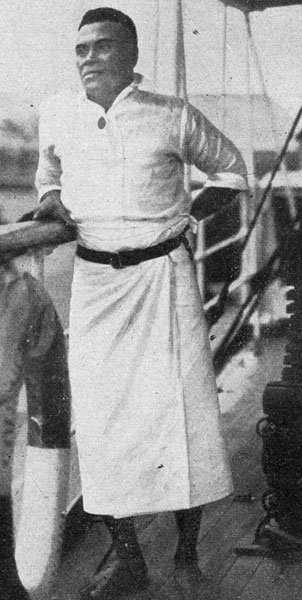
 Loving God, we bless your Name for the witness of Ini Kopuria, police officer and founder of the Melanesian Brotherhood, whose members saved many American pilots in a time of war, and who continue to minister courageously to the islanders of Melanesia. Open our eyes that we, with these Anglican brothers, may establish peace and hope in service to others, for the sake of Jesus Christ; who with you and the Holy Spirit lives and reigns, one God, for ever and ever. Amen. Collect for the Commemoration in Holy Women, Holy Men.

An image of Ini Kopuria in 1945
Ini Kopuria from Holy Women, Holy Men

From the time Jesus said “Do this in remembrance of me” (and even before) faithful men and women have remembered, not just the meal and words of Jesus, but, the stories of those who went before them and those contemporaries who inspired hope in them. We have followed Jesus’ command and we have added the stories of Holy Women and Holy Men to our (Eucharistic) meals.

The Standing Commission on Liturgy and Music of the Episcopal Church is revising our “Memory Book.” You may remember the book Lesser Feasts and Fasts. This book collected short stories of “saintly” forebearers, men and women, commemorated throughout the year (see the Book of Common Prayer, pp. 15-33). In 2009 the Commission was asked to expand the number and kinds of commemorations. The Commission will report to General Convention this summer. However, the “Trial Use” of the old and new commemorations, now called Holy Women, Holy Men, will continue.

All of that is said so that I can introduce Ini Kopuria, Founder of the Melanesian Brotherhood, 1945. You may read his story here: June 6: [Ini Kopuria, Founder of the Melanesian Brotherhood, 1945]. You can see from the Collect to be used in the commemoration that the work of the Melanesian Brotherhood continues to this day.

Do you have a saintly woman or man (women or men) whose memory inspires your best actions and gives you hope? Please share.

Feast of the Visitation (May 31)

Take a moment, now that you have found this, to consider the visit of Mary to Elizabeth. May 31st is the Feast of the Visitation in the Episcopal Liturgical Calendar.

In those days Mary set out and went with haste to a Judean town in the hill country, where she entered the house of Zechariah and greeted Elizabeth. When Elizabeth heard Mary’s greeting, the child leaped in her womb. And Elizabeth was filled with the Holy Spirit and exclaimed with a loud cry, “Blessed are you among women, and blessed is the fruit of your womb. And why has this happened to me, that the mother of my Lord comes to me? For as soon as I heard the sound of your greeting, the child in my womb leaped for joy. And blessed is she who believed that there would be a fulfillment of what was spoken to her by the Lord.” Luke 1:39-45

Take my life, and let it be consecrated, Lord, to Thee

We have titled Mary’s response to Elizabeth, “the Magnificat” Luke 1:4-55.

Earlier today Sojourners posted this in its “Verse and Voice” blog: “Take my life, and let it be consecrated, Lord, to Thee. Take my moments and my days; let them flow in ceaseless praise. Take my hands, and let them move at the impulse of Thy love. Take my feet, and let them be swift and beautiful for Thee. Amen.”
From the first verse of the hymn, “Take My Life and Let It Be” Post: Prayer of the Day: Take My Life and Let It Be

Finally, if you like to listen to different voices speaking on women in the Bible, and Mary on the Feast of the Visitation try this podcast: Lifting up the lowly offered by America: the national Catholic weekly

In what ways do these women model for you what it means to listen to the Spirit, to hear the Spirit, and to act on what you hear the Spirit saying to you? Leave a comment.

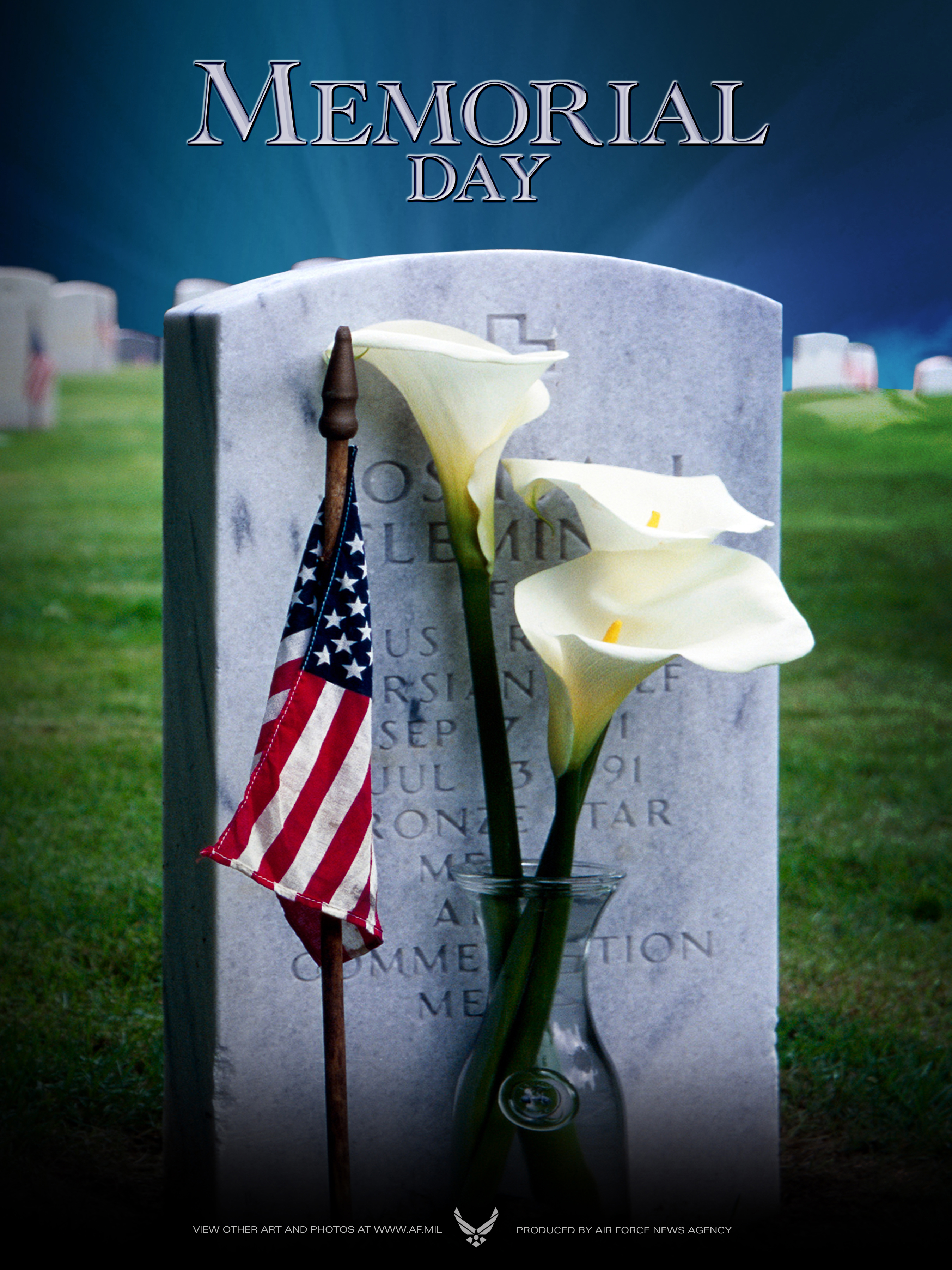
Memorial Day: as we remember may we also become committed to work for peace

Memorial Day, which is observed on the last Monday of May, commemorates the men and women who died while in the military service.  In observance of the holiday, many people visit cemeteries and memorials, and volunteers often place American flags on each grave site at national cemeteries.  A national moment of remembrance takes place at 3:00 p.m. local time. —Dept. of Veterans Affairs

My hope this Memorial Day is that in the midst of whatever holiday fare you have planned today you will take a moment to remember the sacrifices made on our behalf. To help you here are some links I have found helpful in my spiritual journey:

Here is a short prayer shared by the Rev. Gagne in his essay. Let it be our prayer today.

 Loving God, we pray to you for people of every race, religion, langauge and nation. Help us always to respect and love each other for You have made us all. Let those who have given their lives for the sake of justice, peace and freedom be rewarded by your generous love. May their families and friends, and we who honor them today, remember them with love, now and always. Amen.

The blood of the martyrs is the seed of the church …

The Martyrs of the Sudan

… so said Tertullian in the 3rd century CE. Martyrdom isn’t relegated to days long ago and places far away. As a community we remember those who, even now, witness to the faith with their very lives.

Quote . . .On May 16, 1983, a small number of Episcopal and Roman Catholic clerical and lay leaders declared they “would not abandon God as they knew him.” Possibly over two million persons, most of them Christians, were then killed in a two-decade civil war, until a Comprehensive Peace Treaty was signed in January 2005. During those years, four million southern Christians may have been internally displaced, and another million forced into exile in Africa and elsewhere. Yet despite the total destruction of churches, schools, and other institutions, Sudanese Christianity, which includes four million members of the Episcopal Church of the Sudan, has both solidified as a faith community, and gradually expanded at home and among refugees, providing steadfast hope in often-desperate setting.

—from the blog post on Holy Women, Holy Men

The Standing Commission on Liturgy and Music (SCLM) is currently revising the “old” Lesser Feasts and Fasts calendar of the Episcopal Church. The commemoration of the Martyrs of the Sudan is “new.”  This work of revision (and more) of the SCLM will be discussed in the General Convention in Indianapolis, IN this summer.

The Collect for this Commemoration

O God, steadfast in the midst of persecution, by your providence the blood of the martyrs is the seed of the Church: As the martyrs of the Sudan refused to abandon Christ even in the face of torture and death, and so by their sacrifice brought forth a plentiful harvest, may we, too, be steadfast in our faith in Jesus Christ; who with you and the Holy Spirit lives and reigns, one God, for ever and ever. Amen.

____________
Image: Holy Women, Holy Men

Michael Phillip Martinez

Two years ago, March 23 at 8 in the morning, Michael collapsed while unloading food at our outreach center. By 11 he was in a coma and remained so till death on the 26th. The burst aneurism had shredded his aorta; nothing could be done.

We had known Michael for a few years and for over a year he had been a dedicated client-volunteer typically giving 16+ hours a week. He had at first come to help in relocating the outreach center and stayed to help buy, handle, sort, bag, and distribute food. He returned one morning a week to mop and clean while I did data.

After his death we came to know how little we knew of Michael; probably things we could have known or surmised but in the focus of work never got around to.

Two loom large. Michael was homeless and without medical care.

Not that Michael was at all forthcoming. He had, he said, been renting a small trailer in 1000 Palms but at some point switched, he said, to a rented room. After his death we found the ‘room’ in 1000 Palms, actually a few shelves of Michael’s boxed belongings in a residence that had been converted into a machine shop. Michael was renting storage. Medically, in his mid 50s, overweight, with a bad diet, he fit the same profile that had landed me a triple bypass a decade earlier.

Could we have guessed his homelessness? Read the signs of him preparing food to take with him or ‘showering’ with a garden hose out back?  Could we have urged him to explore housing alternatives just as we were doing for other clients weekly? Could we have curtailed his physical activity on our behalf in light of his obvious risk status, and knowing that, have recommended medical alternatives? Maybe. Probably. Sure.

But my remembrance here is not what we could (should) have done. My remembrance it that we missed it. When we are admonished to ‘love one another as I have loved you’ we can’t just wait for the opportunity to show itself. We must seek it out with our eyes and ears open and be willing to read between the lines. Then, hopefully, action will follow.

First Woman Priest in the Anglican Communion: Li Tim-Oi’s Story


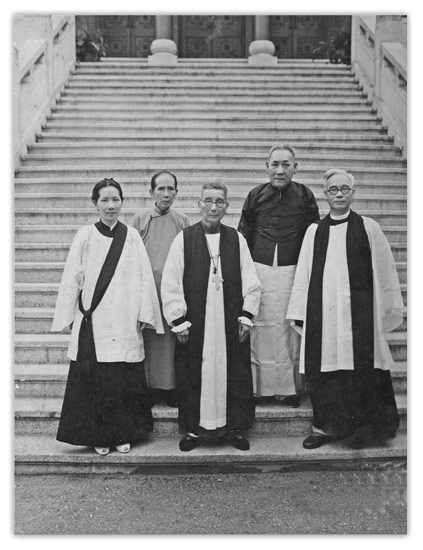
Li Tim-Oi, her mother, Bishop Mok, her father, Archdeacon Lee Kow Yan after her ordination as Deacon by Bishop R 0 Hall at St John’s Cathedral HK. Ascension Day 22 May 1941
Photo from Li Tim-Oi Story


Today (Jan, 24) the Episcopal Church commemorates Florence Li Tim-Oi: the first woman priest in the Anglican Communion (ordained on 25 January 1944). I encourage you to read her story:

At her birth in Hong Kong on 5 May 1907 Li Tim-Oi’s father called her “Much Beloved” because he valued her as a daughter even if others prefered sons.

Read the rest of her story: Litim-Oi | Li Tim-Oi’s Story.

The Li Tim-Oi Foundation was established in 1994. The Foundation funds It takes ONE woman: “It takes ONE woman sums up the story and aim of the LI TIM-OI FOUNDATION – founded in memory of the first Anglican woman priest – to empower Christian women to be agents of change in the Two-Thirds World.” (from the Foundation website)

Read more about the work of the Foundation: It takes ONE woman

Read about the Ordination of women in the Anglican Communion on Wikipedia