We ought to lay down our lives for the brothers and sisters.

Wind in the Chimes: About selfless love

1 John 3:16

On the Fourth Sunday of Easter, Year B, all the readings lead us to see Jesus as the Good Shepherd. The qualities of the Good Shepherd were learned, taught, and lived by his disciples to all who would listen and receive the love of God in Jesus Christ. This Sunday the quality of living and acting from a selfless love is highlighted in 1 John 3:16-24

Ronald Cole-Turner opens up the words of 1 John 3:16:

Love is known in action. How do we know God’s love? It is through God’s action in sending Jesus Christ into the world, and through Christ’s action of laying down his life for us. The actions of God show us what God is like.

The same test applies to our love. How do others know what is in our heart? It is by our actions. Just as God’s love is known to us through the visible action of Christ, so our love is known to others through concrete actions that mirror Christ’s own. Christ lays down his life, and we are to lay down our lives. […]

For Christians, self-sacrifice should be ordinary, not extraordinary. We ought to lay down our lives, John writes, not intending to give a grand challenge for heroic Christian but an everyday commandment for ordinary Christians. The Christian life is a life laid down for others, a life built on self-sacrifice.

Sometimes self-sacrifice can mean physical death. […] More often, the stakes are lower. But the principle is the same. Laying down our lives, at its core, can mean any number of ways in which we lay aside our claim to own our lives. We lay down our lives when we put others first. We lay down our lives when we live for the good of others. We lay down our lives when we make time for others. To love others is to lay down our life for them. When we lay down the completely normal human desire to live for ourselves, and when instead we allow the love of God to reorient us toward the needs of others, we are laying down our lives.

Ronald Cole-Turner is the H. Parker Sharp Chair of Theology and Ethics, at Pittsburgh Theological Seminary, Pittsburgh, Pennsylvania. More.

More

  • A prayer used by Episcopalians: Heavenly Father, whose blessed Son came not to be served but to serve: Bless all who, following in his steps, give themselves to the service of others; that with wisdom, patience, and courage, they may minister in his Name to the suffering, the friendless, and the needy—for the love of him who laid down his life for us, your Son our Savior Jesus Christ, who lives and reigns with you and the Holy Spirit, one God, for ever and ever. Amen. [Book of Common Prayer p. 260 (A Collect for Social Service)]
  • A prayer suggested for caregivers from the Pocket Prayers Series: Give to my eyes light to see those in need. / Give to my heart compassion and understanding. / Give to my mind knowledge and wisdom. / Give to my hands skill and tenderness. / Give to my ears the ability to listen. / Give to me Lord strength for this selfless service and enable me to bring joy to the lives of those I serve. [Author unknown quoted in Trevor Lloyd, Pocket Prayers for Healing (Pocket Prayers Series). Church House Publishing. Kindle Edition.]
  • See also Philippians 2:5-11

About Wind in the Chimes

Wind in the Chimes (renaming and reintroduction of Wind Chimes, 7/21/20)

Wind Chimes: September 25 2012 (an introduction)
By what name did you do this?

Wind in the Chimes: About healing and our centuries-long trust in the Lord.

After healing a man lame from birth Peter begins to tell the story of Jesus and the healing power of Jesus. He is arrested and then questioned about the power or name that was used to heal the man. (Acts 3-4)

Peter makes a declaration to the authorities questioning him: “…if we are being questioned today because of a good deed done to someone who was sick and are being asked how this man has been healed, let it be known to all of you … that this man is standing before you in good health by the name of Jesus Christ of Nazareth … There is salvation in no one else, for there is no other name under heaven given among mortals by which we must be saved.” Acts 4:9-12

We continue to trust the words of Peter as recorded in Acts. We continue to trust the healing power of Jesus. This is how we believe (trust), this is how we pray:

The Almighty Lord, who is a strong tower to all who put their trust in him, to whom all things in heaven, on earth, and under the earth bow and obey: Be now and evermore your defense, and make you know and feel that the only Name under heaven given for health and salvation is the Name of our Lord Jesus Christ. Amen.

Book of Common Prayer pp. 456-457 (Ministration to the Sick)

More

  • See also Philippians 2:5-11
  • A prayer for trust by one who is ill: O God, the source of all health: So fill my heart with faith in your love, that with calm expectancy I may make room for your power to possess me, and gracefully accept your healing; through Jesus Christ our Lord. Amen. [Book of Common Prayer p. 461 (Trust in God)]
  • Healing must never be seen as an end in itself. Scripture teaches us that Jesus’ healings were a sign of the reign of God come near, of God’s marvelous power and presence among us. Healing is not merely the alleviation of affliction, but testimony to the wholeness and salvation God intends for us. [Enriching Our Worship 2, p. 16 (This is a book of supplemental liturgical materials used in The Episcopal Church.)]

About Wind in the Chimes

Wind in the Chimes (renaming and reintroduction of Wind Chimes, 7/21/20)

Wind Chimes: September 25 2012 (an introduction)

Pentecost +2, Proper 5A

No distrust made Abraham waver concerning the promise of God, but he grew strong in his faith as he gave glory to God.

Welcome!

Each Wednesday morning a group of us gather to explore the readings to be used in worship on the following Sunday. Our handout features readings, commentaries, and notes for the Second Sunday After Pentecost (June 11, 2023) in Year A of the Revised Common Lectionary.

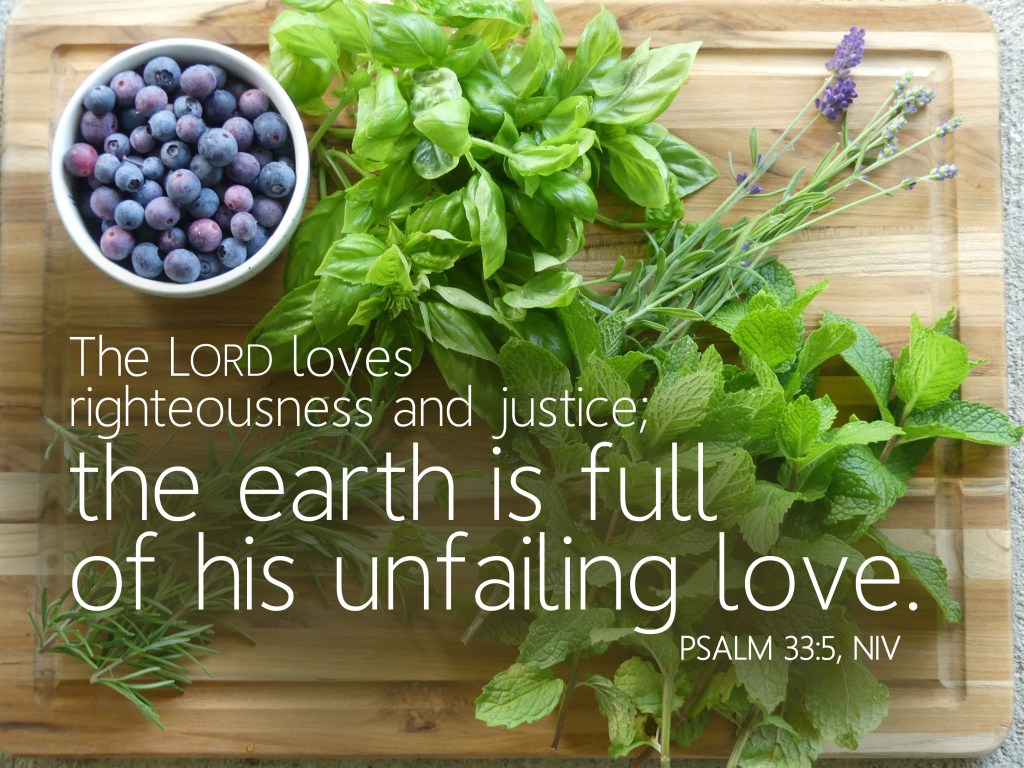
In our Forum on Wednesday, June 7, 2023, we carefully explored the readings from Genesis 12:1-9 and Matthew 9:9-13, 18-26 for the voice of the Spirit. Both the appointed Psalm (Psalm 33:1-12) and the portion of the Letter to the Romans (Romans 4:13-25) added depth to our discussion.

Please view or download the handout we used to guide our exploration.

View the Revised Common Lectionary readings appointed for Sunday, June 11, 2023 on the Revised Common Lectionary site curated by the Vanderbilt Divinity Library.

Track 1 and Track 2?

What are “Track 1” and “Track 2”?

During the … season after Pentecost, there are two tracks (or strands) each week for Old Testament readings. Within each track, there is a Psalm chosen to accompany the particular lesson.

The Revised Common Lectionary allows us to make use of either of these tracks, but once a track has been selected, it should be followed through to the end of the Pentecost season, rather than jumping back and forth between the two strands

The first track of Old Testament readings (“Track 1”) follows major stories and themes, read mostly continuously from week to week. In Year A we begin with Genesis, in Year B we hear some of the great monarchy narratives, and in Year C we read from the later prophets.

A second track of readings (“Track 2”) follows the Roman Catholic tradition of thematically pairing the Old Testament reading with the Gospel reading, often typologically—a sort of foretelling of Jesus Christ’s life and ministry, if you will. ….

Within each track there may be additional readings, complementary to the standard reading; these may be used with the standard reading, or in place of it.

(credit to The Rev Dr. J. Barrington Bates)

Via The Lectionary Page (scroll down to view)

Pay attention. Keep learning.

View or download the Handout for Proper 5, Year A.

Saint Matthew – Tax Man, Apostle, Evangelist, Martyr from the Ad Imaginem Dei blog curated by Margaret M. Duffy. This post explores Saint Matthew presented in Christian art through the centuries.

Please come back to this site throughout the week in order to keep learning.

Image: ChurchArt Pro

Lessons learned at St. Andrew’s Children’s Clinic

Lessons learned at St. Andrew’s Children’s Clinic

Here is a real-life example of what it means to be a “missional” church. This is posted by the Episcopal News Service.

Lessons learned at St. Andrew’s Children’s Clinic

Here is a real-life example of what it means to be a “missional” church. This is posted by the Episcopal News Service.

B Epiphany 6, Art for Readings for February 12, 2012

REMBRANDT Harmenszoon van Rijn
Click to open Biblical Art on the WWW to explore other works by this artist.

Artwork: Christ healing a leper
Artist: REMBRANDT Harmenszoon van Rijn
Date: C. 1655
Technique: Drawing
Location: Kupferstichkabinett, Berlin
Click to open Biblical Art on the WWW display page. Click on ‘IMAGE’ to enlarge.

Fourth Day of Christmas: Barbara Sinatra Children’s Center

Barbara Sinatra Children’s Center

By now you may have picked up a theme in this week after Christmas: children. With the joyful images and music of Christmas we celebrate the birth of the Christ child; now seems a good time to shine that Christ-light on the needs of children here and around the world.

Today (12/28) the Church commemorates the Feast of the Holy Innocents. We tell the story of the violent death of children in 1st century Palestine at the command of a tyrant, see Matthew 2:13-18. Sadly, centuries later, children in our own Coachella Valley still need to seek safety and healing from violence and abuse despite our efforts to live the kind of love that Jesus lived. The staff and volunteers (some of them members of St Margaret’s) are at the Barbara Sinatra Center to bring healing and hope to these children.  ~dan rondeau

The Children Come First

Founded in 1986 by Barbara and Frank Sinatra, the nonprofit Barbara Sinatra Children’s Center at Eisenhower provides counseling for victims of physical, sexual and emotional child abuse.

Our mission is to break the generational cycle of abuse by focusing on prevention and education.

Approximately 90% of our budget comes from the generosity of a caring, worldwide community, fundraising events and charitable organizations. This heartfelt support ensures that children are counseled regardless of a family’s inability to pay.

Barbara Sinatra Children’s Center Home Page

The Twelve Days of Christmas Calendar in one place
About the Twelve Days of Christmas Calendar

divider line

For further reflection

Dick Van Dyke narrates a short (11 min) video about the Center

Logo: Barbara Sinatra Children's Center

Third Day of Christmas: St. Jude Children’s Research Hospital

St. Jude Children’s Research Hospital

In 2007 Natalie Tanner, only 5 months old, was diagnosed with a medulloblastoma (a cancerous tumor in her brain). Baptised at Loma Linda Children’s Hospital on the day of a surgery to remove as much of the tumor as possible, Natalie was given very little chance to survive. Kristen and Andrew Tanner, her parents and members of St. Margaret’s, were put in contact with St. Jude’s Hospital and Natalie was accepted as a patient, intercessory prayers ascended from St. Margaret’s while chemotherapy was begun at St. Jude. After initial successes and wonderful care the cancer returned, Natalie was placed on hospice care and I planned her Memorial Service with her parents. Intercessory prayers continued and a miracle of health and wholeness blossomed. By the end of summer 2008 the cancer had diminished and active care was resumed. Today Natalie continues to thrive.  ~dan rondeau

Natalie was the Patient of the Month in September 2008

Mission Statement

The mission of St. Jude Children’s Research Hospital is to advance cures, and means of prevention, for pediatric catastrophic diseases through research and treatment. Consistent with the vision of our founder Danny Thomas, no child is denied treatment based on race, religion or a family’s ability to pay.

St. Jude Children’s Research Hospital Mission Statement

St. Jude’s Children’s Research Hospital Home Page

The Twelve Days of Christmas Calendar in one place
About the Twelve Days of Christmas Calendar

divider line

For further reflection

Vision Statement

Our vision is to be the world leader in advancing the treatment and prevention of catastrophic diseases in children. This vision will be pursued by providing outstanding patient care; by conducting basic, translational and clinical research designed to elucidate biological mechanisms, understand disease pathogenesis, improve diagnosis, enhance treatment outcome, prevent diseases and minimize adverse consequences of treatment; and by educating health care and scientific research professionals. Through these efforts we seek to cure and enhance the quality of life for an increasing proportion of children who come to us for treatment, and by expanding and sharing knowledge, to advance treatment of children with catastrophic diseases worldwide, while developing strategies to prevent catastrophic diseases in children.

Values Statement

Our foremost responsibilities are to the children with catastrophic diseases, their families, and to the donors that have committed their personal resources toward our Mission. To fully meet these responsibilities, we are committed to an explicit set of values. These values are the standards of behavior that we use to guide our daily actions and decisions. We will ensure that these standards of behavior are adhered to through ongoing training of all personnel working at St. Jude, and by annually evaluating the executive leadership, faculty and staff in their adherence to these values.

Our values of ethical behavior are an important part of who we are, and their incorporation into the fabric of the institution directly impacts our ability to make progress toward achieving our Mission, while simultaneously strengthening our reputation.

  • A commitment to provide our patients with the highest quality of medical and supportive care, and their families with the level of information and support necessary for them to make informed decisions and to become active participants in the care of their children.
  • A commitment to respect the ethnic, cultural, religious and lifestyle differences of patients, their families, our colleagues and our supporters.
  • A commitment to our donors that every dollar donated will be wisely spent toward achieving our Mission of advancing cures, and means of prevention, for pediatric catastrophic disease through research and treatment.
  • A commitment to a culture of excellence, innovation and creativity, not only in our research, but in everything we do.
  • A drive and a sense of urgency to succeed.
  • Honesty, integrity, and accountability in our actions and decisions.
  • A culture of trust and teamwork.
  • Respect for the employees under our supervision.
  • A commitment to the continual development of our employees.
  • A commitment to diversity.
  • A commitment to social responsibility and institutional citizenship on a local, state, national and global level.

To effectively live up to these ideals, institutional leaders and all employees must maintain a culture that promotes adherence to these values in all that we do.

Source: Mission of St. Jude Children’s Research Hospital

Logo: St. Jude Children's Research Hospital

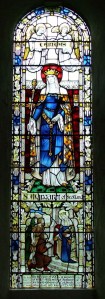
Art for St Margaret’s Day

St Margaret of Scotland
Window dedicated to the memory of Mary Ann,
wife of Anthony Metcalfe-Gibson of Coldbeck.
d. May 10,1925.
St Oswald
Ravenstonedale
Cumbria
Click to open St. Oswald’s Church presentation page at Cumbrian Churches Blog.


Click to open Wikipedia article for St. Margaret of Scotland.

It is often told of St. Margaret that she fed the hungry before she herself ate. Less told is that she rose early to say her devotions before the task of feeding.
 Join us in a Liturgy of Healing at St. Margaret’s Outreach Center, Thursday mornings at 9 a.m.
 and add your prayers of support for the continuance of St. Margaret’s work.
Click for St. Margaret’s Outreach Center.

Pentecost Year A

In the Sunday worship our Rector quoted from a “creed” sent to him. The creed begins:

We believe in the Holy Spirit, the Comforter, the Advocate,
Promised by Jesus,
Who proceeds from the Father and the Son.

The creed continues to celebrate and affirm the Spirit’s presence and power in creation, in the matriarchs and patriarchs and prophets of our ancestry, how the Spirit changed Mary and alighted on Jesus in the Jordan; the creed delights in the Pentecost experience and the power of preaching and healing let loose in the world. The creed finishes:

She dwells in and with God’s people,
Midwife to our rebirth as heavenly children.
One day she will welcome us home to the City of God,
And wipe away every tear from our eyes.

Written by Anastasia McAteer it can be read at Clayfire Curator: We believe in the Holy Spirit: A creed

Here is another indication of the “live word of the Living God.”

Come Holy Spirit….

____________
“Because the Bible is, as we confess, “the live word of the living God,” it will not submit in any compliant way to the accounts we prefer to give of it. There is something intrinsically unfamiliar about the book; and when we seek to override that unfamiliarity, we are on the hazardous ground of idolatry” –Walter Brueggemann in “Biblical Authority: A Personal Reflection” (2000)

The homepage of Clayfire Curator