Come Holy Spirit

Fifteen years ago The Rev. G. Bradford Hall, 4th rector of St. Margaret’s, died. Brad’s oft prayed sermon prayer, iconic of his service and inspirational to the service of many of us, was simple, direct, compelling.

Come Holy Spirit,
Come with your fire and burn us.
Come with your rain and cleanse us.
Come with your light and reveal to us.
Convict us, convert us, consecrate us
Until we choose to do something with our lives.

Many who remember Brad and his prayer and others who encounter the prayer anew ask where did Brad get it.

A year after Brad’s passing his collected sermons were published in THE JOURNEY HOME…Make It A Good One and in that book compiler Peggy Herz Smith tells of the source of ‘Brad’s Prayer’.

Brad and Carol Hall were living in Coronado, California, when they decided one Sunday to go to a nearby Methodist Church. Brad didn’t like what he heard in the sermon that day, so he wrote the minister a blistering letter. The minister, whose name was Tom Warmer, invited this stranger to his office to talk about his anger. “Once over my initial feelings toward him, I found in Tom a warm, sensitive, accepting person,” Brad later wrote. “We talked more, I shared more … and before long I had poured out a tearful confession of guilt, anger, fright, hope, anxiety. I was totally embarrassed and planned to flee, but Tom accepted who I was and where I was. It was a turning point for me and, as I reflect on it now, a real conversion experience. I joined his church the next Sunday. In this church I experienced my Protestant reformation. I heard Bible stories, attended Sunday school and listened to great preaching. With the talent of a great Wesleyan preacher, Tom brought these stories alive not only to me but to the whole town. His church was packed every Sunday.” It was from Tom Warmer that Brad first heard the prayer which he was to use so often during his ministry. He changed the wording occasionally, but never the heart of the beautiful words: “Come Holy Spirit, Come with your fire and burn us … Convict us, convert us, consecrate us … Until we do something with our lives.”

I thought I’d track Warmer down – offer my thanks for his influential prayer – but I didn’t have any luck. An internet search yielded the church but when I called I was told that Tom Warmer was no longer at that Methodist Church and they heard that he had a ‘store front’ church downtown somewhere. A brief conversation with a retired Methodist Minister acquaintance confirmed that Warmer had left the church. So I left it at that for a dozen plus years.

Renewed interest, this year, in ‘Brad’s Prayer’ prompted me to search again. Online I did find Coronado Community Church and on their website they acknowledge Pastor Emeritus Tom Warmer.

Here’s their website http://www.coronadocommunitychurch.org/

I especially like their statement of “What We Believe”

We believe God speaks in many languages and has revealed divine truth in the major religious traditions of the human race. Our central belief is that Jesus Christ is Lord. But in proclaiming that Jesus is the way and the truth does not preclude that his way may also be manifest in religions that do not worship him as Lord. We believe there is a mystery of how God works in our traditions exceeding our knowledge and control. We celebrate the revelation of God presented in the Holy Bible and trust God’s Spirit to unlock how we are to understand divine truth and apply it to our lives.

Thanks again Tom.
“Lead us not into temptation….” Wait. What?

One of my favorite teachers, Richard Rohr, has a weekly blog Unpacking Paradoxes. On June 17th he unpacked the phrase, “lead us not into temptation,” from the “Our Father.”

This line (In Matthew’s version of the Our Father) has never made sense to me, although I continue to say it since this is the way it is usually translated; but I cannot really appeciate it as is. Sometimes, it is translated “do not put us to the test” (In Luke’s version), which still seems strange and problematic. Why would God “lead” us into temptation or “put us to the test” to begin with? Is human life an obstacle course, a testing ground? Are we all on trial? I thought God’s usual job was to lead us away from temptation! Why would we need to ask God to NOT lead us INTO temptation? Does he?

Please read the rest of his post as he answers these questions. It is a different answer than you might expect. It is humbling and it makes a lot of sense to me.

When Goliath looked David over, he sneered at David because he was just a boy

And it’s no wonder he sneered. Goliath stood almost 10 feet tall and had been a warrior a long time. Of course this just sets the stage for God’s actions (then and now).

This Sunday (6/24/12) one of the appointed readings is the story of David and Goliath (1 Samuel 17). Our Forum member, Wendy, in an informative post titled: Child Capacity: Human and Divine, leads us to these questions:

These biblical passages speak to a “both/and” view of child capacity. Children BOTH have far more capacity than modern theories have led us to perceive AND they have limitless power when they are acting in the Spirit of God. How does this understanding speak to us as children’s teachers and pastors? How does this understanding speak to us as adults learning to walk with God?

I encourage you to read the entire post. You will find (in good Episcopal fashion) a lot of questions inviting you (and me) to a deeper understanding of God and children and faith.

Come back and share what you think, your own questions, observations you’ve made over the years, anything at all to keep the conversation going.

Seeing beyond outward appearances

Samuel was tasked by God to anoint a new king. The tone was set in Samuel’s first ‘interview’ as “the Lord said to Samuel, ‘Do not look on his appearance or on the height of his stature, because I have rejected him; for the Lord does not see as mortals see; they look on the outward appearance, but the Lord looks on the heart.’” 1 Samuel 16:7

This week, we shared the story of Samuel, of David, and God that grew into the wisdom of Paul…

…we regard no one from a human point of view; even though we once knew Christ from a human point of view, we know him no longer in that way. 2 Corinthians 5:16 …

…becoming part of our Baptismal Covenant

Will you seek and serve Christ in all persons, loving your neighbor as yourself?

Will you strive for justice and peace among all people, and respect the dignity of every human being?

May we have grace to see beyond physical appearances perceiving the integrity of the heart, God’s gift to us all.

What verses from Sunday’s (6/17/12) lessons spoke to your heart? What verses prompted questions and posed challenges? Let’s continue the conversation here.

Let’s light up the world

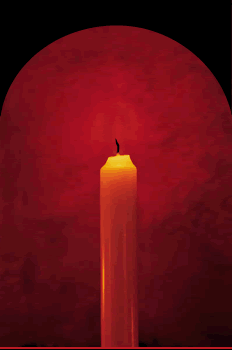
An unlit candle awaiting your attentionLighting a candle is a way to let Christ, the Light, into our lives; it is a way to let our light (of care, concern, hope, love, compassion, interconnectedness, peace) shine into the world;  it is an invitation to warmth; the fire of a candle ascends, like our prayer; it can be an offering of self, “our souls and bodies” to  God’s glory. … The lit candle can be our continuing prayer, even when our conscious praying is interrupted or distracted into oblivion.

The lit candle, especially in the darkest part of the night, is a symbol of an unquenchable hope; it is a symbol of a life-giving trust (in God).

I encourage you to light a candle, offer a prayer, give light (no, give the Light you know) to the world.

For further reading and reflection

“In many different traditions lighting candles is a sacred action. It expresses more than words can express. It has to do with gratefulness. From time immemorial, people have lit candles in sacred places. Why should cyberspace not be sacred?”
From the website of Gratefulness.org as an introduction to a sacred space in which you can light a candle.

I have started a Group for us on Gratefulness.org. The Group initials are 4 letters: a-m-e-n. Our group is “amen” (without the quotes). As you complete the guided process to light your candle in cyberspace you will have the opportunity to enter a set of Group initials. Use “amen” (without the quote marks). All candles with the Group initials amen will appear together. If you want to find your candle, use your initials in the space provided.

“Amen.” Of course, this is a common ending to our prayers. To say Amen to a prayer is to say to all who hear “Let it be so, even more than I can say, or more than I can ask or imagine, let it be so.”

Click here: Light a candle on Gratefulness.org: I will greet you there and you will be guided in your candle lighting effort; God will do the rest.

“So, Mom, how do these seeds grow?”

Jesus said, “The kingdom of God is as if someone would scatter seed on the ground,…” Mark 4:26

The Gospel text appointed for Sunday, June 17, 2012 is Mark 4:26-34. What follows is the opening paragraph of a reflection on Mark posted by Ynot on the Catholica Forum Blog.

Quote . . .Mark was finding it hard to concentrate on the papers spread across the table while a noisy group outside the door debated methods and strategies for proclaiming the kingdom. Get the message sorted out first, some were saying, to make sure everyone follows the same line. Others were talking about picking out the most likely converts. Then they started on the obstacles blocking the message, secularism, materialism, relativism in the Greco-Roman world, the hot-blooded youth who wanted a messiah to lead them against the Roman occupation back home in Palestine, and the biggest problem of all, the lack of spiritual hunger, seen in the poor attendance at synagogue, the waywardness of the young, the blindness of the pharisees. Finally, the leaders of the synagogue who didn’t care for the people. Some were even saying that you’ve got to start with the children and fill their young minds with the Way of Jesus before anything else. Mark threw up his hands in frustration. “They just don’t get it!” he muttered to himself, and put his head down to his work. He knew the key to all their searching was staring him in the face. How have they all got it so wrong? It’s not like organising a social revolution, it’s not like setting up a reform movement, it’s not like force-feeding the young, it’s not like an occupier’s re-education program among a subject people, it’s not indoctrination: It’s like sowing seed!  Read the entire reflection

After reading through this reflection let our Forum know what you think. Ask a question or leave a comment. We would like to continue the conversation.

____________
Image from the blog Phil0logy on WordPress.

Be Real AND Make Hope

It is a huge danger to pretend that awful things do not happen.
But you need enough hope to keep going.
I am trying to make hope.
Flowers grow out of darkness.

Corita Kent —Word for the Day on Gratefulness.org, 25 Sep. 2011

2 Corinthians 4:13–5:1 is appointed for reading on Sunday, June 10, 2012. We will hear Paul talk about hope. When awful things happen how do you “make hope”?

Remembering—a treasure trove of hope and inspiration

 Loving God, we bless your Name for the witness of Ini Kopuria, police officer and founder of the Melanesian Brotherhood, whose members saved many American pilots in a time of war, and who continue to minister courageously to the islanders of Melanesia. Open our eyes that we, with these Anglican brothers, may establish peace and hope in service to others, for the sake of Jesus Christ; who with you and the Holy Spirit lives and reigns, one God, for ever and ever. Amen. Collect for the Commemoration in Holy Women, Holy Men.

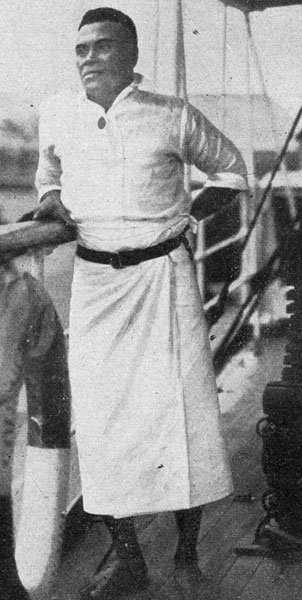
An image of Ini Kopuria in 1945
Ini Kopuria from Holy Women, Holy Men

From the time Jesus said “Do this in remembrance of me” (and even before) faithful men and women have remembered, not just the meal and words of Jesus, but, the stories of those who went before them and those contemporaries who inspired hope in them. We have followed Jesus’ command and we have added the stories of Holy Women and Holy Men to our (Eucharistic) meals.

The Standing Commission on Liturgy and Music of the Episcopal Church is revising our “Memory Book.” You may remember the book Lesser Feasts and Fasts. This book collected short stories of “saintly” forebearers, men and women, commemorated throughout the year (see the Book of Common Prayer, pp. 15-33). In 2009 the Commission was asked to expand the number and kinds of commemorations. The Commission will report to General Convention this summer. However, the “Trial Use” of the old and new commemorations, now called Holy Women, Holy Men, will continue.

All of that is said so that I can introduce Ini Kopuria, Founder of the Melanesian Brotherhood, 1945. You may read his story here: June 6: [Ini Kopuria, Founder of the Melanesian Brotherhood, 1945]. You can see from the Collect to be used in the commemoration that the work of the Melanesian Brotherhood continues to this day.

Do you have a saintly woman or man (women or men) whose memory inspires your best actions and gives you hope? Please share.

Some questions to try out today

We’ll gather in our Sunday Morning Forum at 9am PDT this morning and take up the questions posed by our Forum Member, Wendy:

“Life and peace. Good life. We are invited to access it by freeing ourselves to be open to and led by the Spirit of God to become children of God (Romans 8:14 NRSV). Through our Western lens, to become spirit-focused seems to ignore the real world and to become a child almost seems to be a condescension, but are either of these fears accurate?

“Perhaps the greatest question to ponder is the destiny of a child? Is it to become an adult? Or, according to the Bible, here, is it to become in close relationship with God? Is the child an incomplete adult or is the child an image of one in closest relationship with God in Spirit? Here in Romans, we are invited to become as a child to enter into the Spirit of God. ” from Children of God by Wendy Sanders

  • What images (verbal or otherwise) come to mind when you hear that you are “a child”?
  • “Paul, you are such a child.” Can you imagine Paul’s reaction to that statement? What kind of response might he give?
  • Is it the destiny of a child to “become an adult”? Explain.
  • Is it the destiny of a child enter into “a close relationship with God”? Explain.
  • Have you ever used the word “Abba” in your prayers? If yes, please share what you experienced.

To the Trinity be praise!

To the Trinity be praise!
God is music, God is life
that nurtures every creature in its kind.
Our God is the song of the angel throng
and the splendor of secret ways
hid from all humankind,
But God, our life is the life of all.

–Hildegard of Bingen (1098-1179)